Category

Daniela Donato

I just got back from the Agentforce World Tour in Boston and my brain is full of ideas. I wasn’t totally sure what to expect, but I ended up walking away with a lot of thoughts on how this new wave of Salesforce tools is going to affect the way we design—and honestly, it’s already starting.

Here’s what stood out to me, what’s changing in marketing design, and what I think we need to start doing differently.

What Salesforce tech I learned about—and why designers should care

A picture of a slide from Agentforce World Tour that says Agents are the new primary UI...navigating apps is now a thing of the past and CX will never be static again.

The big thing right now is Agents. These are digital agents built into Salesforce that help you build campaigns, write copy, pass tasks between teams, and do all the repetitive stuff we usually get stuck with.

Here’s what stuck with me:

  • A Marketing Agent that helps write emails, build landing page briefs, and generate campaign ideas
  • Agents that pass work from marketing to sales to success without everything falling apart
  • A combo of Einstein and Data Cloud that makes personalization actually doable—not just a buzzword

The whole point is: this tech works in the background, which means the assets we make (emails, landing pages, chat flows) need to be flexible and fast to keep up. If the backend is getting smarter, the frontend has to match.

Why designers should be paying attention:

  • With marketers using agents to streamline content and campaign creation, we need to make sure that the designs on the frontend are just as easy to be flexible and scale. How can you templatize designs so they can be used for multiple variations and make assets a rinse and repeat process, so that marketing can continue to flow seamlessly to engage customers where they are?
  • As AI functionality + Data Cloud is making it easier to tailor campaigns on a 1:1 level, designers need to prep for modular, dynamic design solutions that can easily adapt to be used in tandem with these personalized experiences.

How design can make bots, emails, and landing pages better
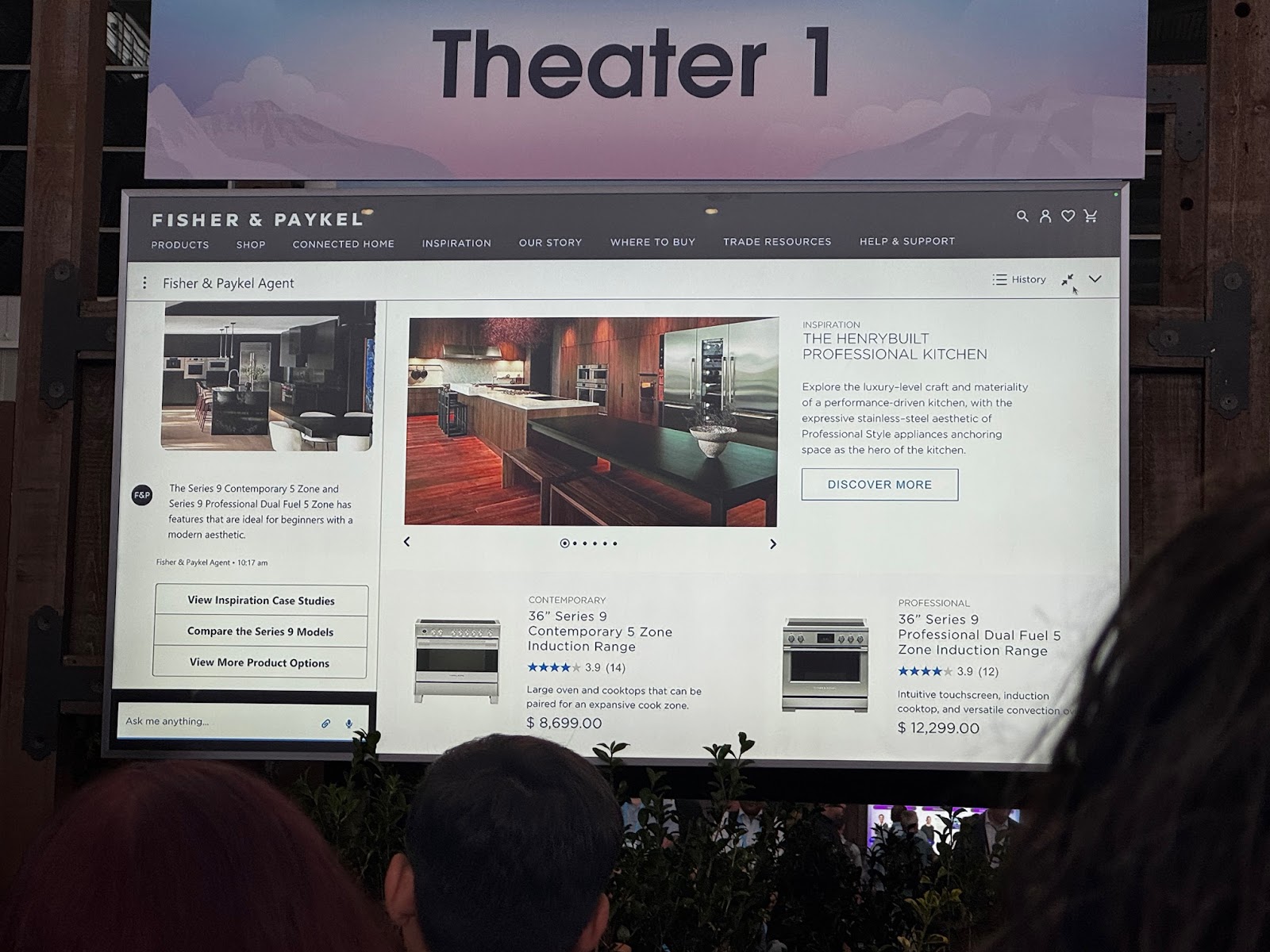
A picture of a slide from Agentforce World Tour showing a web page from Fisher & Paykel.

A lot of chatbot flows feel like someone gave up halfway through. This tech is finally making them better, and as designers, we should be helping that along.

Things that stood out:

  • Keep bot messages short. Break things up.
  • Add little visual moments such as spacing, structure, and simple hierarchy

Same goes for emails and landing pages. If AI is helping create content, our layouts should be:

  • Modular and adaptable. Not every headline is going to be the same length
  • Built with personalization blocks in mind
  • Designed to include stuff like product recs, timers, or variations depending on the audience

It’s less about making something perfect once, and more about making something that works in a bunch of different ways.

Marketing tracking and data = smarter creative decisions
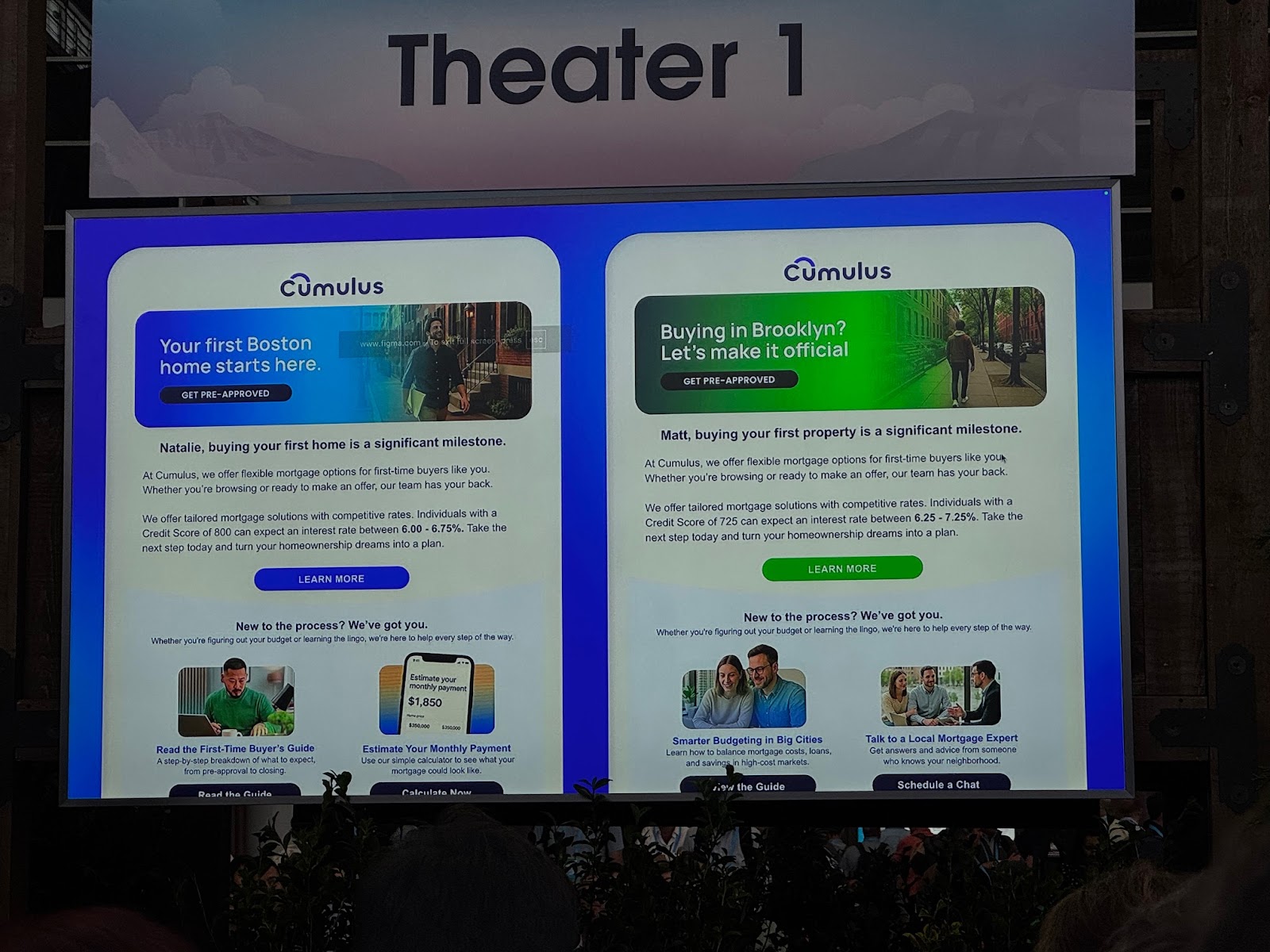
A picture of a slide from Agentforce World Tour showing dynamic blocks being used to personalize the email for recipients in two different locations, one in Boston and one in Brooklyn

I used to skip over the data talk. But now that I see how it connects to the creative side, I’m paying more attention.

Salesforce showed how live audience data helps trigger different campaign paths. And if we know who we’re designing for, we can make better choices.

Things I’m going to start doing:

  • Ask who we’re designing for before opening Figma
  • Build layouts that make A/B testing easy
  • Stop hanging onto designs that don’t perform, even if they look good

Key takeaways for fellow designers working in Salesforce-powered marketing

  1. Design for flexibility. AI needs space to breathe,  your layouts should anticipate variability.
  2. Think like a builder. Modular, testable, scalable. 
  3. Keep it human. No matter how smart Agentforce gets, people still connect with thoughtful visuals, clear flows, and real emotion.
  4. Ask for data early. It’s not just for reporting, it can inform design choices from the start.

If you’re a designer in the Salesforce space, this is your sign to get used to automation tools, AI agents, and your marketing team’s strategy. It’s not about being replaced, it’s about being empowered.

In the world of digital marketing, a seamless and visually captivating user experience is crucial to capturing your audience’s attention and driving conversions. For Marketing Cloud Account Engagement users, optimizing both email and landing page designs is an art that requires a balance of creativity and strategy. 

Crafting Impactful Email and Landing Page Experiences

In this post, we’ll delve into five design musts that can elevate your Account Engagement-powered campaigns and help you create impactful email and landing page experiences.

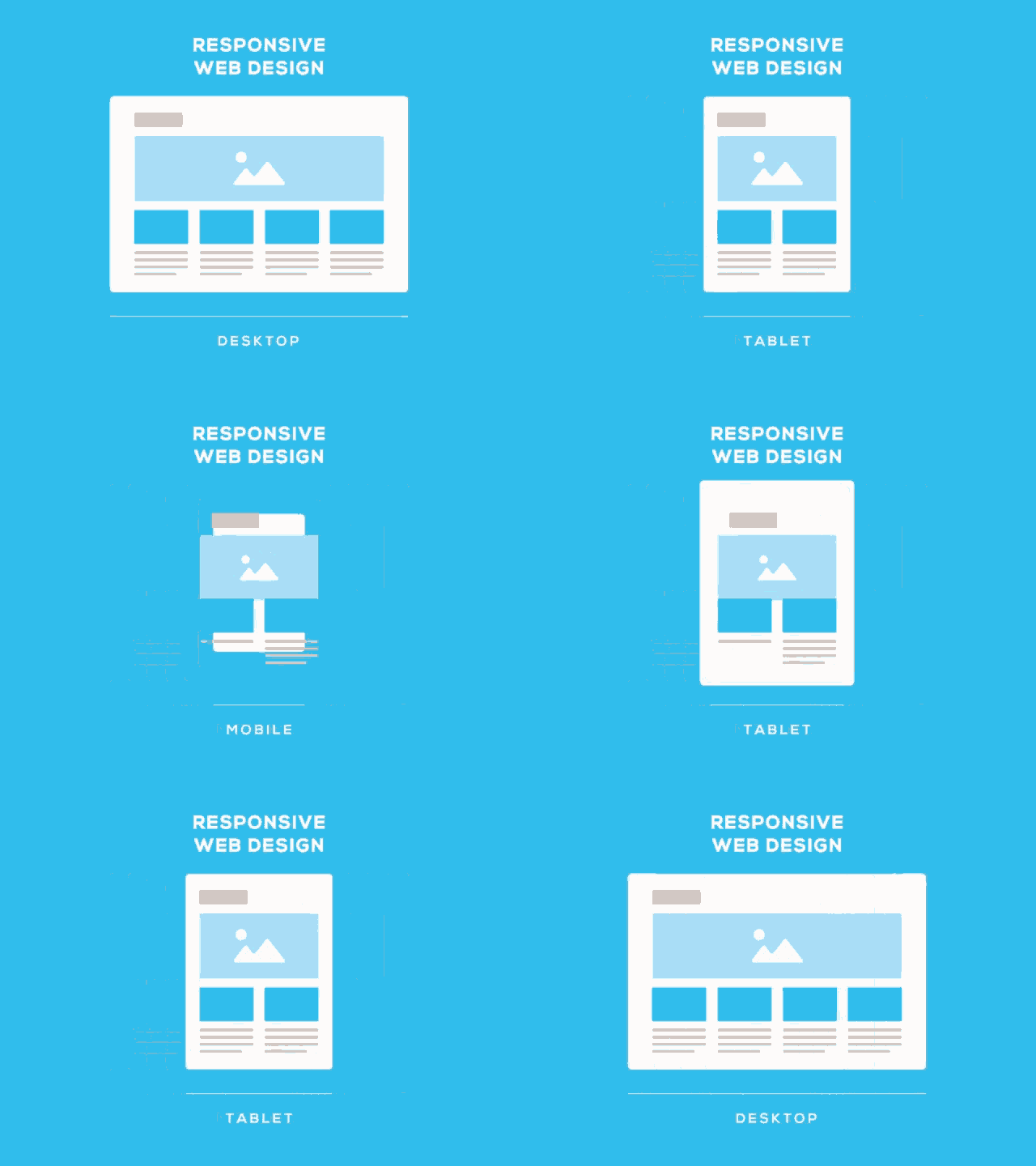
Design Must #1: Use Responsive Design to Engage Across Devices

In today’s mobile-centric landscape, responsive design is no longer an option; it’s a necessity. Whether you’re crafting an email or designing a landing page, ensure that your layout adapts flawlessly to various screen sizes, from desktops to smartphones.

Account Engagement offers responsive email templates that automatically adjust content to fit different devices, allowing you to reach your audience wherever they are. Similarly, when creating landing pages, use responsive design principles to guarantee a seamless experience and better engagement.

Design Must #2: Establish Visual Cohesion through Consistent Branding

Consistency is key in branding, and it extends to your email and landing page designs. Maintain a consistent color palette, typography, and imagery that align with your brand identity. You can leverage Account Engagement’s customizable templates to infuse your emails and landing pages with your brand’s visual elements, reinforcing familiarity and trust among your audience. 

A unified brand presence boosts recognition and enhances the overall user experience.

Design Must #3: Capture Attention Instantly through Compelling Imagery

Visuals are powerful tools for storytelling and grabbing attention. 

Incorporate high-quality, relevant images that resonate with your audience’s interests and needs. In emails, use eye-catching visuals that complement your message and entice recipients to read further. 

On landing pages, leverage impactful imagery to convey the value proposition of your offer instantly. Remember, a picture is worth a thousand words, so choose visuals that amplify your message effectively.

Example: Sercante Landing Page Created in Account Engagement

Design Must #4: Guide User Actions with Clear Call to Actions (CTAs) 

The purpose of your email and landing page is to drive specific actions. Whether it’s encouraging recipients to click through to your website or enticing them to fill out a form, your CTAs must be prominent and action-oriented. Use contrasting colors, persuasive language, and compelling design elements to draw attention to your CTAs.


The Account Engagement drag-and-drop email and landing page editors enable you to create visually appealing buttons that stand out, leading users to take the desired actions effortlessly.

Example: Bold and clear CTA

Design Must #5: Streamline Layouts to Enhance Readability and Navigation

Cluttered and confusing designs can deter users from engaging with your content. Keep your layouts clean, organized, and easy to navigate. 

In emails, use headings, subheadings, and bullet points to break up text and improve readability. On landing pages, employ a clear hierarchy to guide users’ attention toward key information. 

Account Engagement design tools empower you to structure your content in a user-friendly manner, ensuring that recipients and visitors can quickly grasp your message and offerings.

Be an Awesome Account Engagement Asset Designer 

Mastering the art of designing impactful emails and landing pages within the Pardot platform requires a blend of design aesthetics and marketing strategy. 

By adhering to these five design musts — responsive design, consistent branding, compelling imagery, clear CTAs, and streamlined layouts — you’ll create experiences that captivate your audience, encourage interaction, and ultimately drive conversions. 

Embrace these principles to unleash the full potential of Account Engagement and leave a lasting impression on your target audience. And reach out to the team at Sercante when you’re ready to take your Account Engagement Assets to the next level.