Category

Real Talk

I’m noticing a trend.

People hate their marketing automation platform implementation partners.

On at least a weekly basis, a prospective customer or a Salesforce AE with a red account will come to me with a story of a “failed implementation.”

“We implemented 6 months ago, and we’re barely even using it.”

…they say, with an implied (or sometimes direct) accusation against their implementation partner.

I nod gravely, affirming their tale of woe.

But honestly — a ”failed implementation” isn’t always to blame for the current state of affairs.

What a REAL fail looks like

Don’t get me wrong.  There are plenty of shitty implementation partners in the ecosystem.  But the basic Pardot stand up tasks are… well, pretty basic.

When I audit other consultants’ implementations, sometimes I see:

  • Incomplete configuration
  • Sloppy/rushed builds
  • Inconsistent set up

…but most often I just see a pretty normal Pardot org.  Sometimes with pretty solid content and campaigns that the customer has built out after the partner moved on.

So why does the client feel like a failure when from a systems perspective everything is good to go?

Introducing the Dip

When companies first onboard with Pardot, they’re psyched and ready to take over the marketing automation universe.

But then… reality hits.

Things aren’t as shiny and sexy as Salesforce said.

Successfully running automated campaigns is hard.

The sales team refuses to call on those gosh darn leads.

No one is contributing content.

They’ve hit what Seth Godin calls the Dip.  Or what some management consulting and Six Sigma people call the “Valley of Despair.”

The dip is that feeling that things aren’t working with the current state of affairs.  You’re frustrated, and you’re not sure if you should fight through it or throw in the towel.

Why people hit ‘the dip’ after Pardot implementation

Hitting the dip is not a failure.  If you’re nodding your head and can relate to the above, let me say this again — THIS. IS. NOT. A. FAILURE.

You’re not doing anything wrong.  It’s a natural part of the process.

The most common reasons I see customers struggling to power through the dip is one of these missing ingredients:

  • Clean data
  • Content
  • A champion driving internal support
  • Team bandwidth
  • Technical skills
  • Processes worth automating

Coming out on the other side

Once in a blue moon, when a company hits the dip, it means that Pardot may not have been the right fit.  But much more often, it means it’s time to double down, recommit, and persevere — not jump ship.

I love all my custies, but my favorite companies to work with are those that come to us at this particular moment.  They saw the vision of how their business could be transformed by marketing automation, they made an investment, they took the first steps — and they’re at the point where they’re ready to get serious and take things to the next level.

This is a turning point.  And it’s fun.

Can you avoid the dip altogether?

Honestly?  Probably not entirely.

Not trying to be a Debbie Downer here. There are just natural ups and downs when adopting any new product.

A few things can help make it better and feel less drastic:

  1. knowing it’s coming
  2. working with a partner on a managed services/retainer basis to help you rally through it.

…because the other side really is worth it.

As a Pardot consultant, I run into a lot of people who are stuck.

They’re not getting the value they wanted out of the tool.

They’re not sure what to do next.

The ocean of possibility feels daunting.

When talking to people in this space of frustration, I try to listen for 3 things.

  1. What is the outcome they’re after?
  2. Are they working toward that outcome in an effective way?
  3. If not… is it because they don’t know how to, or because they don’t want to? (That may sound like a weird question, but I’ll explain.)

Getting through “I don’t know how”

If lack of effective action stems from a missing skills or knowledge, that’s actually a great place to be.

You can learn.  You can find resources.  You can talk to people who have walked the road you’re walking.

This is the frame of mind for many of the companies my team supports with implementations.  There’s a knowledge gap, and we have a structured process to help would-be Pardashians conquer that (full of training guides, blogs, videos, and other helpful goodies.)

When there’s more to the story

Sometimes the knowledge gap is real.  But I also frequently find smart, motivated people avoiding starting a project or executing something poorly.  In those cases, there’s invariably more to the story than “I don’t know how.”

Why haven’t you created an Engagement Studio nurture?

If scoring and grading was a priority when you bought Pardot, why aren’t you using it yet?

Have you trained your sales team on how to leverage the information you’re gathering in Pardot?

The first answer to inquiries like that is often “I don’t know how.”  Or the usual time and money fallback.

But those are rarely the TRUE reasons holding talented, in-it-to-win-it marketers back. The real barrier is often something more like:

  • What if I build it and then it flops
  • What if I can’t get other people to buy in
  • What if I do it once and then it becomes my job forever
  • What if my boss hates it
  • What if I’m not good at this
  • What if I look dumb

In other words… it feels like a risk.

Identifying and naming that lurking reason for inaction is powerful.  Seeing is the first step to overcoming.

Okay, real talk time.

Not all companies who implement marketing automation are met with wild success and find themselves on the stage at Dreamforce.  For every one of those marketing automation poster children, there are 5 other that are looking at their annual software bill thinking to themselves:

“Was this really worth it?”

When Pardot implementations go south, it’s rarely (if ever) due to the technology itself.  It tends to be due to a few very predictable and preventable reasons:

1) Unclear processes

You can’t automate a process that doesn’t exist.

Are you making up a process right now?  Don’t automate it yet. Test it IRL, with a human being, and see what works.  When you have the process ready to roll, then let’s unleash the automation beast on your marketing and sales system.

2) Lack of content

Email marketing – particularly drip nurturing – requires a large volume of content.

Has your company created blogs, sales copy, or other content assets that could be re-purposed?  If not, who will this responsibility fall to? Can you bring in outside help?

3) No clear ownership

Marketing automation exists in a somewhat unique and nebulous space.  Who does it belong to? Is it IT, because it’s a piece of technology? Is it marketing, because it connect top of the funnel efforts to a sales handoff?  Is it sales, because ultimately it’s about sowing seeds of awareness and growing new leads?

The truth is, it can belong to anyone… but it needs to belong to SOMEONE who will take ownership and commit to getting shit done.

4) A missing piece of the trifecta: head, heart, and hustle

Marketing automation is challenging space.  The most successful teams build programs where head, heart, and hustle collide.

The “head” (i.e. brains) part of the equation:

  • Process expertise
  • Technical knowledge of Pardot and Salesforce
  • Dev resources to build next-level cool things on the platform

The “heart” needed to drive effective campaigns:

  • Vision & strategy
  • Campaign messaging
  • Bringing things to life with captivating creative

And the “hustle” side brings the other two together with:

  • Flawless execution/scheduling
  • Managing budgets
  • Measuring results
  • Staying two steps ahead and planning for the next set of initiatives

Does your team have all three of the above?  If not — how do you build that capability in house or add resources to complement your team members?

5) Lack of resources for post-implementation support

I recommend that all companies, especially those who are new to marketing automation, build in a budget for post-launch training, campaign development, and consulting.

A 30-day Quickstart is a great way to get up and running on the platform quickly.

But Rome was not built with a Quickstart.  Having a partner to assist you beyond this — to provide ongoing, proactive support and accountability — is incredibly valuable and helps ensure your long term success.

What other success factors lead to a successful implementation?

Have you seen other key ingredients for success?  Where have you or others that you know struggled with standing up a new platform?

Let’s hear it in the comments!

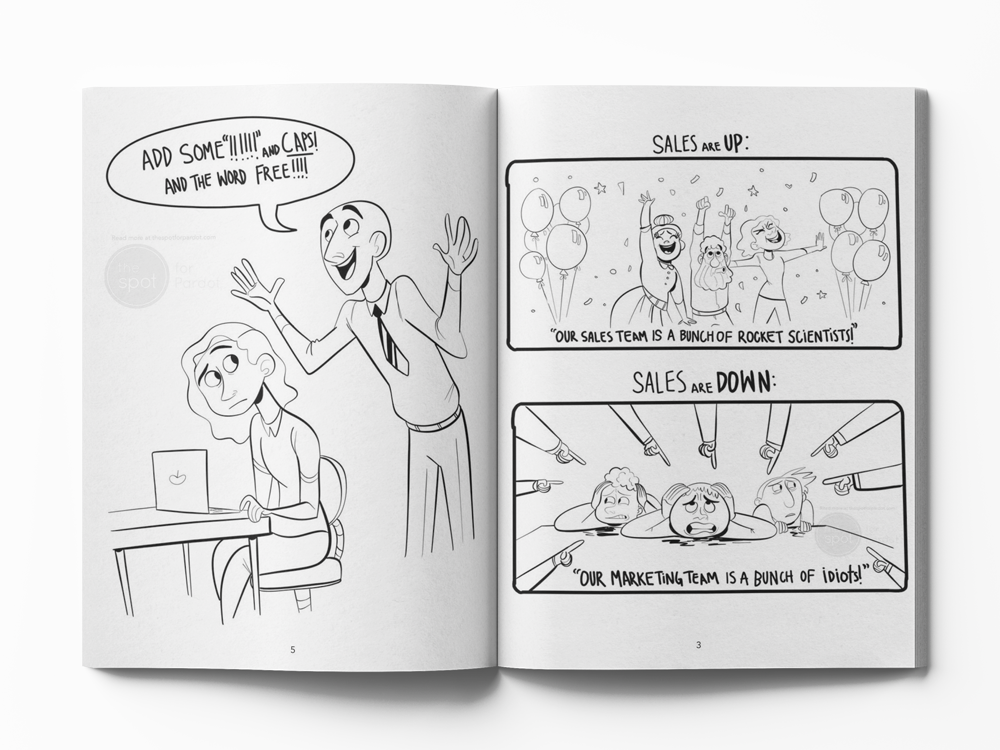
In the category of super random side projects, I made a coloring book.

Nope, not the kind for the little humans in your life.  It’s called “Why Marketing Automation Experts Drink.”

It’s a stress-relieving, fun, and slightly snarky adult coloring book for marketing automation professionals.  If you (or someone you love) works with Pardot, Salesforce Marketing Cloud, Hubspot, Marketo, Eloqua, or email marketing — this book is for you.

Marketing automation pros need a break

I wrote this because gosh darn it, sometimes it’s hard to be a martech pro.

We have to carry the torch for change and relentlessly advocate for a new way forward in our organizations.

Technology advancements move a mile a minute.

Our jobs look easy to people who know nothing about it.

And wow, is it emotionally exhausting to arm wrestle sales & finance every day.

Gift it to your martech & email friends

This little book is dedicated to the marketing technologists who are fighting the good fight, building stunning strategic campaigns, and moving the needle on results.

So when the going gets tough, pull out the sharpies and highlighters. I highly recommend this book for the moments when you need to blow off steam, reduce stress, or pretend like you’re listening during your 8th straight conference call of the day. (Not that you multitask during those or anything.)

Check it out on Amazon here.

Hope you enjoy it, and happy coloring!

(PS — Interested in a bulk order?  I can hook you up with a deal.  Ping me at [email protected])

I went into a retail store a few weeks ago. I should have known better, but I was leaving for a vacation and desperately needed to buy a swimsuit.

I poked around online, but realized what I wanted couldn’t be shipped in time. So I drove to the mall. Ugh, gross.

I browsed the store, desperately avoiding eye contact with the floor reps, until I gave up on finding what I was there for. I asked for help. A very nice 16-year-old associate listened to my questions, but had no idea what I was talking about.

So she got a manager. Manager confirmed they did have inventory, but it was in the back.

She radio’ed someone to go get it and walked away.

I stood there for like 10 minutes. That 600 seconds was punctuated by several chipper “Hi, have you been helped?” moments with a few other staff members.

Someone finally came. With the wrong product. I tried it on anyway, but it had like 4 inktags/anti-theft devices attached, and I couldn’t really tell how it would fit without them.

I tried to find the manager again for help, but no dice.

Finally I just gave up and left.

When our CX feels like the mall circa 2018

As B2B marketers, we create awesome, lead-magnet content. We map it to the buyer’s journey, and build out drips to stay top of mind for prospects.

When someone finally raises their hand in response, this is our moment to shine.

We are missing huge opportunities if our hard-earned leads end up being volleyed from rep to rep once they get in the door.

What opportunities are you missing if your smoking hot lead feels like they’re standing in the middle of the retail floor being asked “have you been helped” on an infinite loop and not getting the info they need?

The gap in data needed for effective lead routing

Salesforce makes it easy to build lead assignment rules based on explicit criteria — location, company size, industry, and more. Pardot lets you add things like demonstrated interest, level of activity, score/grade to make that routing even smarter.

Other critical things to ask are:

  • What other dependencies are there?
  • Are they already in the system, or is this a net new individual?
  • Is their account/company in Salesforce already?
  • Is there an open opportunity with their company, or has one of their colleagues bought from us in the past?

The answers to these questions are critical to get your leads to the right person at the right time.

This is even more pronounced if you’re ramping up an ABM strategy. For example, let’s say you’ve invested in targeted advertising, direct mail, and personalized content for a list of 1,000 named accounts. If a new lead from one of those organizations raises their hand… do you really want that hitting the BDR queue?

Where LeanData takes this to the next level

LeanData is lead routing on steroids. A few of our customers are using it right now… and my elevator explanation is that it extends native Salesforce/Pardot functionality to build more context into the routing equation.

When a lead comes in the door, LeanData looks for related Accounts and lets you build routing logic that references that account-level opportunity history, activities, cases/support tickets, and all of the rich context of marketing interaction that you need for effective routing.

It is such a powerful thing that Salesforce and Pardot have all of their data on the same platform — and LeanData taps into this shared repository of interactions to help match and appropriately route leads.

(Let me know if you’d like to see a demo in our sandbox environment — I’m geeking out hard on this platform right now.)

A different end to the retail story

Imagine if the swimsuit retailer in the story above (who shall not be named) had more context to manage their walk-ins, including any buying or browsing history from other people in the same household?

If they would have seen my hubby Googling “can you swim in the Dead Sea” (yes), known that I mostly buy things in/black/dark black/blackest black, known the category of product I was looking at, past time-to-close, and more — then the conversation when they tried to make a sale would have been very different.

Does this challenge resonate with you? What “whoops” moments have you run into with lead routing? Let’s hear it in the comments!

To read more on LeanData, check out their recent post on the Pardot blog.

A recent post focused on pros and cons of insourcing and outsourcing Pardot work.

The TL;DR of that one: there are great reasons for and against either approach.

But if you’re sitting here comparing your internal resources against your ever-growing to-do list, and decide you’re in the “outsource it” camp… here are a few ways to successfully leverage consultants.

1. Be clear on your goals, not just your deliverables

Sure, you could find an agency to write you 3 blog posts a month and 10X social posts.  But is that really what you’re after?

Look for a consultant that gets WHY you’re pursuing certain projects – not just the WHAT involved in execution.

If you find a consultant who takes the time to get to know your business and your objectives, they can advise you on the best way to get from point A to point B.

Some consultants are wired like this by nature, others are not.  IMO, this is the #1 thing that separates the good and the awesomesauce.

2. Look for cultural fit

Personality and work style are as important as experience.  Finding someone who is responsive, communicative, and who gels with your team is critical.

Equally critical is finding someone who is willing to challenge your status quo. It’s easy to meet with a potential client and tell them they’re doing a great job. But that’s not what will help you grow your business.

3. Have them train your team

Found someone with the expertise, consultative nature, and cultural fit you need? Great. Now make sure they’re willing to pass that value along to your team.

Ask them to walk your team through what they’ve built and document decisions for future team members. Good consultants are willing to do this and aren’t afraid of sharing their “secrets” with you – they retain clients by demonstrating results, not hoarding information.

4. Hold them accountable for investments of time

I generally like to price projects based on value or output, not on time.

Many consultants bill by the hour, which is fine and dandy.  As you look to hold them accountable for more than just running up the clock, consider asking them things like:

  • What deliverables can we expect for X amount of hours?
  • How long does it typically take to do XYZ task?
  • What results should we expect from the campaigns we’re building?

These are really hard questions to answer.  For all marketers.

Your prospective consultants may squirm a bit… because as you’ve likely experienced, there are no guarantees in digital marketing and it’s hard to commit to firm numbers.

But they should be able to share benchmark performance rates, look at your historical performance, or at the very least share anecdotal evidence of what they’ve seen work for other companies like yours.

5. Be open to the “good kind” of scope creep

“This should only take a minute.”

…famous last words before discovering 5 other things that should be addressed before finishing the initial project that you set out to do.

Consultants are notorious for quoting one thing and going way over budget. If this is done to trick you into signing a contract or because of shoddy requirements gathering — that’s not cool.

But in some cases, when you’re working with a consultant you will uncover some problems you didn’t even know you had.  When that happens, consider the issue that’s been uncovered… and if it merits it, take the time to address it.

Be open to the good kind of scope creep that helps you get the right foundation in place for successful execution.

6. Evaluate the resources, not just the firm

Find out which actual team members will be working on your account.  What is their experience, and do you have confidence in it.

It’s shocking to me how some big-name consulting firms will bill crazy-high hourly rates, and then promptly turn around and hand a new project to their 22-year old new hire who can count on one hand the number of times they’ve logged into Pardot.

7. Set communication expectations upfront

Sense of urgency and speed of response to communications vary.  Rather than make assumptions, consider asking direct questions about the type of turnaround time and communication cadence you can expect, such as:

  • What is your typical response time to questions and requests? (Or if you have a specific expectation, like 48 hours, ask if they can meet that).
  • How do you keep your clients updated on your work?
  • What tools and processes do you have in place for collaborating on projects?

8. Treat them like an extension of your team

Keep your consultants in the loop on your overall marketing plan and business goals. Invite them to your team meetings, get them involved in planning, share the reports and communications you give to your execs and internal team members.

The more information you share, the more empowered they will be to give your strategic guidance and set you up for success.

[Side note: this is another great reason to price by deliverables/output vs. time — because who wants to pay for consultants sitting in a bunch of meetings?]  

Over to you: How do you successfully bring in outside partners?

How have you successfully onboarded partners, agencies, and consultants?  Any key tips or lessons learned you might share?

Let fellow readers know in the comments!

No more posts to show