Category

Cara Weese

Product Note: Marketing Cloud on Core is now known as Marketing Cloud Next. Marketing Cloud Growth and Advanced are editions of Marketing Cloud Next and have also been referred to as Agentforce Marketing.

Salesforce marketers have been navigating a whirlwind of changes over the past year, and with every announcement one question looms large: What does the future hold for Marketing Cloud Account Engagement? If you’ve been worried about Marketing Cloud Account Engagement (formerly Pardot), you can breathe easy knowing it is evolving in powerful new ways, especially in conjunction with Marketing Cloud on Core (aka Marketing Cloud Growth and Advanced Edition).

Let’s explore why the future of Salesforce marketing is brighter than ever and how Account Engagement and Marketing Cloud on Core can work together to create a competitive edge for businesses looking to scale their marketing impact.

Marketing Cloud Account Engagement is Evolving

Account Engagement remains a key part of Salesforce’s marketing ecosystem. As the recent Salesforce Marketing Tech Roadmap highlights, Account Engagement is evolving with deeper AI capabilities, enhanced automation, and better connectivity with Data Cloud. Instead of being phased out, Account Engagement is fine-tuned to work seamlessly with the latest Salesforce innovations.

Marketing Cloud on Core is Changing the Game for Marketers

Account Engagement and Marketing Cloud on Core are essential components of Salesforce’s marketing ecosystem, each serving a unique yet complementary purpose. Account Engagement continues to be the trusted tool for B2B marketers, while Marketing Cloud on Core brings an expanded, AI-powered, data-driven marketing approach. Built on the Einstein 1 Platform, these solutions create a seamless, unified experience across Sales, Service, and Marketing, leveraging AI and Data Cloud to enhance customer interactions. Rather than replacing one another, these tools are evolving side by side to offer marketers a more connected and intelligent way to engage with their audiences.

What’s Exciting About Marketing Cloud on Core?

  • Generative AI helps marketers create AI-driven campaigns, emails, and segments in minutes.
  • Einstein AI provides predictive insights with Einstein Send-Time Optimization and Einstein Engagement Frequency, and Einstein Engagement Scoring.
  • Data Cloud ensures every customer touchpoint is informed by a single source of truth, say goodbye to disconnected marketing efforts.
  • Omnichannel marketing is effortless with native email, SMS, and WhatsApp channels.

The Dream Team: Marketing Cloud Account Engagement Paired with Marketing Cloud on Core

The real magic happens when Account Engagement and Marketing Cloud on Core work together. Here’s how they complement each other:

  • Lead Nurturing & Cross-Channel Engagement: Imagine a B2B marketing manager running a nurture campaign for high-value prospects. Account Engagement ensures these leads receive timely, relevant emails based on engagement, while Marketing Cloud on Core supplements this with SMS reminders and AI-driven segmentation, creating a truly engaging experience for each customer.
  • Segmentation + Personalization: A marketing operations specialist wants to create highly personalized experiences for prospects. Automate lead nurturing based on behavioral triggers with Account Engagement’s Engagement Studio. At the same time, Marketing Cloud on Core dynamically adjusts messaging using Dynamic Content built within the Data Cloud Data Graph, ensuring every touchpoint is tailored to the recipient’s journey.
  • Sales Alignment + AI-Powered Insights: Picture a sales team receiving AI-powered lead insights. Account Engagement scores Leads based on interactions, ensuring sales reps prioritize the most engaged prospects. Meanwhile, Marketing Cloud on Core uses AI to predict customer needs, alerting sales when a lead is likely to convert.

What This Means for Marketers

With Account Engagement advancing and Marketing Cloud on Core opening new possibilities, Salesforce marketers have more tools than ever to drive impactful engagement. The key takeaway? Marketing Cloud Account Engagement is evolving, and when combined with Marketing Cloud on Core, it unlocks even more significant marketing potential. The shift to a unified Salesforce marketing ecosystem means:

  • More automation and AI-driven insights to improve efficiency.
  • A seamless user experience across Salesforce products.
  • Greater flexibility to adapt marketing strategies to changing customer behaviors.
  • The ability to scale effortlessly with Data Cloud.

If you’re ready to explore how Account Engagement and Marketing Cloud on Core can work together for your organization, reach out to Sercante so we can help you start experimenting with the latest AI-driven features. The future of marketing is here! Are you ready to make the most of it?


Product Note: Marketing Cloud Growth and Advanced are editions of Marketing Cloud Next and have also been referred to as Agentforce Marketing.

Marketing Cloud on Core (also known as Marketing Cloud Growth or Advanced Edition) can now track how marketing efforts contribute to revenue! With the Spring ‘25 release, Salesforce introduced Opportunity Influence, helping businesses connect marketing engagement to pipeline and revenue. But how does it work, and what’s the difference between Opportunity Influence and Campaign Influence? Let’s dive in!

Opportunity Influence vs. Campaign Influence: What’s the Real Deal?

Before we break down how to customize and report on Opportunity Influence, let’s clarify how it differs from Marketing Cloud Account Engagement’s Customizable Campaign Influence. While both models aim to connect marketing efforts to revenue, they function in distinct ways and serve different use cases. 

FeatureOpportunity InfluenceCampaign Influence
Data SourceMarketing Cloud Engagement (emails, ads, automation, etc.)Salesforce Campaign Membership
Influence ScopeTracks engagement across multiple touchpointsTracks Leads/Contacts who are Salesforce Campaign Members
IntegrationSyncs Marketing Cloud engagement data to Salesforce OpportunitiesWorks within Salesforce CRM using Campaigns and Opportunities
Attribution ModelsMulti-touch attribution (first-touch, last-touch)Campaign Influence and Customized Models
Reporting & InsightsMeasures marketing-driven revenue impactMeasure campaign-driven revenue impact

🚨 Important Note for Account Engagement Users 🚨

You cannot use Opportunity Influence alongside Customizable Campaign Influence. If your team already relies on Account Engagement’s Campaign Influence Models, keep this in mind when deciding which model to use.

Additionally, Account Engagement users cannot activate Opportunity Influence as it does not currently integrate with Account Engagement’s Campaign Influence model. If your organization currently tracks marketing-driven revenue using Campaign Influence reports, you’ll need to continue using that model. However, if you’re considering a shift to Marketing Cloud on Core, Opportunity Influence could offer enhanced multi-touch attribution and engagement tracking.

Battle of Influences: Campaign vs. Opportunity – Which One Wins?

Let’s say you’re running a B2B software company and you’ve executed multiple marketing campaigns using a variety of platforms, including ads, email, an e-book, and a webinar, to engage your prospects.

  • Campaign Influence: A prospect attends the webinar, clicks on an email, and downloads the e-book before being transitioned to sales as a marketing-qualified lead. These interactions are recorded under a Salesforce Campaign and can be manually associated with the Opportunity when created based on the Opportunity Contact Role and Campaign Member. You can assign influence weight based on your customized rules.
  • Opportunity Influence: Marketing Cloud on Core automatically tracks all marketing engagement, including the ad view and click, webinar attendance, and e-book download. These touchpoints are automatically associated to attribute influence based on the predefined model and associated to the Opportunity upon creation.

If Campaign Influence were a fine-dining experience, it would be a chef-curated meal—meticulously crafted with manual customization to fit your exact taste. You decide which interactions get the most credit, but it requires hands-on effort. On the other hand, Opportunity Influence is like an all-you-can-eat buffet with an expert chef behind the scenes. It automatically dishes out credit across touchpoints, giving you a full spread of marketing influence with minimal effort. If you love precision and control, Campaign Influence is for you. But if you want a seamless, automated view of your entire marketing impact, Opportunity Influence takes the crown.

How to Set Up Opportunity Influence

Setting up Opportunity Influence requires configuration in Sales Cloud to ensure marketing engagement is properly attributed to revenue-generating activities. To fully connect marketing efforts with sales outcomes, ensure that contacts engaging with marketing campaigns are linked to Opportunities. This allows for accurate tracking of marketing interactions that influence deals.

Enabling Opportunity Influence

  1. Navigate to Salesforce Setup > Opportunity Influence
  2. Enable Opportunity Influence
  3. Select an Attribution Model
    • First-Touch: Gives full credit to the first marketing engagement that led to the opportunity. It’s ideal for understanding which top-of-funnel efforts drive initial interest.
    • Last-Touch: Assigns full credit to the last marketing interaction before the opportunity was created. It helps measure the final push that converted a lead into an opportunity.

Going Beyond Activation

Customization is key to maximizing Opportunity Influence. Marketers should align influence models with their sales cycle, ensuring critical marketing touchpoints, such as email engagements, paid ads, and automation journeys, are correctly captured. Because Opportunity Influence consumes Data Credits, it’s essential to be strategic when enabling multiple models to avoid unnecessary credit usage.

Making Sense of Your Data: Reporting on Opportunity Influence

Once Opportunity Influence is enabled and tracking data, you can start reporting on marketing’s impact. The key to unlocking valuable insights is leveraging Salesforce’s Reports & Dashboards to tell a clear story about how marketing drives revenue.

Your Treasure Map to Salesforce Reports & Dashboards

  • Head over to Salesforce Reports and search for Opportunity Influence Reports. This is your go-to hub for seeing which marketing touchpoints are helping close deals.
  • Get specific with your insights! Use filters to refine reports by timeframe, campaign, or opportunity. Want to know which emails led to the most revenue? Adjust your filters to see the impact.
  • Create Salesforce Dashboards to visualize Opportunity Influence. Need a quick snapshot for your leadership team? Build an easy-to-read chart that shows exactly how marketing is fueling revenue.

The Ultimate Guide to Opportunity Influence Report Types

Salesforce provides several built-in report types to help you analyze how marketing efforts contribute to revenue. Here are the key report types you can use:

  • Opportunity Influence Summary Report – This high-level report shows how marketing engagements are influencing revenue across all opportunities. Use it to track overall marketing impact.
  • Opportunity Influence Detail Report – A more granular report that breaks down individual touchpoints per opportunity, allowing you to analyze which specific marketing interactions played a role in closing deals.
  • Influence Attribution Model Comparison Chart – Compare first-touch and last-touch models side by side to see which one provides the best insights for your marketing strategy.
  • Marketing Touchpoint Analysis Report – Identifies which marketing channels (email, ads, website visits, etc.) are contributing the most to opportunity creation and pipeline growth.

By setting up and analyzing Opportunity Influence reports, marketing teams can gain deeper insights into which touchpoints matter most, optimize their strategies accordingly, and confidently demonstrate their return on investment.

Why Opportunity Influence is a Game-Changer

Opportunity Influence is a must-have tool for any marketing team looking to measure true revenue impact. No more guessing which emails, ads, or landing pages are driving pipeline – Opportunity Influence connects the dots, giving you a clear picture of how marketing fuels business growth. With built-in attribution models, you can customize insights based on what matters most to your strategy.

Whether you’re aiming to prove marketing ROI, optimize your campaigns, or align better with sales, Opportunity Influence provides automated, data-driven attribution that simplifies reporting and enhances decision-making. If you want better visibility into marketing’s role in revenue generation, this feature is your new best friend!

💡Next Steps:

  1. Check your org to see if the new update is available.
  2. Test Opportunity Influence tracking before rolling it out company-wide.
  3. Monitor data service credit usage if you’re using multiple attribution models.

📣 Want to learn more? Check out the full Spring ‘25 release highlights or dive into the official release notes.

🚀 What are your thoughts on Opportunity Influence? Drop a comment below, and let’s discuss!

Product Note: Marketing Cloud Growth and Advanced are editions of Marketing Cloud Next and have also been referred to as Agentforce Marketing.

Spring has sprung at Salesforce, and it comes in the form of the Salesforce Spring ‘25 Release Notes! Whether you’re a seasoned pro or a budding marketer, this release is packed with goodies that will make your campaigns bloom brighter than ever. Let’s dive into the highlights for Marketing Cloud Growth and Advanced Edition!

Take Your Marketing Global 

WhatsApp Logo

Marketing Cloud is getting a boost with a WhatsApp integration, making it easier to incorporate this channel into your marketing strategy. Whether you share updates, promotions, or ongoing support, WhatsApp helps you connect with your customers worldwide. The integration includes a campaign template, communication subscription support, and a default Email Preference Center. In addition, it supports 2-way conversations, and the message builder supports audio, video, and file sharing.

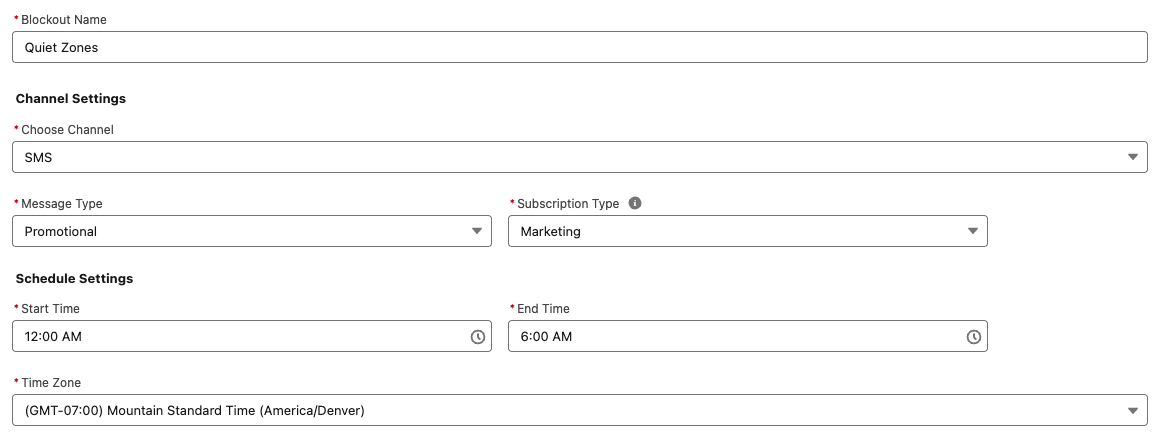
WhatsApp is not the only feature going global this Spring; SMS is joining the fun! With sending capabilities expanding to more than 50 countries, your messages can reach more customers. The new update includes identity validation to enhance trust and effectiveness and ensure reliable delivery. Additionally, blackout windows for SMS and WhatsApp allow you to respect your audience’s downtime, ensuring your messages land at the right time.


AI: Your Marketing Superpower

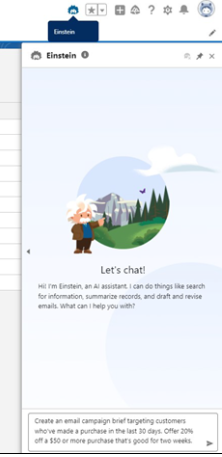
Salesforce is supercharging your marketing strategy with expanded AI capabilities, bringing unparalleled efficiency and creativity to your campaigns. With Agentforce, you can generate landing pages and email content in seconds, freeing time for more strategic tasks. Need to plan a campaign? Agentforce also crafts detailed campaign briefs, ensuring you start with a strong foundation. For Marketing Cloud Advanced Edition users, the Agentforce Campaign Designer (Beta) takes it even further, providing a single interface to edit and refine your campaign strategies, multi-channel flows, and content. These tools empower you to create more innovative, impactful campaigns.

A screenshot of a prompt in Salesforce Agentforce to create an email campaign.

Spring into Smarter Campaigns and Content

Marketing Cloud’s Spring ‘25 Release is focused on making campaigns smarter and your content work harder. From reusable personalization tools to seamless flows, Salesforce has designed the release to help marketers craft successful campaigns from start to finish.

Personalization That Packs a Punch

Stop spinning your wheels! Simplify your workflow and create tailored campaigns effortlessly with reusable content and personalization points. These features save you time and help you connect more deeply with your audience. Reusing merge fields with Expressions across campaigns will keep your messaging sharp, consistent, and right on target—making every interaction count.

Smarter Segmentation for Better Results

Segmentation is getting a makeover! The Spring ‘25 release features new tools that filter attributes—like new leads—right from the Campaign record, saving you time and speeding up your campaign’s delivery. Plus, you can preview up to 1,000 segment members before activating your campaign flow, giving you confidence in your targeting strategy.

Meet the CRM Prospect Object

Say hello to your new best friend: the CRM Prospect Object. It’s here to help you manage prospects like a pro. Create prospects with forms, nurture them automatically, and convert them into loyal customers. With account scoring based on engagement, fit, and intent, you can prioritize the leads most likely to convert.

Forms That Go Where Your Customers Are

Why make your customers come to you when you can bring the form to them? With the new ability to embed forms on external sites, you can deliver them to your hosted web page. After a quick setup in Salesforce and your external site, grab the form’s code block from its detail page and drop it into your site’s HTML. It’s as simple as copy-paste! (Just make sure your site supports iframes, is secure, and uses HTTPS.)

Flow Like a Pro

Managing Flows is easier and more intuitive than ever. You can handle more of the process directly from the Campaign record, track flow statuses in the new Marketing Calendar (fully integrated with the Sales Calendar), and view flow versions and failures to provide quicker, seamless resolutions. The new Campaign Stage field offers insight into the current campaign and keeps your team updated. Need a little extra customization? Add custom fields to your campaign briefs to make them truly yours.

Content Updates That Shine

Marketing Cloud is releasing new content creation features. With a new “Processing” content status, you’ll always know when landing pages, forms, and branding updates are pending publication. While changes can’t be made during this time, you can relax knowing your updates are locked in. Need to duplicate content? Cloned content is easier to manage by saving it in a shared workspace, keeping your team aligned. Consistent branding has never been more straightforward—assign default branding to your workspace to ensure emails, landing pages, and forms all have the same polished look. Ensure brand consistency across all your forms by assigning a brand, with forms automatically adapting to reflect your workspace, landing page, or external site branding.

And More!

  • Connect External Web Tracking to a Campaign allows existing customers to install new data kits and deploy new data streams.
  • Tracking and Source Information for Consent helps you comply with global laws and regulations to review the source and consent status change via the Consent Audit Trail in Data Explorer.
  • Setup Enhancements aim to save users time. They include tracking setup progress, installing or updating the Sales Data Kit, a guided experience for authenticating domains, and the ability to autogenerate an Identity Resolution Ruleset.

Learning how to use and customize Salesforce can be a rewarding experience, but it can also present unique challenges for individuals with disabilities. Whether it’s navigating the interface, processing complex data, or communicating effectively with colleagues, users with disabilities may encounter barriers that hinder their learning journey.

It’s a topic that’s near and dear to my heart, and I had the pleasure of presenting a session on this topic at WITNess Success, a Salesforce community conference.

In this blog, we’ll explore the experiences of individuals who have learned Salesforce while managing disabilities, highlighting their strategies, successes, and the resources available to support them.

Emphasizing the importance of accessible online learning modules to learn Salesforce while overcoming disabilities

The Salesforce community includes inspiring members who have shared insights into the experiences of individuals with disabilities learning Salesforce.

Here’s what they have to offer.

Akasia Parran

Akasia Parran, who has been legally blind for five years, found her path to a Salesforce career through the support of the Blind Institute of Technology and Salesforce’s accessible online learning modules.

Akasia completed her Salesforce Administrator certification in just six months. “I wouldn’t have a career without Salesforce’s continuing efforts to create accessible software,” she shares.

This accomplishment showcases the significant impact of accessible technology on career development​ (Salesforce)​​ (Trailhead | The fun way to learn)​.

Thomas Frantz

Thomas Frantz, Senior Manager of Accessibility Partnerships and External Communications at Salesforce, emphasizes the role of inclusive design and community support.

He has been instrumental in promoting accessibility within Salesforce and shares how the company’s efforts have helped him and many others thrive in their careers.

His work continues to foster a culture of inclusion and accessibility within the tech industry​ (Salesforce)​.

Leveraging Assistive Technologies

A range of assistive technologies is available to help users with disabilities learn Salesforce.

  • Screen readers like JAWS and NVDA help visually impaired users navigate the Salesforce interface.
  • Voice recognition software such as Dragon NaturallySpeaking enables users to input data and commands through speech, which can be particularly beneficial for those with mobility impairments or dyslexia.
  • Alternative input devices, like adaptive keyboards and mice, provide valuable support, allowing users to interact with Salesforce more comfortably and efficiently.

Seeking Personalized Support

One of the most effective strategies for learning Salesforce with a disability is to seek personalized support.

The Salesforce Trailblazer Community is a fantastic resource where users can connect with others who share similar experiences. Local user groups and accessibility resources provide additional guidance and support. By reaching out to these communities, users can access tailored advice, mentorship, and encouragement.

Embracing Universal Design

Inclusive design practices ensure that Salesforce training materials and resources are accessible to users of all abilities. Organizations should advocate for and implement universal design principles, ensuring their training content is user-friendly and accommodating. This includes providing alternative formats for materials, ensuring compatibility with assistive technologies, and creating an inclusive learning environment.

Building a Supportive Community

Fostering a culture of empathy and support within the Salesforce community is essential for empowering disabled users. Encouraging open dialogue about challenges and sharing strategies for overcoming them helps create a more inclusive and understanding environment. Users should feel empowered to share their experiences, learn from one another, and support each other in their Salesforce journeys.

Learning Salesforce with a disability may present unique challenges, but it is possible to succeed with the right strategies, resources, and community support.

Remember, your unique perspective is a source of strength, and your experiences can inspire and empower others on their learning journeys.

Consumers today want personalized experiences from beginning to end. This is why Sercante is thrilled to announce that The Home for Marketers has undergone a transformative name change. We’re marking a new era of comprehensive strategies focused on growth services. 

This is more than a rebrand! It’s a reflection of Sercante’s expanded vision and commitment to driving radical business impact across all teams inspired by our recent acquisition by Trilliad. Our new home at dreamforce will be a place for anyone in sales, customer success, and marketing to gather. Without further ado,  we are excited to introduce the Growth Lounge at Dreamforce 2024.

Introducing The Growth Lounge

The atmosphere and unique space that the Home for Marketers has offered in the past will still be returning to San Francisco, but we now extend an invitation to friends in sales and service as well. Renamed The Growth Lounge, this space will serve as the central hub for professionals across marketing, sales, and service to gather, spark inspiration, and exchange ideas on elevating customer experiences and through the latest technologies.

The Growth Lounge at Dreamforce is designed to foster deeper connections among these crucial teams. We’re promoting collaboration and alignment that are essential for delivering seamless interactions for consumers across any industry. This transformation reflects the growing recognition that customer experience is a shared responsibility across all departments.

Opening Doors to Sales and Customer Success

The Growth Lounge is dedicated to opening doors for sales and customer success teams. We want to be sure these teams have the tools and support needed to thrive. We believe growth is a collective effort, and by integrating the expertise of these teams, we can drive significant business outcomes. 

Sales teams can tap our insights and strategies to identify new opportunities, while customer success teams can enhance their engagement efforts for long-term customer satisfaction and loyalty. This cross-functional approach not only boosts individual team performance but also contributes to the overall growth of the organization.

Why the Growth Lounge Matters

When a consumer enjoys a seamless interaction with your brand, they shouldn’t be able to distinguish whether they are dealing with marketing, sales, or service. They are simply having their own personal experience, and here at Sercante, we strongly believe that it is that consistency that fosters loyalty and satisfaction. The Growth Lounge aims to facilitate the integration and cooperation by creating a safe space to foster new connections, discover tech to level up your game, and receive live support from experts.

Join us at Dreamforce

If you’re heading to Dreamforce this year, make sure to RSVP for your FREE 3-day pass to The Growth Lounge. 

This year, we are hosting the lounge September 17-19, 2024 from 8:00 a.m. to 4:00 p.m. each day at Yerba Buena Bar. And that’s not all! There’s so much more to join in on while at Dreamforce 2024.

Marketer’s Meet Up

We have set aside time to mix and mingle with our fellow marketers and we hope you do not miss out! Along with your free pass to The Growth Lounge, Sercante will be hosting a mix and mingle for sales, marketing, and customer experience professionals before Dreamforce even kicks off. 

RSVP today to save your spot!

Monday, September 16, 2024

6:00 – 9:00 PM

Yerba Buena Bar

Sercante After Party “In the Clouds”

There’s nothing quite like ending a day at Dreamforce than with a Sercante hosted party “In the Clouds.” We will be celebrating cross-cloud collaboration and business growth with all of you, along with a live band and DJ to keep the party going following day one of Dreamforce’s festivities. 

RSVP today so you don’t miss out on the celebration.

Tuesday, September 17, 2024

7:00 PM – 12:00 AM

715 Harrison

Our Fellow Sponsors

Not only do you have the opportunity to connect with several Sercante Dragons who will be in attendance, but we would be remiss without calling out our fellow Growth Lounge sponsors. When you stop by The Growth Lounge, you will also have the opportunity to meet up with other like-minded industry experts to discover new tools, tips, and tricks to take your business growth to the next level. 

Our sponsors will be hosting live demos, providing free support, and, of course, there will be tons of swag!

Don’t miss out on your chance to be part of a community committed to redefining customer experience through collaboration and innovation. We look forward to seeing you at Dreamforce and working together to take the standards of customer interactions further than ever before.

In the age of big data, effective audience segmentation strategies are the key to unlocking the full potential of vast datasets available to enterprise-level companies. Join me on a journey from data overload to impactful insights as we explore how enterprise segmentation strategy drives meaningful results. 

From demographic segmentation to behavioral analysis, we’ll delve into the various segmentation approaches that empower enterprise companies like yours to understand their audiences on a deeper level.

Segmentation strategies for enterprise marketers

Businesses today face a monumental challenge: how do they effectively harness and analyze the customer information that’s at their disposal? 

One powerful solution is audience segmentation. By dividing large datasets into smaller, more manageable subsets based on common characteristics or behaviors, segmentation enables enterprises to unlock the hidden value within their data and make informed decisions that significantly impact their bottom line.

 In this blog, we’ll examine the fundamental principles of segmentation, discuss its various applications, and provide practical insights into implementing segmentation strategies that deliver measurable results for marketers at enterprise companies. 

Demystifying Segmentation

At its core, segmentation is a strategy marketers use to divide their broad customer base into smaller groups based on shared characteristics, behaviors, or preferences. The end goal is that marketing has specifically targeted lists to tailor their efforts. With their extensive reach and scale, enterprise businesses typically have large target audiences spanning across different demographics, geographies, and industries. 

These audiences can encompass millions of consumers, making effective targeting and engagement a significant challenge. However, by having the marketing team segment its audience into smaller, more manageable groups, your business can tailor their marketing efforts, products, and services to meet customer needs.

Data Distilled

Identifying segmentation criteria determines the variables that will be used to divide target audiences into distinct segments. The choice of segmentation criteria depends on the specific goals of the business, the nature of the product or service being offered, and the available data. 

Standard segmentation criteria include geographic, behavioral, product interest, or demographic factors. Businesses can create meaningful segments that enable more targeted and effective marketing strategies by carefully selecting segmentation criteria that are relevant, actionable, and aligned with business objectives.

Geography

Geographic segmentation focuses on location or region. This is most often used when there is great variation between consumers based on their locale. 

One well-known enterprise to use this strategy is McDonald’s. In a recent article written by Two Teachers, they share that “By tailoring its products, services, and marketing messages to meet the unique preferences and needs of consumers in different regions, McDonald’s has been able to create a powerful global brand that resonates with people from all walks of life.” 

McDonald’s successfully uses geographic segmentation daily by tailoring their advertising and their menu items, to fit the local preferences. For example, here in the United States, we may seek the Big Mac, whereas in Japan, their HiruMac Teriyaki McBurger. Yum!

Behavioral

Behavioral segmentation includes purchase history, loyalty, and social engagement. This strategy focuses on consumer preferences and patterns, and Netflix is one of many enterprises using this method daily. 

According to Scientific American, “users discover around 80 percent of shows through algorithmic recommendations.” For Netflix, this is highly dependent on users sharing their ratings along with watching preferences and saves. With AI at our disposal, behavioral targeting is becoming even more popular and easier.

Psychological

Pscychographic segmentation prioritizes attitudes, values, lifestyles, and interests. This method targets a customer’s motivations and preferences. This is a broader method, as it can be challenging to target someone based on feelings, but some brands do it successfully. 

Let’s take a look at Nike. According to PDF Agile, Nike has very specific personalities they are targeting – men who go to the gym and love sports, women who exercise or prefer sportswear, and children who are also athletes. 

According to that article, “Nike focuses on the people who enjoy engaging in sports. The company is passionate about sports, and it makes products suitable for sports lovers.” As a result, all of their campaigns are focused on that type of individual.

Demographic

Demographic segmentation assesses age, gender, income, education, job role/title, etc. This strategy allows business to tailor their marketing efforts to meet the needs of a specific demographic. This is the easiest of the segmentation strategies as it is the easiest data to collect, and it’s also inexpensive while effective. 

Let’s look into the financial sector, which offers “different tiers of products and services based on income levels,” according to Faster Capital. Affluent customers are targeted and sold premium credit cards with high fees and exclusive perks, while a college student would be offered a credit card with low fees and a rewards program. 

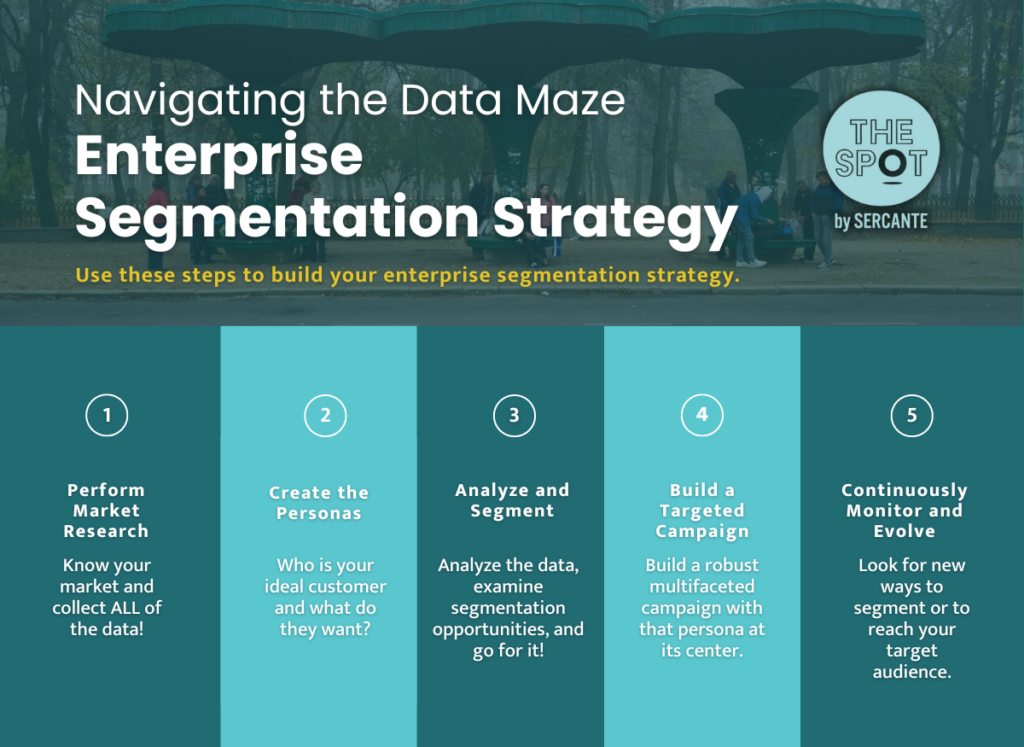
Navigating the Data Maze: Enterprise Segmentation Strategy

So, how do I get from point A to point Z? Let me walk you through it.

  1. Perform Market Research: Know your market and collect ALL of the data!
  2. Create the Personas: Who is your ideal customer and what do they want?
  3. Analyze and Segment: Analyze the data, examine segmentation opportunities, and go for it!
  4. Build a Targeted Campaign: Build a robust multifaceted campaign with that persona at its center.
  5. Continuously Monitor and Evolve: Once you’re done, keep going. Be on the lookout for new ways to segment or reach your target audience in new and creative ways.

Get help with segmentation strategies for your enterprise team

Segmentation strategies are invaluable assets for enterprises seeking to navigate the complexities of modern markets and effectively engage with diverse customer bases. 

Enterprises can gain deeper insights into customer preferences, behaviors, and needs by segmenting their audiences based on demographic, geographic, psychographic, and behavioral criteria. Moreover, the continuous refinement and optimization of segmentation strategies enable businesses to adapt to evolving market dynamics and stay ahead of competitors. 

As enterprise companies continue to embrace the power of segmentation, they will unlock new opportunities for growth, innovation, and customer satisfaction.

We’ve helped countless enterprise teams figure out the best approach to audience segmentation, and would love to solve your segmentation challenges, too. Reach out the the team at Sercante to get help with your team’s segmentation strategies.

No more posts to show