Category

Christina Anderson

As a buyer, we’ve all been there. You fill out a form, wait to hear from sales, and then maybe you receive a piece of content that isn’t relevant to you, or you find yourself repeating what you shared in the form later on a call. And what happens? You find yourself starting to feel less and less confident about the brand because your experience hasn’t been seamless. What we don’t think about as buyers is what the seller is probably experiencing in the CRM and how the data, or the lack thereof, is impacting their interactions with you. 

When the CRM is a roadblock rather than a revenue driver for sellers, it negatively impacts the buying experience in addition to sales performance. In today’s modern era, where buyer expectations are rising and marketing, sales, and customer success teams are under more pressure to drive growth with tighter budgets, it is critical that they prioritize optimizing core functions to deliver the best experience possible for buyers. An essential piece: optimizing the CRM seller experience.

To get the highlights on how to approach this, continue reading below. To get the full deep dive, watch Part III: A Better CRM for Sellers = A Better Experience for Buyers, of the Built to Buy series.
Built to Buy Part III
A Better CRM for Sellers Equals a Better Experience for Buyers
Speakers: Siso Ntuli, Senior Engagement, and Taylor Bacchus, Account Director
Watch Now

Why the Seller Experience Must Be a Growth Priority

For marketing, sales ops, and revenue teams, optimizing the seller experience isn’t just a nice-to-have operational fix. It is a critical growth lever.

  • Impact on Sales Performance: Unfortunately, the majority of a seller’s day is not spent selling. Only about 28% of their time actually is. (Salesforce) The rest of their day is consumed by manual data entry, hunting for siloed information, and navigating non-optimized processes. When the CRM experience is clunky, difficult for sellers to find what they need, not aligned to their sales process, or not reinforcing their training best practices, it slows them down, continuing to hinder the time they do have to sell, acting as a roadblock to their performance.
  • Impact on the Buying Experience: Buyers are not thinking: Am I in a marketing, sales, or customer success experience? They see one singular brand experience. When a CRM is friction-heavy, sellers can show up to calls sounding unprepared, while buyers find themselves forced to repeat information they already gave to marketing, making the brand seem not in tune with their specific needs. According to Gartner, 77% of B2B buyers reporting that their last purchase was very complex or difficult, it shows that these experiences are happening more often than growth teams probably realize. Any internal friction added erodes their trust.

To empower sellers to achieve higher performance and deliver the best buying experience possible for customers, optimizing the seller experience in the CRM is a must.

Through the Seller’s Eyes: How Marketing Can Help

The buyer’s experience is everyone’s responsibility, and marketers can play a pivotal role in helping to improve the seller experience. For marketers, when the CRM is aligned to core sales processes and optimized to how sellers actually work, it makes it easier to collaborate, streamlines the marketing to sales handoff, and ensures fewer leads fall through the cracks and more of the right leads form meaningful connections with your brand.

To fully understand what a seller’s experience is in the CRM, the strategy needs to be approached from the seller’s perspective and knowing what matters to them.

To a seller, more data does not always mean more value. When a lead hits their queue, they are looking for clarity on two simple questions: Who are you, and what should we be talking about?

Marketing can significantly improve the seller experience by shifting focus from data quantity to context quality. Instead of throwing more data over the wall, marketing should provide the connective tissue that tells the buyer’s story. This includes:

  • Prioritization: Is this a “hot” hand-raiser or someone in an explorative phase?
  • Relevant context: What specific content did they consume? Knowing if a prospect looked at a pricing sheet versus a top-of-funnel blog post changes the entire sales approach.
  • Laser-focused data: Provide only the key data points needed to frame a strategic conversation rather than overwhelming the seller with noise.

Having a conversation with sales to understand what questions they are asking themselves when a lead comes through, how they prioritize follow-up, and how they are gathering resources and data to create a strategy that will guide future sales conversations can help the marketing team focus on the right data when passing over leads and collaborating with sales to improve the seller experience.

A Strategic Approach to a Better CRM Experience

Aside from the initiatives that marketing can take, optimizing the seller experience in the CRM requires a mindset shift around how the technology is approached. Is it only seen as a database for sellers to enter information about their deals for reporting and forecasting, or is it seen as a powerful productivity engine that can support sellers in their sales process: arming them with insights for impactful conversations, streamlining and automating mundane admin tasks, and reinforcing sales training best practices?  

As Siso Ntuli, Senior Engagement Manager at Sercante, puts it: “The goal isn’t just to generate numbers. It’s to facilitate meaningful conversations”.
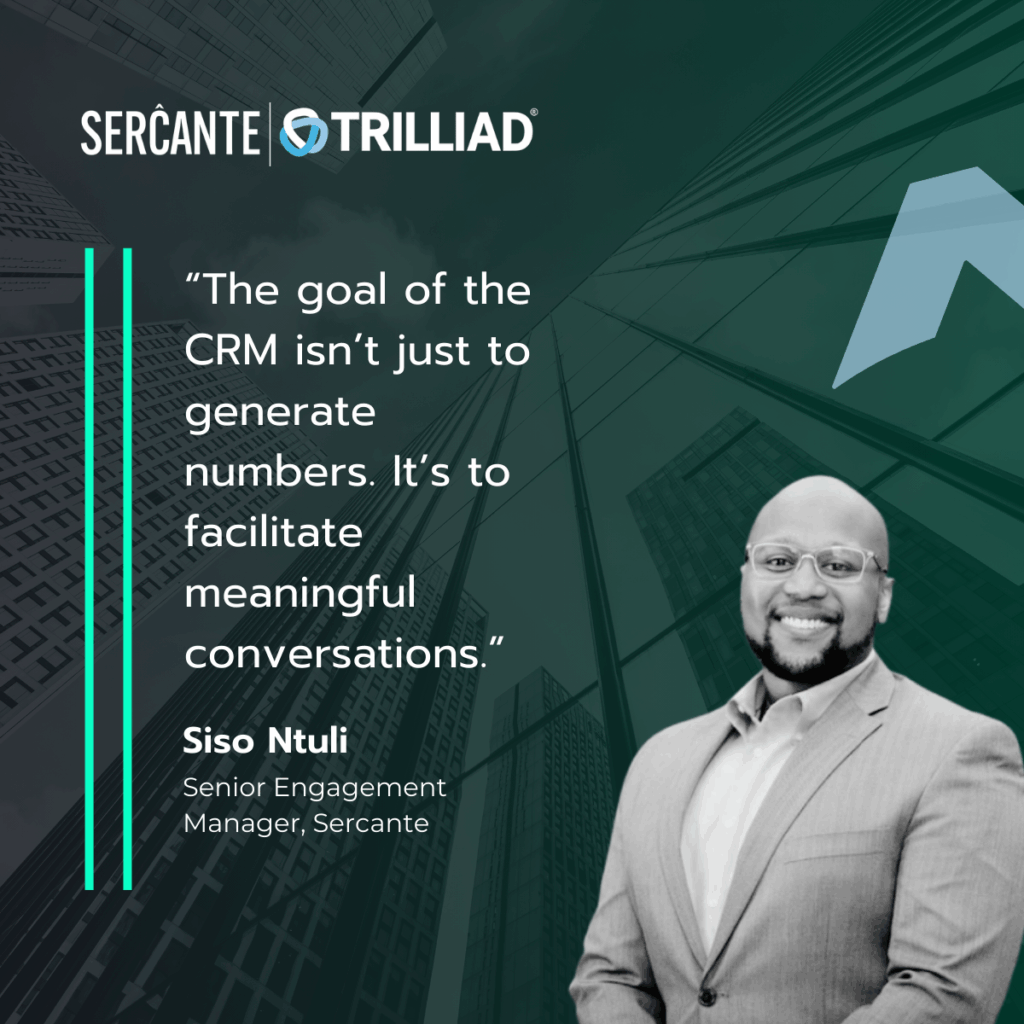
A quote from Siso Ntuli, Senior Engagement Manager at Sercante: The goal of the CRM isn't just to generate numbers. It's to facilitate meaningful conversations.

To turn your CRM into a growth accelerator, teams should take the following strategic steps:

  1. Map the processes: Outline every step of the sales process alongside the buying process to see how it currently aligns with your CRM setup to see where there is misalignment.
  2. Spot the silos: Identify swivel-chair work: tasks that force sellers out of the CRM and into spreadsheets or disparate systems.
  3. Identify opportunities for AI & automation: When thinking through the steps in the sales process, highlight the repetitive and mundane tasks that could be streamlined with AI and automation. This can free up time and brainpower for sellers, so they can focus more on the customer.
  4. Approach with a customer-centric mindset: As the team considers what improvements could be made to the CRM for the seller’s experience, ask: What will the end experience feel like to the buyer? Keeping this in mind will guide CRM optimization initiatives to be designed not just for internal processes, but for the experience the buyer expects.  

Shifting the mindset to approach the CRM as a system that can be a revenue driver rather than a roadblock for sellers, and keeping the buyer’s experience at the forefront, is the beginning of optimizing the CRM. The next step is understanding the current state of the CRM seller experience.

The CRM Seller Experience Scorecard

Getting a baseline from your sales team on what their experience and sentiment are with the CRM allows teams to identify in which areas they may want to improve first. 

Ntuli introduced the CRM Seller Experience Scorecard to evaluate the CRM across five key criteria:

  • Level of Adoption: Is the system easy to use, or do sellers dread logging in?
  • Level of Data Visibility: Is the must-have data readily available at their fingertips?
  • Level of Automation Use: Is automation being used to eliminate manual tasks?
  • Amount of Manual Data Entry: How much manual data entry is being done?
  • Data Reliability: Do sellers trust the data in the CRM?

Each area is rated on a scale of 1 – 10. Anything from 1 – 4 is the sign of a roadblock. Anything from 8 – 10 is considered optimized.

The CRM Seller Experience Scorecard

Download the CRM Seller Experience Scorecard to do this exercise with your team.

Any area that is identified as a roadblock shows teams where they might want to focus first. To ensure CRM optimizations are effective, Sercante’s Strategy Director, Jenna Packard, and Change Enablement Director, Debra Engels, recommend using a phased roadmap that considers the level of impact on the business, the level of effort to implement, and the effect it would have on the people involved. Tune into Part VI: Tech That Grows With You (Not Against You), of the Built to Buy series to hear their approach.

Built to Buy Part VI
Tech That Grows With You (Not Against You)
Speakers: Jenna Packard, Strategy Director, and Debra Engels, Change Enablement Director
Watch Now

A CRM Seller Experience That Drives Growth

A CRM that works against your sellers is a CRM that causes friction for your buyers. When sales can easily get what they need in the CRM, spend less time and brainpower on mundane tasks, be supported with reinforced training, and access key insights to have meaningful conversations, they have a seller experience in the CRM that supports meaningful conversations, building real connections that drive lasting growth. Giving today’s buyers the experience they expect.

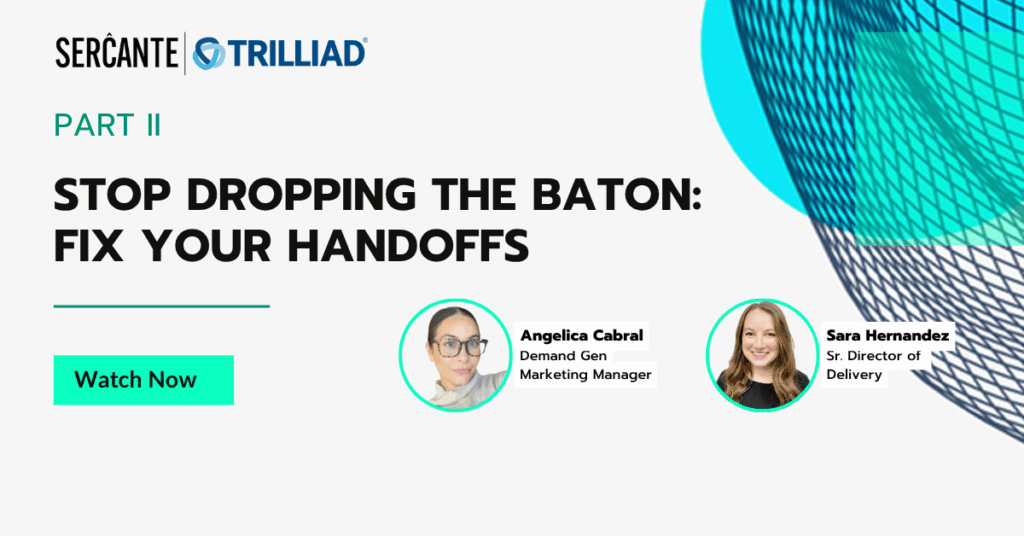
Clunky handoffs between marketing, sales, and customer success are one of the most common ways teams lose momentum, drop leads, and tank trust—costing you customers. Whether it’s a hot prospect that never makes it into a rep’s queue or a new customer who has to re-explain everything they shared in discovery, these gaps compound. Which is why aligning sales, marketing, and customer success for seamless handoffs is so critical to delivering the smooth journeys today’s buyers expect.

The Sercante team shared their insights about how to approach aligning across teams for efficient transitions in Part II, Stop Dropping the Baton: Fix Your Handoffs, of our series, Built to Buy Designing the B2B Journeys Your Buyers Actually Want. The highlights from the conversation are below. Watch the full episode to get all the details.

Part II Stop Dropping the Baton: Fix Your Handoffs
Watch Now
Speakers: Angelica Cabral Demand Gen Marketing Manager and Sara Hernandez Senior Director of Delivery

Clunky handoffs are stunting your growth

When a buyer is easily transitioned from one department to the next, it breaks down their trust in your business. This loss of trust ultimately hurts the longevity of their potential relationship with you, impacting customer lifetime value before it has a chance to grow.

Other statistics show the impact on revenue when the teams don’t have strong cross-team collaboration for smooth handoffs.

  • 10%+ of annual revenue is lost due to poor cross-team alignment (Demandbase)
  • 70%+ of leads are wasted because of delayed response times (Credofy)
  • It’s 5x cheaper to retain a customer than to acquire a new one (Forbes)—yet many teams fumble the transition from sales to customer success, weakening loyalty and shrinking lifetime value.

You have probably seen the above statistics before, so why does this matter now? In today’s modern era, buyer expectations are higher than ever. People don’t have the patience anymore to wait around to be followed up with, repeat themselves over and over, and if they feel like a company isn’t in sync with them, they’ll move on to the next option. 80% of buyers say that the customer experience is as important as the product itself (cropink.com, 2025), while 77% of buyers said that their last purchase was very complex or difficult (Gartner). 

Therefore, creating stronger alignment and fixing your handoffs isn’t something that can be ignored.

Approaching alignment with a customer-first mindset

Approach these conversations through a customer-first lens. Think about it, if you were your buyer, what does the journey feel like today? What could be done to make it better? Answering these questions will help to focus your marketing, sales, and customer success teams around the same outcome: a seamless buying process. As you identify your areas of opportunity, write them down, and then soon you’ll be able to start digging into the customer lifecycle and the processes happening internally.

In Part I, Walk Your Funnel Like a Customer, of the series, the Sercante team shared their expertise on how to approach this exercise and then map your customer lifecycle to think about how you can define your stages, establish who owns what, improve data visibility, and create feedback loops.

Part I: Walk Your Funnel Like a Customer
Watch Now

Walk your funnel like a customer.
Take one of your latest customers and look at every touchpoint they had with you. How long did it take before they were followed up with? Were they waiting at all? At any point was the handoff clunky? Write it down and you’ll most likely find a few areas for improvement.

Map your stages and define ownership of each stage
Internally, what are all the stages of the customer lifecycle? Who’s responsible for what? What’s the entry and exit criteria for each stage? What happens during the transition? Make it clear.

Get the right data in front of the right people.
Visibility is everything. If customer success can’t see sales notes, or sales can’t see marketing engagement, your buyer is repeating themselves.

Build feedback loops into your process.
Alignment isn’t one and done. Create recurring meetings and shared reporting to stay in sync and fix issues before they grow.

Establishing this customer-first lens and starting to map your customer lifecycle helps to set your team up for success for the deep-dive alignment conversations throughout the different areas of the funnel.

From marketing to sales: clarify expectations with an SLA

There are several aspects that go into having strong cross-team collaboration across marketing and sales: accountability, trust, shared definitions, metrics, and reports. It can be overwhelming when looking at it as a whole. Therefore, one of the best ways to get started, as Angelica Cabral said, “Put it on paper.”

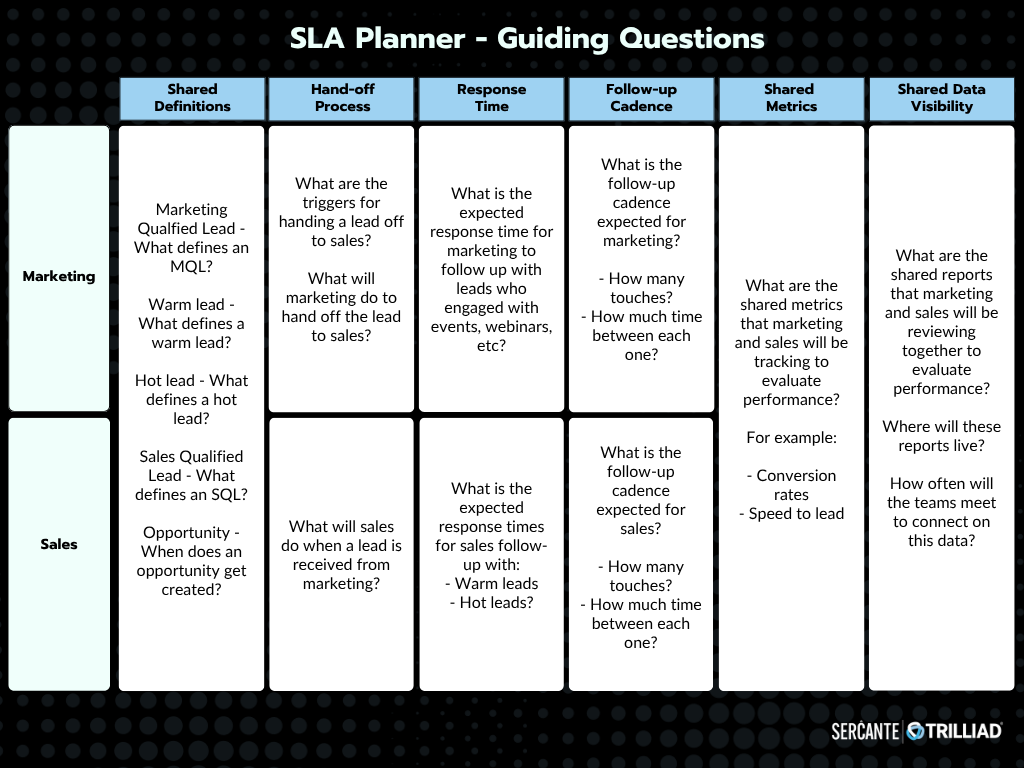
That’s where a Service Level Agreement (SLA) comes in. This doc helps teams define shared definitions, response expectations, and metrics for success. It doesn’t have to be fancy. But it does have to be clear.

Here are a few guiding questions to get started:

  • How do we define a Marketing Qualified Lead (MQL)? A Sales Qualified Lead (SQL)?
  • What triggers the lead handoff from marketing to sales?
  • What will marketing and sales do during the handoff?
  • What’s the expected response time from sales once a lead is handed off?
  • How many touches should sales make?
  • What metrics are both teams tracking (e.g., conversion rates, speed to lead)?
  • Where will shared reports live? How often will we review them?

You can use Sercante’s SLA planner to help organize all your thoughts and use that as a base for starting to build your roadmap.

Sercante's SLA Planner Guiding Questions

From sales to customer success: it’s a hand-hold

The customer lifespan doesn’t end at conversion. As a result, the collaboration between sales and customer success should act more “like a hand-hold” as Sara Hernandez put it, rather than a hand-off, to continue to grow the customer relationship.

To keep the experience connected, similar to the SLA exercise, the Sercante team shared the Post-Conversion Customer Alignment Guide that your teams can use to help approach the critical alignment conversations of how you’ll continue to coordinate in sync as the buyer converts.

Here are some guiding questions to get started:

  • What information needs to be shared from sales to customer success and vice versa?
  • What is the ideal timeframe to bring customer success into the loop?
  • Where should the deal context live (and how do we keep it updated)?
  • What KPIs are we tracking across sales and customer success (e.g., retention, upsell, NPS)?
  • How often are we meeting to review customer progress?

Having these conversations gives your team a starting point to understand where your gaps are, where you may already be aligned, and how you can start making improvements to deliver a better buyer experience.

Don’t stop at the planning phase

A word of caution to keep in mind is: after your teams have these alignment conversations and document everything, your alignment strategy then needs to be executed. According to the 2025 Trilliad Sustainable Growth Study, where 350+ senior B2B go-to-market leaders were interviewed, 1 in 3 admit that their alignment stops at the planning phase.

The 2025 Trilliad Sustainable Growth Study
The Integration Advantage: Sustainable B2B Growth Through Cross-Functional Alignment

Without actually executing your alignment strategy, change won’t happen, and your buyer will continue to feel clunky handoffs in the buying process.

Therefore, after you have your alignment strategy all set, take the next step and bring it into your technology, the systems that your go-to-market teams use every day, such as your CRM and marketing automation systems, to ensure that your SLA and Post-Conversion Alignment plans actually get put into practice for sustained alignment.

Seamless handoffs lead to scalable growth

At the end of the day, this isn’t just about process hygiene. It’s about the full experience your customer has with your brand and whether they choose to keep investing in that relationship.

By improving your internal handoffs, you can:

  • Deliver the buyer experience, your buyers actually want
  • Increase retention, loyalty, and customer lifetime value
  • Reduce lead leakage and missed opportunities
  • Strengthen cross-functional trust and accountability
  • And make it a whole lot easier to hit those revenue targets

Because when your teams are aligned, your buyer feels it. The experience is smoother. The trust is stronger. And the results? They start compounding. 

To bring in an expert resource and a strategic partner to help put your alignment goals in motion and build scalable processes that deliver seamless customer experiences, reach out to the Sercante team. We’ve helped thousands of teams succeed and bridge the gap between vision and reality for buyer experiences that build real connections and drive lasting growth.

Since hosting MarDreamin’ in person this year, we’ve gotten a lot of questions about if the virtual experience is still happening. The answer: Yes, but not like you remember. We’re bringing you a fresh take on the virtual conference, designed for how modern marketers on Salesforce learn and connect today. 

Instead of long days staring at the screen, this year’s experience is built around flexible content drops, live moments you don’t want to miss, and deeper conversations with your peers that continue long after the mic cuts out. You’ll be able to learn on your own time, engage when it makes sense for you, and walk away with ideas you can start putting into action right away with MarDreamin’: On Tap.

Introducing: MarDreamin’: On Tap

Throughout the month of November, we’ll be dropping fresh content and kicking off community conversations in Slack. No more “I’ll just catch the recording” or a stream of sessions that are just “on in the background”, this will be binge-worthy content released in bite-sized chunks that you can dive into when it’s convenient for you, kicked off with live moments you’ll want to show up for and meaningful conversations where you’ll exchange experiences, ideas, and get actionable takeaways that drive growth.

Let’s back up: What is MarDreamin’?

MarDreamin’ began during the pandemic as a virtual event—when Sercante partnered with industry leaders to bring the marketing community together at a time when in-person meetups weren’t possible. Since then, it’s grown into a thriving, global community of thousands.

As the founding team at Sercante believes in a tech-driven future where real connections thrive, marketing and technology evolve, but the human element and relationships remain the key to driving real growth—and MarDreamin’ is where the community can continue to build those deeper connections so we can all continue to grow together.

How is MarDreamin’ Virtual different this year?

We’re scrapping the three-day marathon “typical virtual conference” feel and evolving the experience to more closely align with how modern marketing pros on Salesforce interact with content and their peers in their daily lives, think: Netflix meets learning—with an afterparty in Slack.

The shift that brings the best parts of in-person events online

Three-day marathons that end in screen fatigue and attendance that means half-listening in another tab and then never making it to the replay isn’t how people truly learn or connect today. Therefore, we wanted to design an experience made up of content and community that fits your workflow and brings the best parts from in-person events online.

  • The unfiltered conversations in between sessions
  • The spontaneous moments
  • The people you connect with
  • The off-script, honest chats with peers who get it
  • Plus the sessions where you scribble notes so fast, you couldn’t read them later

It’ll be all the insights, game-changing strategies, and solutions you love from industry experts, Salesforce pros, and thought leaders in a way that meets you where you are today and for the future.

MarDreamin’ On Tap: The Drop + The Thread

MarDreamin’: On Tap will be content drops + community threads, spread across the month of November. 

The Drop – A bundle of binge-worthy sessions kicked off by a live moment you’ll want to show up for—AMAs, debates, and unfiltered confessions from marketers in the trenches.

The Thread – Slack threads that get unlocked when the live moment kicks off for insightful conversations that keep going long after the mic cuts out.

Why is MarDreamin’: On Tap a must-attend experience?

MarDreamin’: On Tap is your chance to see what the brightest minds in the industry have to say about all of the latest trends, and how they’re approaching solutions at their organization. It’s an opportunity to tap into their expertise, practical how-tos, and lessons learned from all the ways they have been pushing the boundaries with new ways to engage their customers, maximize AI, and innovate on the Salesforce platform.

  • Learn in a way that’s convenient for you—and retain the information. With impactful live sessions, and snackable content drops, it allows you to actually be present when it’s convenient for you and walk away with bite-sized actionable insights you can easily remember and bring back to your team.
  • Be inspired by peer-led content and build deeper connections. Hear from your peers who have been in the trenches and engage in community-led conversations in Slack to learn from each other in a way that fuels creativity and sparks your best ideas.
  • Maximize impact with real-world value. Every live moment, snackable session, and Slack thread, will be dedicated toward empowering attendees with practical strategies and solutions that they can apply to their customer experiences, role, and careers with the resources and technology they have available today.

Join the waitlist

Join the waitlist for first access to call for speakers, agenda updates, and when registration goes live. 

Then get ready to learn from and engage with marketers on Salesforce from across the globe in a way that fits your workflow for real connections and lasting insights that drive meaningful growth.

About MarDreamin’: On Tap

MarDreamin’: On Tap is a fresh take on the virtual conference—a series of live content drops and meaningful Slack threads made for how modern B2B marketers on Salesforce actually learn and connect today. Each drop delivers snackable insights from the pros in the trenches, plus unfiltered conversations that keep going long after the mic cuts off. It’s the best parts of an event—the bold ideas, the smart sidebars, the off-script hallway convos—delivered virtually in a way that fits your workflow, and sparks real growth.

It’s not a secret, so many growth teams, marketing, sales, and customer success, want to be using AI to streamline processes and elevate customer experiences, but when it comes to adoption, they’re a little stuck on how to get started with AI. 

After hearing a few of the experts at Sercante share their insights and having conversations with marketing leaders who have taken the plunge on applying AI to their initiatives, plus some first-hand experience with our own marketing, I was able to create this collection of tips for how to get started with AI. 

For those thinking, TLDR, let’s cut to the chase, I recommend downloading Sercante’s AI Starter Kit.

Tip 1: Pinpoint the pain

After attending a Connections 2025 Recap Webinar, Sercante’s Salesforce Product Director, Heather Rinke, advised the audience to get started with AI by writing down the biggest pain points they have today.

What is a manual, repetitive, and mundane task, sucking up your bandwidth?

Then consider, of those pain points, which is the lowest barrier to entry? What might have dependencies that might need a little more technology configuration, data setup, or the involvement of multiple departments?

Focus on the low lift, but quick-win initiatives first. Often, this would be an internal process that you could see how it performs, measure impact, and then scale from there.

[Watch On-Demand 2025 Connections Recap]

Tip 2: Do your research

As Laura Curtis, Senior CRM & Marketing Automation Strategist at Sercante said on the Connections Recap, “You don’t know what you don’t know.” 

In fact, 71.7% of non-adopters say “lack of understanding” is their biggest barrier to AI adoption (Influencer Marketing Hub AI in Marketing Benchmark Report). So if you’re feeling overwhelmed, you’re not alone. But it’s also fixable.

One way to start doing your research: Download the Sercante AI Starter Kit. It’s full of:

  • Real use case examples
  • Tips you can steal
  • Customer stories
  • Common pitfalls to avoid

Also, check out Rinke’s article, Five Tips for Getting Started with Agentforce.

Tip 3: Try out-of-the-box tools first

Don’t build the Death Star on day one.

There’s zero need to spin up a complex custom solution to get started. Many platforms—especially Salesforce Agentforce—already have out-of-the-box agents and AI functionality you can activate right now.

Use them.

Start small. Test how it works. See how it helps. Then decide if you want to scale or customize.

Tip 4: Get your data house in order (but don’t wait for perfect)

As Sercante VP of Growth & Alliances, Lauren Noonan,  shared on the Connections Recap, “Very few people buy a home and it’s perfect.”

You can start with AI even if your data isn’t a 10/10. But the better your data hygiene, the better your AI output.

Start by asking:

  • What data is critical for our first use case?
  • Where does it live?
  • What’s messy that could block us?

Then clean it as you go. Consider what other data optimizations you can make along the way to support the future AI initiatives on your roadmap. Like updating the kitchen before you renovate the whole house, and then mapping out what renovations make sense to do next.

Tip 5: Measure what matters

But what metrics are worth tracking to measure the impact of AI?

It depends on your use case, but as an example, Noonan shared the idea of using AI to generate a campaign brief instead doing it manually.

How long does it take you to do it manually versus using AI? 

Before getting started with using AI internally, get benchmarks for how long it typically takes your team do the processes you’ll be using AI for and then measure how long it takes after.

Now, the bigger question that Noonan posed is “What are you going to do with the time you get back and how will it impact the organization?”

If you’re trying to champion AI in your organization and get your leaders on board to support the initiative, answering questions like these can be a huge part of the business case—other than the increased efficiency, maximized output, and better customer experiences that’ll lead to growth.

Tip 6: Taking a crawl, walk, run approach to AI

As the CMO of Mogli, Christina Scarmeas, shared on my recent conversation with her on the Innovator Series about her team’s approach to using AI and Agentforce: 

“One of the biggest things we learned was, it’s okay to slow down and take a crawl, walk, run, approach to AI. Take a step back, look at the infrastructure that we need to deploy, and what we’re trying to do with these agents. Be okay with having a phased approach with expectations of how it’s going to be implemented, and if you put that infrastructure together and have a team that is dedicated to the strategy behind it, the results come fast.”

[Watch the Innovator Series]

This aligns with Rinke’s advice of starting with an initiative that is low-barrier-to-entry, perhaps something internal where you can point to productivity gains. 

A customer in the healthcare industry’s story of getting started with AI

For example, one of Sercante’s customers in the healthcare industry serving multiple practices implemented Service Agents with Salesforce Agentforce.

The Service Agents were set up to help the human agents query knowledge faster to support them in their calls to better serve patients and providers.

The solution has been rolled out to one practice area first, so the team can continue to learn and adapt the solution as needed before scaling to their other practice areas.

This is a great instance of a team starting small, with rolling out an AI-powered solution in one area of their business to then evaluate and see how it can be applied to the other areas of their business..

Tip 7: Build your AI roadmap

Once you’ve dipped your toe in, it’s time to zoom out.

As the Director of Marketing at Mogli, Evan Thomas shared on the Innovator Series:

“AI is the next evolution of technology and like all the tools that came before it, you have to have a plan. Just getting AI into your org isn’t going to fix it. You have to have a plan for that AI. What is it going to do for you? What is the process it is going to supplement or help your team focus on? What is the reason you’re doing it?”

Creating your AI Roadmap for quick wins and long-term success

Therefore, the next step is creating your plan or your AI roadmap. Identifying your pain points and use cases is the first step of this. The other piece of this is evaluating the customer lifecycle through the lens of the customer and identifying points of friction that could benefit from a solution to help your team scale and make the engagement seamless. However, as this can be overwhelming for teams to do, experts have started collaborating to put together resources for this.

Sercante’s session, AI Roadmap: The Strategy for Driving Growth with AI, is a great resource that includes insights from experts on how to approach creating a plan that:

  • identifies high-impact use cases
  • considers dependencies and how to address roadblocks
  • outlines key metrics to track for measuring success
  • clearly defines your path for quick wins and long-term success

Take advantage of training opportunities for creating your AI plan

Another option for getting started with creating your AI Roadmap is to get training. According to SurveyMonkey, 70% of employers don’t provide training on AI, even though 70% of marketers say it’s essential. Therefore, any time you can get training and advance your skills on how to approach AI or how to use it, take advantage!

One training offered is Sercante’s AI Workshop: Building your roadmap for real impact. This is the deep dive where the experts will guide you through creating your 30-60-90 day plan to help your organization get started with AI and scale for the future.

One last thing: Pick yourself in this era

CEO of Sercante, Andrea Tarrell, shared this sentiment during her opening keynote at MarDreamin’ Summit, encouraging the community to take action asking, “If not you, then who?”

This technology is at our fingertips, and it’s up to us to decide how we’re going to use it to streamline processes, meet customers where they are at scale, and create a truly seamless experience.

It’s time to get started with AI.

On June 30, 2025, Salesforce announced the class of 2025 Salesforce MVPs while also celebrating the 15th anniversary of the MVP program. Among the class was Sercante’s Account Engagement Product Director, Erin Duncan. In the Salesforce ecosystem, Erin Duncan is known as an inspiring leader, Marketing Champion, Speaker, Writer, and Trailblazer Community Group Leader. Her path to Salesforce MVP really starts back in 2018 with a 30 To Watch list and an exhilarating experience at Dreamforce.

Salesforce MVP Class of 2025 with Erin Duncan

Meet Erin Duncan

Erin has been in the Salesforce ecosystem for over a decade, and her passion for diving into new technology and helping fellow trailblazers succeed on the Salesforce platform has fueled her actions to obtain 11 Salesforce certifications, lead the Atlanta Marketers User Group, the Pardashians Slack group, and share her expertise and lessons learned through blog articles and speaking engagements.

How Erin’s story really began

When we spoke with Erin she said, “2018 was really the year that I caught the Salesforce Community bug. This was the year that Salesforce did a magazine with 30 Marketers to watch that I was in, and this was also the first year I spoke at Dreamforce. This really made me want to continue teaching others how to be successful in the community.” 2018 was also the year that Erin became a Salesforce Consultant, so that she could continue to lean into partnering alongside teams using the technology and help them to reach their goals on the platform.

After catching the Salesforce Community bug, Erin soon joined Sercante as a CRM and Marketing Automation Strategist, started writing blogs for The Spot (see all of her posts here), where she soon became a top contributor, and was recognized as a Salesforce Marketing Champion.

A strategic guide for growth

In 2021, Erin became Sercante’s Account Engagement Product Director, where she leads educating and enabling teams on all things Marketing Cloud (Account Engagement, Growth & Advanced Edition) to empower them to maximize the full capabilities of the technology to drive growth. 

As soon as a new feature or announcement is made for the product, Erin is rolling up her sleeves, diving in, and then presenting her recommendations and best practices to help customers navigate the ever-evolving technology.

A collage of photos featuring Erin Duncan speaking at Connections, MarDreamin', and engaging with the community at Dreamforce and Southeast Dreamin'.

Leading enablement for Marketing Cloud Growth and Advanced

Fast forwarding to today, Erin’s latest efforts have been leading the charge to enable the community on Salesforce’s latest marketing automation technology, Marketing Cloud Growth & Advanced Edition. 

After being a part of the Marketing Cloud Growth pilot team with Salesforce, Erin dove into the platform to test use cases, explore its full functionality, and compile her recommendations for how to get the most out of the tech to create personalized multichannel journeys that meet customers where they are.

Since then, Erin has written and collaborated on 30 blog articles (find them on The Spot here), led multiple speaking sessions, demos, and workshops, including presentations at Connections, Dreamforce, MarDreamin’, and Southeast Dreamin’. She also participated in leading three sessions for the Trailblazer Community’s Marketing Cloud Learning Bootcamp: Introducing the Marketing Cloud Growth, Data Mastery for Marketers: Leveraging Data Cloud, and Mastering MC’s Flow, Builders, Personalization, and Reporting.

Erin’s latest contributions

Erin’s latest resources she has put together for this initiative include an on-demand webinar, Elevating Your Campaigns with Next Gen Marketing Cloud, a recorded demo walking through the AI features that can be applied when creating a campaign with the platform, Agentforce for Marketing, and compiling the course materials for Sercante’s training course, Marketing Cloud Growth and Advanced Bootcamp.

The community’s testimonials of Erin’s impact

When nominating Erin for the Salesforce MVP program, community members shared the following:

“Beyond her impressive credentials, Erin is an inspiring leader and an influential figure within the Salesforce B2B community. She speaks at Salesforce and community events, manages the Pardashian Slack channel with over 10K customers and contributes by writing how-to content.”

“Erin has done all the things talking about MC Growth Edition – blog posts, supporting people in the Pardashian slack workspace, talks at community events (midwest, southeast, in addition to MarDreamin), community group meetings.“

 “Truly amazing! She continues to go above and beyond for the community.”

Follow Erin Duncan for her latest insights

We’re always looking forward to seeing what Erin will do next and continue to be wowed by her relentless zeal and passion for continuing to empower the community for success on the Salesforce platform.

To get in touch with and follow Erin for her latest insights, recommendations, and best practices, follow her on LinkedIn, join the Pardashians Slack community, and subscribe to The Spot.

What is the Salesforce MVP program?

The community nominates Salesforce MVPs, and they are selected for their expertise, leadership, and generosity. MVPs are re-evaluated each year for their contributions to the community and those who maintain this status after five years join the Salesforce MVP Hall of Fame.

In 2024, Sercante and Salesforce community experts hosted the 5th MarDreamin’, the virtual community conference for marketers on the Salesforce platform that brings together the brightest minds in marketing to share knowledge, network, and transform strategies for growth. For the first time, MarDreamin’ is being taken to a whole new level with the first-ever in-person event: MarDreamin’ Summit.

Save the Date for May 7-8, 2025, to join an exclusive group of marketers in the community with a balanced mix of all experience levels, plus Marketing Champions, and Salesforce MVPs to gather in Atlanta, Georgia, for a peer-led, curated experience, to have deeper conversations, build lasting relationships, and learn from one another in a way that the virtual world can’t replicate.

What is MarDreamin’ Summit?

MarDreamin’ Summit isn’t just a conference—it’s a curated, no-fluff gathering for marketers redefining what’s possible with Salesforce. This day-and-a-half conference will feature expert-led, interactive workshops, peer-led, insightful sessions and panels, and exclusive networking opportunities where the conversations you have and the people you meet, are purposed to genuinely elevate your marketing game.

Every attendee will get to contribute, have their voice be heard, and will leave with actionable strategies, practical insights, and lasting connections to elevate their careers and drive real business impact.

This is an experience built by marketers for marketers. Expect the real-talk, you’ve come to love at MarDreamin’, in a learning-centric environment, where real marketers share real stories and solutions using the technology you can access right now.

Tell me about the agenda

Here’s a sneak peek at what’s in store at MarDreamin’ Summit:

Day 1: Workshop Day – May 7 (Half Day)

Engage in interactive, hands-on training sessions led by Salesforce-certified instructors. These workshops are designed to equip you with practical skills and strategies to:

  • Maximize the Salesforce platform
  • Create personalized, seamless customer experiences
  • Drive measurable growth in your organization
  • Thrive in your role and propel your career forward

Day 2: MarDreamin’ Summit – May 8 (Full Day)

Day 2 is the main event! Look forward to an exhilarating summit of keynotes, panels, and insightful sessions across multiple floors. Highlights include:

  • Exclusive, in-person only content
  • Intimate networking experiences with peers and industry leaders
  • Insightful conversations to spark inspiration and build deeper relationships
  • Practical solutions to tackle the latest industry challenges
  • Live demos of the top solutions focused on learning what’s possible
  • Curated experiences where every unique voice contributes to community impact

Why MarDreamin’ Summit is a must-attend event

There are so many stellar community conferences out there, why should MarDreamin’ Summit be added to your calendar? Here are the top five:

  1. Build deeper community connections: Step into a room full of marketers ready to engage and share their experiences, a space where everyone brings unique insights to the table to foster meaningful conversations, elevated learning, and lasting relationships.
  2. Advance your skills with hands-on learning: Participate in interactive workshops tailored for all experience levels to be more efficient in your role, reach goals faster, and create even better customer experiences that drive real impact for your business.
  3. Be inspired by peer-led content: Hear from your peers that have been in the trenches and engage in audience-led discussions to learn from each other in a way that fuels creativity and sparks your best ideas.
  4. Maximize impact with real-world value: Every workshop, keynote, panel, networking experience, and session will be dedicated toward empowering attendees with practical strategies and solutions that they can apply to their customer experiences, role, and careers with the resources and technology they have available today.
  5. Thrive in a curated, impact-driven environment: All demos and solutions shared will be focused on learning what’s possible to empower attendees with methods to solve real marketing challenges with effective tools—without the pitch.

What makes MarDreamin’ Summit different from other Dreamin’ events?

MarDreamin’ has been known in the ecosystem as being the must-attend, virtual conference for marketers on Salesforce. It has connected marketers from across the globe with attendees from 55+ countries sharing their challenges, experiences, best practices, and proven solutions to learn and grow together. MarDreamin’ has been the blend of powerful technology meeting the human connection that drives growth in careers, business, and fuels attendees’ most innovative ideas to create un-matched customer experiences. 

Now we’re bringing this energy, in person for the community to connect like never before. MarDreamin’ Summit, is where marketers can gather with their peers on a deeper level, have their voice be heard, and feel supported by others who have been there and get it, and grow their skills to drive meaningful impact.

MarDreamin’ will still be held virtually in the fall.

For those unable to attend in May, MarDreamin’ 2025 will return virtually this fall with incredible content and community engagement. Stay tuned for details!

Want to Be a Part of the Action?

  • Pre-register: Seats are limited for MarDreamin’ Summit and the content will be carefully crafted and selected to support maximum learning for every attendee. Pre-register here to express your interest and share more about your goals for attending.
  • Be a Speaker: Have a great session idea? Start thinking about your proposal and visit the Call for Speakers page to learn more about speaking at MarDreamin’ Summit. Then stay tuned for when the call for speakers opens!

Don’t miss out on MarDreamin’ Summit!

Spaces are limited for this exclusive, in-person curated experience, so be sure to pre-register to request your seat. Whether you’re looking to advance your skills, build transformative connections, or gain fresh insights to drive growth, MarDreamin’ Summit is the place to be.

Visit mardreamin.com to pre-register and learn more.

Join the community in Atlanta this May for the curated in-person experience of the year for marketers on Salesforce!

About MarDreamin’ Summit

MarDreamin’ Summit is a curated gathering for marketers redefining what’s possible with Salesforce. With peer-led sessions, hands-on learning, and intimate networking experiences, where every unique voice is heard, in an impact-driven environment, attendees have the opportunity to connect and learn from each other on a deeper level—in a way the virtual world can’t replicate. Pioneered by Sercante and Salesforce community leaders who get it, the MarDreamin’ Summit experience cuts through the noise and inspires creativity, from real marketers, real insights, and real connections. 

No more posts to show