Category

Andrea Tarrell

“Executive Buy-In” – this is a phrase that truly puts the buzz in buzzword.  But contrary to most buzzwordy things in this industry, you really are going to need it to be successful with any marketing automation platform.

So what does this elusive notion of “executive buy-in” really mean in the context of Pardot?

1) You’ve got the budget

First, money.  You need the funds to put your plan in action, and this usually includes:

  • The subscription fees to Pardot
  • The time/salary cost of someone to design and deploy campaigns
  • Financial resources to get trained
  • Budget to pay an agency or a freelancer to complement the capacity and skills of your existing team

In 2012, Gartner predicted that marketing would have a bigger technology budget than IT, and this may finally come true this year.  According to their latest CMO Spend Survey, an average 3.24% of revenue goes to marketing tech spend, which pretty darn close to the 3.4% average that CIOs earmark for IT.

[Speaking for budgets, does your CFO give you mad side eye? We’ve got a blog post coming soon on how to win him or her over – be sure to subscribe in the left hand sidebar to get it delivered to your inbox.]

2) You share a philosophy

More important than sharing greenbacks is sharing a similar philosophy on what marketing automation is for.  My worldview:

Most traditional marketing tactics are either dead or significantly less effective.  A content-rich inbound marketing and sales strategy is the way to move the needle in 2017.  (And execution is everything.)

This kind of alignment between you and your leadership team can be tricky to measure, but I’d recommend taking a hard look at this.  Do you agree on what success looks like?  Is your idea of “good marketing” at least in the same ballpark?  

I totally whiffed on this one at a past company.  During the interview process, I asked about our service offering, our team, our clients, our growth metrics — and I was thrilled to hear that they’d already invested in Pardot.

But what I didn’t realize at the time was that the CEO had a very old-school vision of what email marketing could and should be.  In his mind, it wasn’t about scaling the reach of our content or effective targeting/personalization.  It was a numbers game about mass deploying the same canned pitch, and opt-in consent was a little detail we didn’t need to concern ourselves with.

The lesson learned?  Ask questions, and do not pass go until you can get on the same page about the strategy and philosophy that underlies your marketing efforts.

3) Your other boss, sales, digs it

It doesn’t matter who you report to on the org chart.  As a marketer, you will always have a second boss, and that is sales.  

Is your Chief Commercial Officer or VP of Sales in your corner?  You will quickly find that their support is key to maintaining – not to mention growing – your digital marketing footprint and budget. 

They’re also the key to getting your reps to act on the leads you’re generating and nurturing — and that is no small feat. 

How can you sell sales leadership on the vision of what Pardot can bring to the table?  What features will make their and their teams’ lives easier?  (Related: prioritizing projects that inspire the most love, for the least amount of effort.)

Pitching your team on Pardot 

Bottom line, getting executive buy-in for Pardot is critical to success, but I would definitely file this under “easier said than done.”

Knowing that you need buy-in doesn’t tell you HOW to get there — and that process is a little different in each organization.  If you’re struggling with where to start, I’d suggest thinking through:

  • What resources do I need to ask for?  (Not just license fees — what’s the all-in cost, in time and money?)
  • How can I paint of picture of the “future state” we can get to if we do this, and how can I leverage that vision to build excitement?
  • Who else might share my interest in moving this forward?
  • What obstacles and objections should I anticipate?
  • Who needs to say YES… and who can say NO?  (Usually two different answers.)
  • What is the worldview of the stakeholders I need to get on board, and how can I appeal to that?
  • Are there metrics or concrete outcomes I’m willing to commit to achieving if the organization agrees to move forward?

If you’re working on pitching Pardot, or recently tried (successfully or not-so-successfully), I’d love to hear from you in the comments.

What was most difficult?  What surprised you?  Any tips or lessons learned?

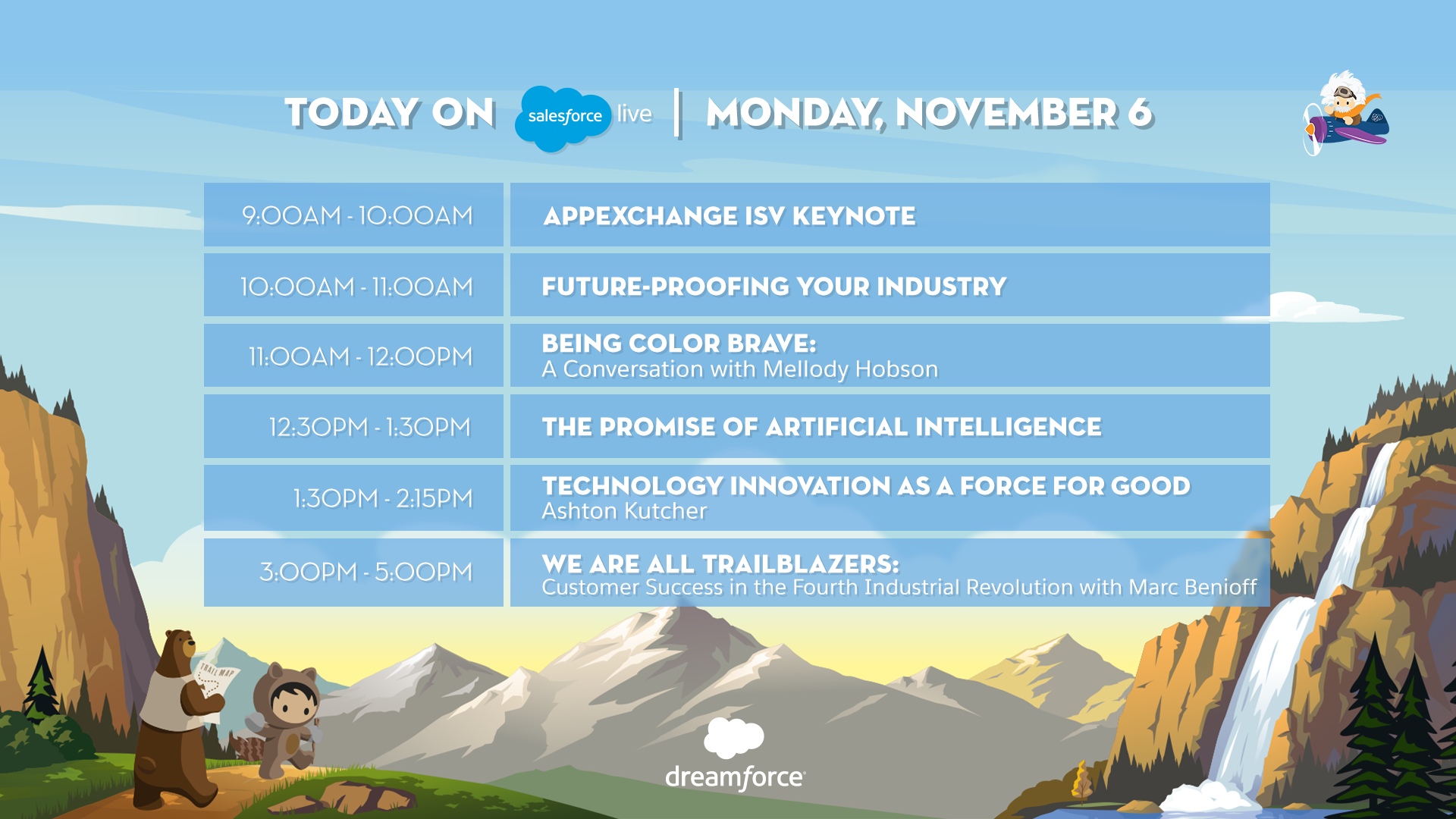
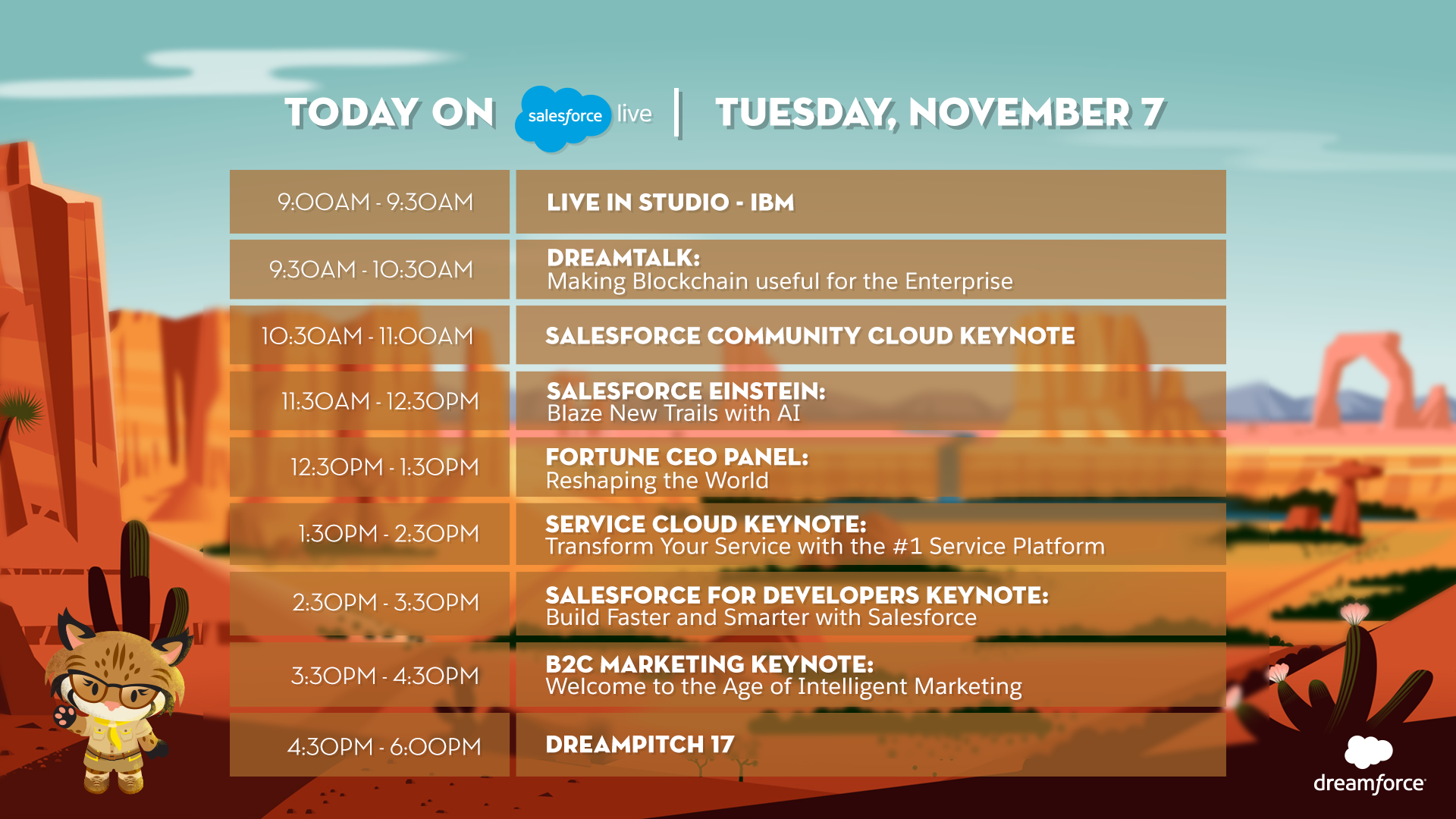
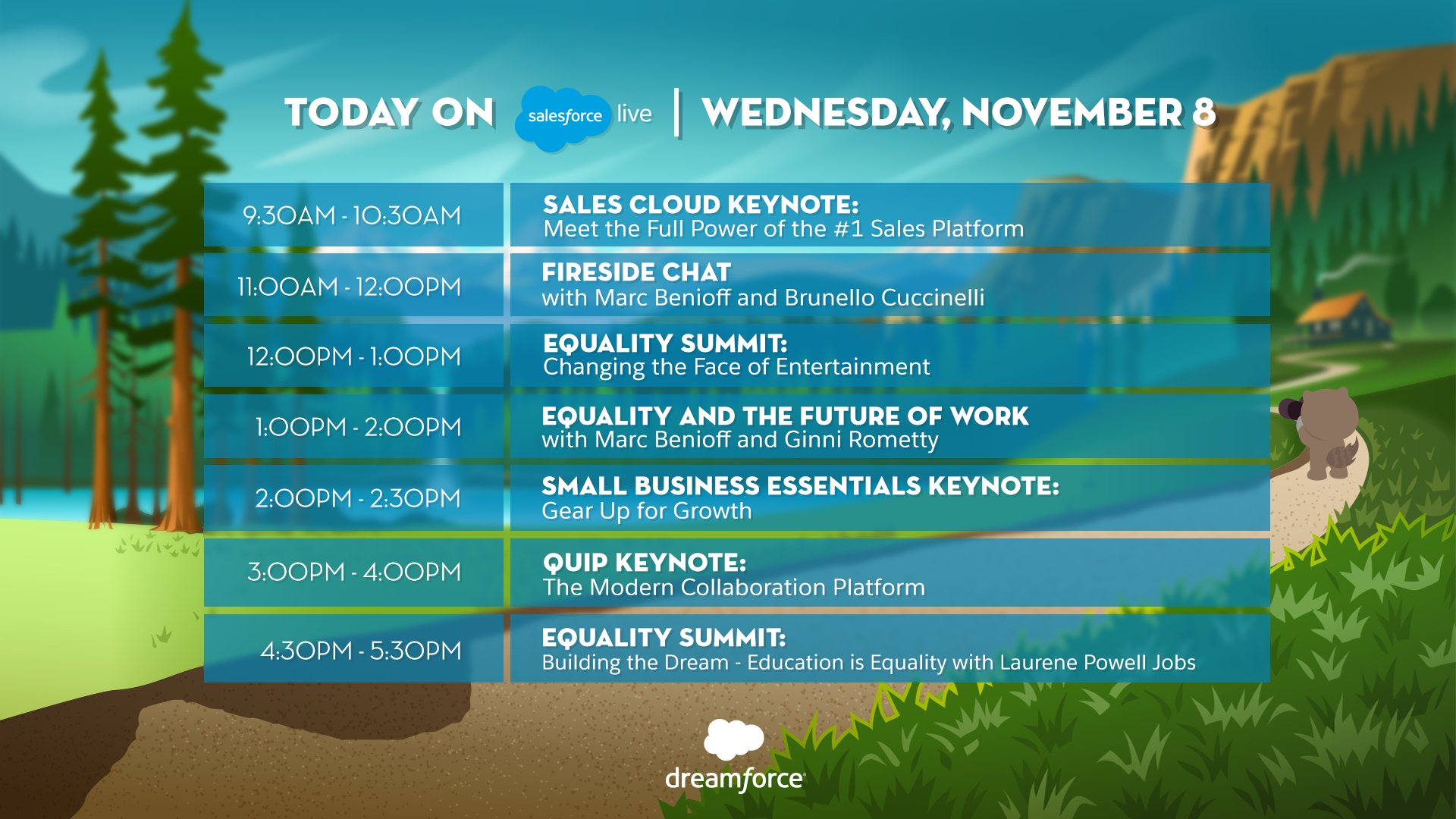
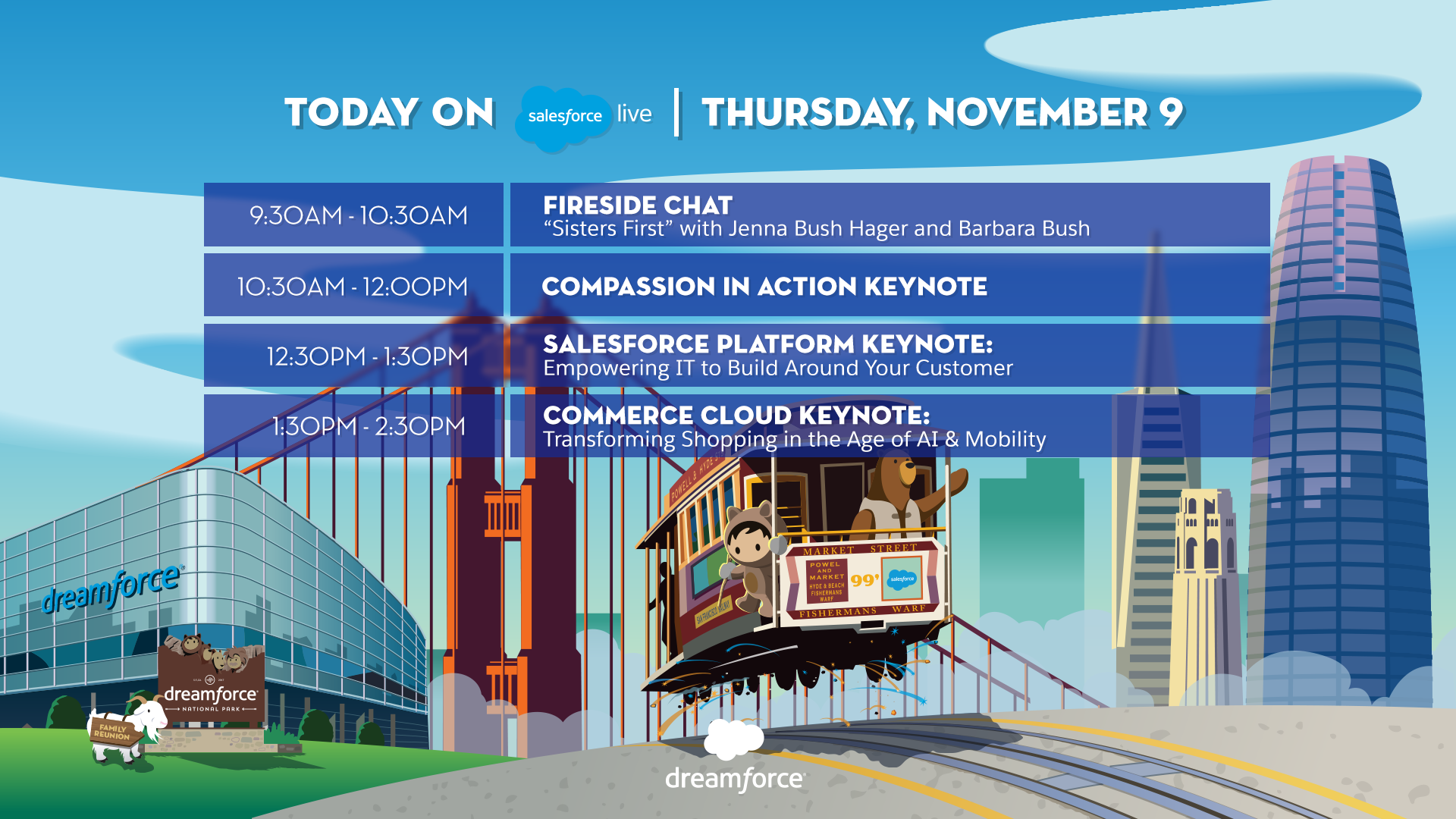
My heart skipped a few beats as I looked over the list of keynotes to be streamed from Dreamforce this year…

Monday

Tuesday

Wednesday

Thursday 

[Source]

Okay, but where’s Pardot?!

I felt the FOMO creeping in as I skimmed these lists over and over looking for Pardot.  After some frantic tweets and well placed GIFs, Pardot shared the deets.

It turns out, the B2B Marketing Keynote didn’t make it into these handy dandy cheat sheets, but it is, in fact, going to be livestreamed.

The B2B Marketing Keynote is Wednesday at 2:30 PM Eastern / 11:30 AM Pacific, and this is the spot to be: https://sfdc.co/b2bkeydf17stream

See you there?

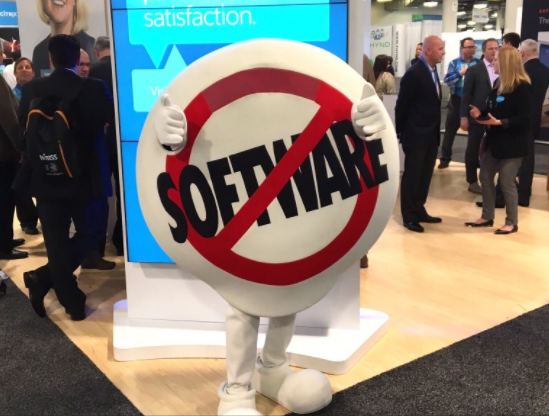
Dreamforce has all kinds of surprises, but there is one thing that is consistent year after year: mascots.  Lots of mascots.

With the debut of Trailhead, the number of mascots in the Salesforce ecosystem has exploded.  So here’s a guide to the furry, squishy things you might see walking around the Expo floor:

1) SaaSy

SaaSy is the ORIGINAL Salesforce mascot.  Born in 2008, back in the days when cloud and SaaS in general were still relatively new, SaaSy was a symbol for liberation from the traditional client server model.

Saasy.PNG

2) Chatty

The introduction of Chatty in 2010 heralded the debut of Chatter and the social enterprise.  Chatty made the perfect companion for SaaSy, truly a match born cloud.

Chatty

3) Astro

ASTRO!  Now we’re getting to the fun stuff.  Here’s what Salesforce has to say about Astro:

“As a true outdoors mascot, Astro can usually be found running around on Trailhead, helping everyone learn Salesforce.”

It’s very unclear to me what animal Astro really is.  A raccoon?  An ewok?  A bear?

What is clear though, is that Astro is adorable.  Fun fact: Astro is also non-binary and goes by they/them.

Astro

4) Einstein

I have mixed feelings about Einstein as a mascot.  He represents all things artificial intelligence, which is great and all that.  He’s adorable in illustration form…but if we’re being honest, he’s sort of terrifying in real life.

Einstein.PNG

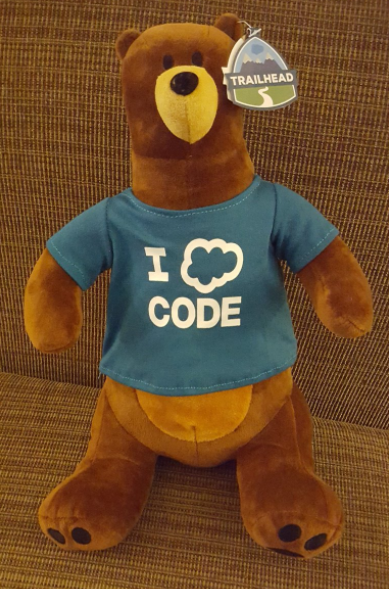
5) Codey Bear

Codey.  Code-y.  Get it?  Codey is the guy for makers and builders, tackling projects and getting his paws dirty.

He likes to chill in the developer forest, if you’re looking for him at Dreamforce.  My dog Murphy has also adopted him as one of her own.

6) Cloudy

Cloudy’s purpose is a little foggy to me (yep, lame pun intended).  Here’s the party line on her deal:

“Tech-savvy and smart, Cloudy builds innovative apps with the cloud. True to her name, she is always at the center of the action. Her confidence and steadfastness are second only to her in-depth knowledge of everything cloud-related. Cloudy brings out the best in everyone and encourages you to tap into your own unlimited potential.”

Um, sure.  Here’s Cloudy, ya’ll:

FX067_Cloudy.jpg

7) Appy

Appy is one of the youngest mascots, and was just born back in March.  She champions apps built on the platform and promoted via the AppExchange.  This girl is all about partnership.

I haven’t seen Appy out and about in “real life” form… so am very curious to see if she makes a debut at Dreamforce.

17586889_1266409730133720_4569203779643113472_n.jpg

8) Blaze

Blaze is a bona fide newborn!  She just debuted back in September.

Blaze is the pack leader of Cloud Services, and here’s what Salesforce has to say about her role:

“Blaze will help you access our adoption services. She’ll show you what you need with Accelerators, proactive engagement, interactive webinars, and events. And if you want a constant companion with you every step of the way, Blaze will be there with advisory services like architects, customer-centric design, innovation, and transformation.”

Blaze was last sighted on Adam Waid’s Twitter (@adamwaid), inciting rampant FOMO in everyone who can’t be at Dreamforce this year.

Blaze.PNG

Okay, but what about Pardot?

So… yeah.  This is a Pardot blog, about Salesforce mascots.  If you’re wondering:

“What member of the animal kingdom will come to represent our beloved platform?”

ME TOO.

I have seen no official guidance on this.  So this is rampant speculation.  Safe harbor, in case you base your buying decisions on mascots.

But these are contestants I would suggest:

a. Parrot

A Parrot is only one letter away from being Pardot.  And a parrot has bright and vibrant colors, promoting its brand, doin’ its thing, and soaring high.

b. Parbot

Pardot could very well be represented by a Robot — for all of the marketing and sales tasks we’re able to automate on the platform.

3. Pawdot

A PUPPY!  Like the ones Pardot is bringing to Dreamforce.  By far, the cutest available option I can think of.

What do you think?

What mascot can carry the torch on behalf of B2B Marketing Automation?  Who can represent Pardot in the sea of squishy, adorable things to take a selfie with at Dreamforce?

And did I miss any mascots?  It’s a lot to keep up with.

Let me know in the comments!

One of the things I love about the broader Salesforce community (our #Ohana) is the generous knowledge sharing that goes on.  It’s incredible – in addition to their “day jobs,” there are countless Salesforce ninjas who take time to speak at user groups, plan regional conferences, and write blogs about what they’ve built and learned on the platform.

We’re not quite there on the Pardot side of the cloud in terms of volume of content generated and general proclivity for paying it forward.  I’d love to see more from fellow marketing automation enthusiasts (read: those of us in the trenches, not “thought leaders”) so that we can all level up and built smarter, leaner, better marketing programs.

There are a few Pardot rockstars leading the way on this that I get a little “fan girly” over. Be sure to follow them and check out what they’re doing!

1) Jenna Molby

Jenna Molby is one of the most technically savvy Pardot admins I’ve come across. She’s based in Vancouver, and puts the rock in rockstar.  Some of my favorite content that she’s shared includes way to trick out native Pardot forms — especially:

Seriously, how awesome are those tutorials?

Want to follow her?  She’s most active on her blog.

2) Lara Black

Lara Black is the knight in shining armor of the Pardot B2B Marketing group in the Success Community.  She’s lightning fast with answering even the most head-scratching user questions — Pardot support should seriously pay this woman or at least send her a thank you basket full of Pawdot puppies for her contributions.  

I had the pleasure of seeing her speak at Texas Dreamin’, and she’s as genius in person as she comes off online.  

Want to follow her?  Check her out on the Success Community.

3) The Toms

This one is really a combined shout out to two people — Tom Ryan and Tom Hayward from Macram. Together, they run a Pardot agency based in the UK. (How cool is it that they have a company staffed entirely by Toms?  That tickles me.)

The Toms are really supportive and helpful on the Success Community, and they also have a pretty badass blog.

Want to follow them?  Take a gander at their blog.

4) Sara McNamara

Sara is like the Lara Black of Twitter, and comes to the rescue whenever anyone has a support question.  Even the troll-ish ones.

When it comes to detailed knowledge of the Pardot product, Sara reigns supreme — she notices the tiniest changes to the platform instantly and has a really good pulse on what what’s coming down the pipeline.

Also, her GIF game is spot on.

Want to follow her?  The spot to find her is on Twitter.

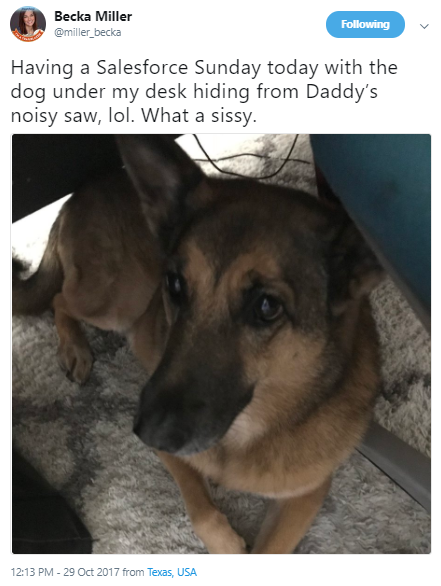
5) Becka Miller

Becka is a multi-channel Pardot wizard.   She’s active on the Success Community, she’s on Twitter, she runs a User Group, she’s spoken at Dreamforce — can I just say that DANG, this girl can hustle.

Also, she has a German Shepherd, which instantly earns 100 points for Gryffindor in my book:
german shepherds of salesforce
Want to follow her?  Check her out on Twitter

Bonus: Pardot Team Members & Consultants

This is a blog about awesome users championing Pardot.  If I expanded it to include detailed explanations of Pardot employees and consultants that are contributing to making this a richer and more vibrant community, this list would get really long.

But really quick… a few Pardot employees that are absolutely worth a follow:

And, there are a few Pardot consultancies/agencies who I really admire and who share great content (technically the competition I guess, but they’re still pretty cool):  

Share the Love: Who’s On Your List?

What Pardot peeps are on your must-follow list?  Who’s helped you succeed on the Salesforce platform?

Give ’em a shoutout in the comments!

Ironic: the farther I get in my career, the less I get to do some of the things I love and get to that elusive “flow state.”

(Alright maybe that’s not really “ironic,” but it at least meets the Alanis Morrisette threshold for the word.)

Flow, according to the all-knowing Wikipedia, is defined as:

The mental state of operation in which a person performing an activity is fully immersed in a feeling of energized focus, full involvement, and enjoyment in the process of the activity. In essence, flow is characterized by complete absorption in what one does, and a resulting loss in one’s sense of space and time

Have you found something like that?  Something that you can just get lost in and pour your heart into?

Don’t get me wrong — I am engaged and stimulated by what I’m working on — but there’s still a tug at the heartstrings for the familiar tasks I really enjoyed early on getting started with marketing.

The work that puts me in the zone

My foray into the world of marketing was as a content creator and strategist. There’s a well-weathered copy of Inbound Marketing signed by Dharmesh Shah sitting on the desk in my home office (the original one that sung the virtues of Digg and StumbleUpon), and it’s the first book that I read that made me think,

“Hey, I might want to do this marketing thing.”

With some practice, I turned into a blogging machine.  

I love writing — both the act of actually doing it, and strategizing around how written content can be deployed in a content marketing and lead nurturing program.

Writing is how I process new information, form opinions, and just generally organize thoughts.  It’s one of the few tasks I can lean into and suddenly wonder where an entire afternoon went.

But as I took on management roles, my ability to do “a few of my favorite things” changed.  And now today, as I’m trying to grow a business, I realize I need to spend a little less time on those tasks, and more time doing things like… sourcing accounting software. And drafting employment agreements.  And creating SOWs.

So how do you preserve that feeling of flow?

This isn’t a rhetorical question.  I don’t have the answer, and this blog isn’t going to unlock flawless tried-and-true secrets (sorry if that’s why you came here.)

But here’s what I’ve tried so far to strike a balance:

1. Call yourself out when you’re using familiar tasks to hide

We gravitate toward things we’re good at.  If you’re brutally honest with yourself, is focusing on the skills you built as an individual contributor sometimes an excuse for ignoring the scary or unfamiliar tasks looming on your ‘to do’ list?

2. Budget time to indulge in your favorite tasks, and stick to it

I give myself 5 hours a week to create content and track my time doing it in Harvest.  When I’m out of time, I’m out of time — and then it’s on to other priorities.

I fudge on this a little by reclaiming “dead time.”  At least half of the blogs on this site were written on my phone in the back of an Uber or commuting on the MARTA.

3. Teach others to do what you love

Be the exception to the “those who can’t do, teach” aphorism.  Share what you love with other people.

I get so much joy from teaching other people about content marketing and marketing automation.  There’s nothing I love more than seeing new team members or clients rocking it out, and getting to live vicariously just a little from their success.  (Hence the decision to go into marketing automation consulting.)

One word of warning when you assume the role of teacher: You may feel an overwhelming pull to micromanage like a total a-hole, because you know your subject matter really, really well.  Resist. Let your “students” find their own way and add their twist to things.  

4. Find new things that are your jam

When you push outside of your comfort zone, when you do the hard work of slogging through the grueling and the unfamiliar, you just might stumble across some new things you love. 

Sales I’m finding I surprisingly really like.  And public speaking — which used to reduce me to a puddle on the floor — is now something that totally triggers a flow state and it’s proved incredibly productive in helping me build a brand for my business.

What are your strategies for finding this balance?

Can you relate to this?  What types of tasks just put you in the zone and allow you to get lost in all the best possible ways?  How do you balance the beloved and the familiar tasks with finding that next challenge to stretch you?

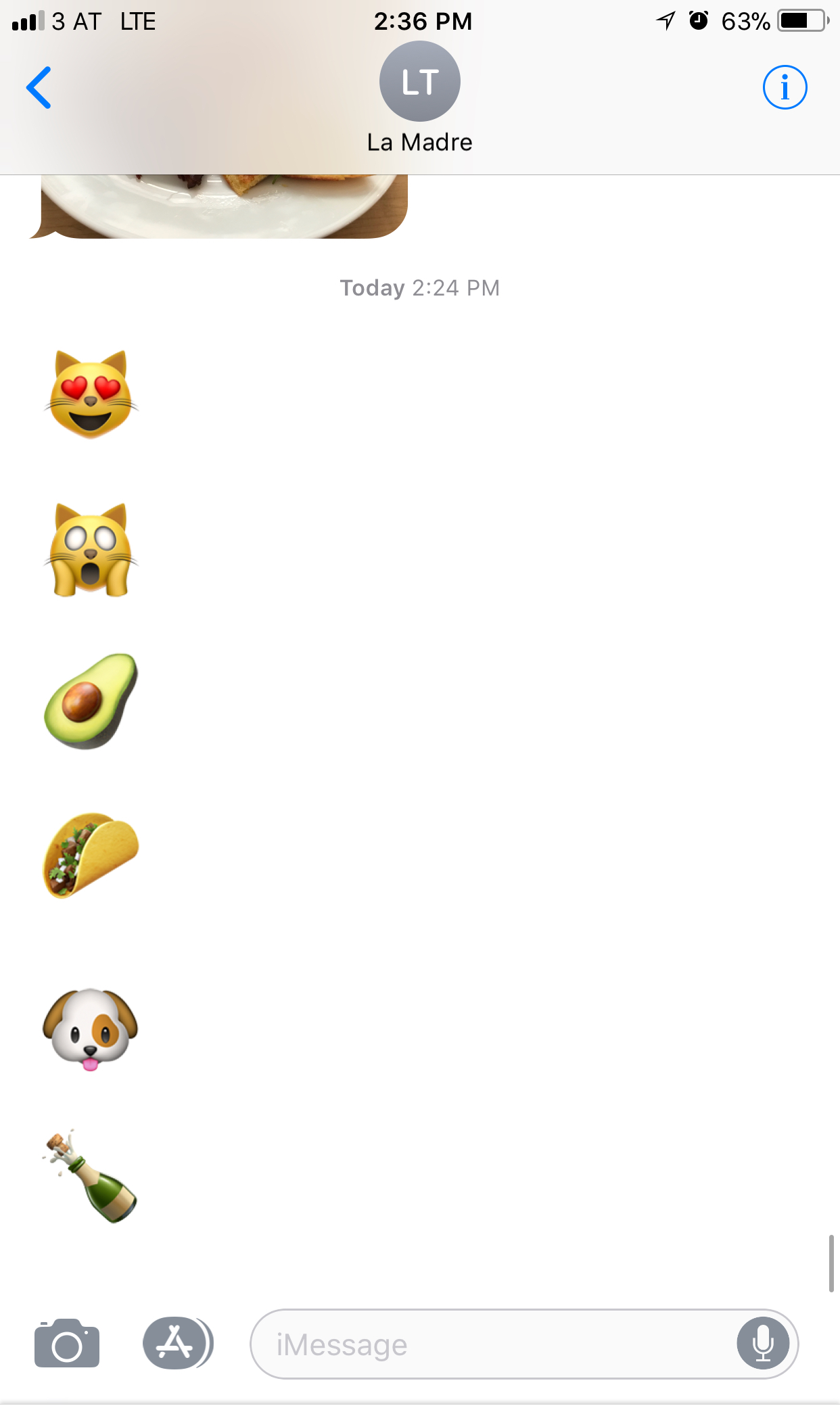
True story, this is an actual text I got from my mom recently:

IMG_6427.jpg

Um…yeah. I’m not sure what this means.

It might be some sort of code for “hey dude call your mother,” because I did, and the emojis didn’t actually come up.

Cryptic mom texts aside, emoji literacy is becoming something that digital marketers need to have on their radar. Emojis are one of the fastest growing “languages” in human history – and we’re seeing them make the leap from fun flair in SMS to mainstream marketing.

How emojis have crept into our vernacular

The modern emoji emerged in Japan in the late 1990s. The word “emoji” itself is actually a combo of the Japanese words for “picture” (e) and “character” (moji.)

There is truly nothing new under the sun, though — the first smiley face emoticons appeared on typewritten documents as far back as the 1648. (Yes, really. I mean it could have been a typo… read this and decide for yourself.)

The innovation of the smiley with a nose, i.e. :-), didn’t debut until 1982.

And now, here we are in 2017, scrolling through hundreds of itty bitty images our iPhone keyboards to find the emoji that perfectly captures the emotion we can’t quite explain in words.  What a time to be alive.

Should you give emojis a try in your marketing?

We’re all looking for ways to stand out in a crowded inbox. Could a colorful image catch your recipient’s eye in a long list of text only subject lines?

According to a report by Experian, 56% brands using an emoji in their email subject lines saw a lift in unique open rate.  Not too shabby.  Other data I’ve seen on emoji performance has had inconclusive results.  But it might be worth a try…

A few things to consider to help you determine whether this makes sense for your marketing:

1. Does it fit your brand voice?

What is the tone of your overall marketing and corporate comms? Is it buttoned up and formal? Light and playful? Somewhere in between? Keep your emoji-ing consistent with that, and use your brand guidelines as a filter for how and when to use a well-placed emoji.

2. Who else is doing it?

Scan your own inbox for emojis in emails. Is your competition leveraging them to stand out? If the answer is no – I actually see that as a really good thing. That means there’s an opportunity for you to differentiate.

3. How will you know if it’s working?

What’s the main metric you’re targeting? If you’re dropping emojis in subject lines, the best one would be open rate. This is an ideal use case for A/B testing, so that you can isolate the impact of the emoji.

Get your emoji on: HOW to actually do it

Ready to go?  Then here’s the how-to stuff:

1. Copy and paste into your Pardot template ????‍♀️

The easiest way to get an emoji into Pardot is with a little Ctrl + C, Ctrl + V action. Emojipedia is a great resource to select the perfect emoji.

Update: Amy has brought it to my attention that not ALL emojis available on Emojipedia will work in Pardot.  Working on testing this and coming up with a comprehensive list of “Pardot-safe” emojis, but in the meantime, here are some that have worked for me:

■ □ ▢ ▣ ▤ ▥ ▦ ▧ ▨ ▩ ▪ ▫ ▬ ▭ ▮ ▯ ▰ ▱ ▲ △ ▴ ▵ ▶ ▷ ▸ ▹ ► ▻ ▼ ▽ ▾ ▿ ◀ ◁ ◂ ◃ ◄ ◅ ◆ ◇ ◈ ◉ ◊ ○ ◌ ◍ ◎ ● ◐ ◑ ◒ ◓ ◔ ◕ ◖ ◗ ◘ ◙ ◚ ◛ ◜ ◝ ◞ ◟ ◠ ◡ ◢ ◣ ◤ ◥ ◦ ◧ ◨ ◩ ◪ ◫ ◬ ◭ ◮ ◯ ✁ ✂ ✃ ✄ ✆ ✇ ✈ ✉ ✌ ✍ ✎ ✏ ✐ ✑ ✒ ✓ ✔ ✕ ✖ ✗ ✘ ✙ ✚ ✛ ✜ ✝ ✞ ✟ ✠ ✡ ✢ ✣ ✤ ✥ ✦ ✧ ✩ ✪ ✫ ✬ ✭ ✮ ✯ ✰ ✱ ✲ ✳ ✴ ✵ ✶ ✷ ✸ ✹ ✺ ✻ ✼ ✽ ✾ ✿ ❀ ❁ ❂ ❃ ❄ ❅ ❆ ❇ ❈ ❉ ❊ ❋ ❍ ❏ ❐ ❑ ❒ ❖ ❘ ❙ ❚ ❛ ❜ ❝ ❞ ❡ ❢ ❣ ❤ ❥ ❦ ❧ ❶ ❷ ❸ ❹ ❺ ❻ ❼ ❽ ❾ ❿ ➀ ➁ ➂ ➃ ➄ ➅ ➆ ➇ ➈ ➉ ➊ ➋ ➌ ➍ ➎ ➏ ➐ ➑ ➒ ➓ ➘ ➙ ➚ ➛ ➜ ➝ ➞ ➟ ➠ ➡ ➢ ➣ ➤ ➥ ➦ ➧ ➨ ➩ ➪ ➫ ➬ ➭ ➮ ➯ ➲ ➳ ➴ ➵ ➶ ➷ ➸ ➹ ➺ ➻ ➼ ➽ ➾ ☀ ☁ ☂ ☃ ☄ ★ ☆ ☇ ☈ ☉ ☊ ☋ ☌ ☍ ☎ ☏ ☐ ☑ ☒ ☓ ☖ ☗ ☚ ☛ ☜ ☝ ☞ ☟ ☠ ☡ ☢ ☣ ☤ ☥ ☦ ☧ ☨ ☩ ☪ ☫ ☬ ☭ ☮ ☯ ☰ ☱ ☲ ☳ ☴ ☵ ☶ ☷ ☸ ☹ ☺ ☻ ☼ ☽ ☾ ☿ ♀ ♁ ♂ ♃ ♄ ♅ ♆ ♇ ♈ ♉ ♊ ♋ ♌ ♍ ♎ ♏ ♐ ♑ ♒ ♓ ♔ ♕ ♖ ♗ ♘ ♙ ♚ ♛ ♜ ♝ ♞ ♟ ♠ ♡ ♢ ♣ ♤ ♥ ♦ ♧ ♨ ♩ ♪ ♫ ♬ ♭ ♮ ♯ ♰ ♱

2. Understand how your emoji will come across (literally, not figuratively) ????

Be aware that emoji support across clients and operating systems is different. Emojis are based on Unicode characters – which is a computing industry standard that helps ensure consistent representation of text and symbols across digital devices.

For example, 8.2% of users are still on Windows XP, which is wholly e-NO-ji. If these folks get your email on a desktop client, they’ll see a big fat ☐ in place of the witty emoji you lovingly selected.  The BEST environment for emojis is Gmail, which always renders emojis (no matter what device or OS.)

You could spend days analyzing how your emojis will render, but is that the highest and best use of your time as a marketer?

My advice would be to look at the top 3 OS and mail clients your audience is using, and allow that to inform your decision. Emojipedia show you what will come across.

3. Use emojis to accent, not replace content ????

Because you can’t be 100% certain that your emojis will render, I’d recommend using them for flair/emphasis rather than actually replacing words. So instead of:

Wanna ????this?

Try…

Wanna pizza this? ????

If your content is blocked, that latter is much easier to understand.  The user will see:

Wanna pizza this? ☐

Instead of:

Wanna ☐ this?

That’s not a blank I’d want to leave to the human imagination.  Lots of ways to fill that one in.

4. Treat it like an experiment, and TEST IT!

Don’t just listen to your Beating Heart on Samsung Galaxy S8 (April 2017).

Get some data.

Use your A/B testing superpowers (available in Pardot Pro or higher) to gather data on how emojis actually move the needle on your results.  If you do run an emoji test, please share what you find in the comments!

Emoji or NOji: what are your thoughts?

If you do run an emoji test, please share what you find in the comments!

In the meantime, what do you think — are emojis a fun way to stand out in the inbox, or too cutesy for B2B marketing?  When is a well placed emoji appropriate?

No more posts to show