Category

Andrea Tarrell

A question I often hear from companies considering implementing Pardot:

“Should I buy Premier Support, or work with a consultant instead?”

This is a false dichotomy.

There are pros to having both resources — so ideally, you could have both.

If you’re under budget constraints (like many of us residents of the real world are) and can only choose one, then which direction you should go depends where you need the most help.

Things a Salesforce or marketing consultant is good for

Consultants ride shotgun with you while you ramp on the platform.  They can be hands-on, understand your business, and then help you execute on your sales & marketing plan.

Key ways they can help:

  • Shepherding you through an implementation
  • Making strategic recommendations on your tech stack outside of Salesforce & Pardot
  • Working with you to build campaign strategy
  • Adding to the content creation and graphic design chops of your team
  • Actually executing sends/building programs for you
  • Individualized training

If you anticipate needing a consistent, ongoing partner to support your team — someone who can make sure the trains run on time and hold you accountable to the goals you set when implementing Pardot — a consultant is the way to go.

Things Pardot Premier Support is good for

Premier Support is like having a cadre of Pardot and Salesforce wizes on speed dial.  It’s a great resource to have in your back pocket when you have an urgent need or a specific ask in mind.

Premier Support is super valuable for:

  • Responding to 3 AM batcalls
  • Doing technical things backendy things your consultant can’t — like fixing the incorrect link you just mass emailed to 50K people
  • Administering focused topical training called “Accelerators”
  • Giving you advice on the best way to build a program (although they can’t actually execute it for you)

If you need technical backup and short bursts of training/education if and when your team needs it — Premier Support has your back.

Deciding which you need for your business

The most common complaint I hear about Premier Support is:

“I forgot I had it and never used it.”

…but that’s not really a fair critique, is it?

The best resource for your business depends on what you’re looking for, and is the one that you will actually use to help you leverage Pardot to its fullest potential.

If you do decide to purchase Premier Support, USE IT.  Schedule those Accelerators (my clients love those) and use them as a first line of defense for one-off questions.

Similarly, if you work with a consultant, USE THEM.  Understand how they will complement your team — whether that’s with strategy, content, design, execution, reporting, or something else — and put them to work where they can have the greatest impact on your business.  Pick a proactive partner who will push you and make sure you get the value you were looking for from Pardot.

And with either option — make sure you’re using external resources to grow your in-house capabilities and learn.

Pardot Premier Support vs. a Salesforce consultant

What have you experienced when working with Pardot Premier Support and with a Consultant?  What do you see as the pros and cons of each?

Let’s hear it in the comments!

Okay, real talk time.

Not all companies who implement marketing automation are met with wild success and find themselves on the stage at Dreamforce.  For every one of those marketing automation poster children, there are 5 other that are looking at their annual software bill thinking to themselves:

“Was this really worth it?”

When Pardot implementations go south, it’s rarely (if ever) due to the technology itself.  It tends to be due to a few very predictable and preventable reasons:

1) Unclear processes

You can’t automate a process that doesn’t exist.

Are you making up a process right now?  Don’t automate it yet. Test it IRL, with a human being, and see what works.  When you have the process ready to roll, then let’s unleash the automation beast on your marketing and sales system.

2) Lack of content

Email marketing – particularly drip nurturing – requires a large volume of content.

Has your company created blogs, sales copy, or other content assets that could be re-purposed?  If not, who will this responsibility fall to? Can you bring in outside help?

3) No clear ownership

Marketing automation exists in a somewhat unique and nebulous space.  Who does it belong to? Is it IT, because it’s a piece of technology? Is it marketing, because it connect top of the funnel efforts to a sales handoff?  Is it sales, because ultimately it’s about sowing seeds of awareness and growing new leads?

The truth is, it can belong to anyone… but it needs to belong to SOMEONE who will take ownership and commit to getting shit done.

4) A missing piece of the trifecta: head, heart, and hustle

Marketing automation is challenging space.  The most successful teams build programs where head, heart, and hustle collide.

The “head” (i.e. brains) part of the equation:

  • Process expertise
  • Technical knowledge of Pardot and Salesforce
  • Dev resources to build next-level cool things on the platform

The “heart” needed to drive effective campaigns:

  • Vision & strategy
  • Campaign messaging
  • Bringing things to life with captivating creative

And the “hustle” side brings the other two together with:

  • Flawless execution/scheduling
  • Managing budgets
  • Measuring results
  • Staying two steps ahead and planning for the next set of initiatives

Does your team have all three of the above?  If not — how do you build that capability in house or add resources to complement your team members?

5) Lack of resources for post-implementation support

I recommend that all companies, especially those who are new to marketing automation, build in a budget for post-launch training, campaign development, and consulting.

A 30-day Quickstart is a great way to get up and running on the platform quickly.

But Rome was not built with a Quickstart.  Having a partner to assist you beyond this — to provide ongoing, proactive support and accountability — is incredibly valuable and helps ensure your long term success.

What other success factors lead to a successful implementation?

Have you seen other key ingredients for success?  Where have you or others that you know struggled with standing up a new platform?

Let’s hear it in the comments!

If you’re a long time reader, you know that I geek out about innovative ideas for Pardot, and from time to time advocate for an enhancement or two.

This holiday season, while sipping egg nog and catching up release notes, I revisited my wish list.  There have been lots of great features tucked into recent releases… and my short list of items for the next round include:

  1. Add “Completion Actions” ability to Email Templates
  2. Variable Date Function
  3. Allow Customization of Notification Emails (LeanData is a great 3rd party option to solve for this… but it would still be great to have this built into the product.)
  4. Parameter in Automation Rules for “is changed”
  5. Audit Trail on Pardot Emails, Forms, etc.
  6. Email Report Breakdown by List
  7. Record the number of direct replies from a Pardot sent email
  8. Create Pardot Blackout Dates that Suppress Engagement Studio Sends (particularly relevant for the holidays!)
  9. Allow for Operational Email sending out of Engagement Programs
  10. An option to export a PDF version of an email report (And emails! And Engagement Studio programs! Export all of the things to PDF!)
  11. Self-Service Link Correction After Email is Sent (Support has always been able to wield this superpower… can we get in on the action too?)
  12. Dynamic Content on Multiple Values

What items are on your wish list?  Let’s hear ’em in the comments!

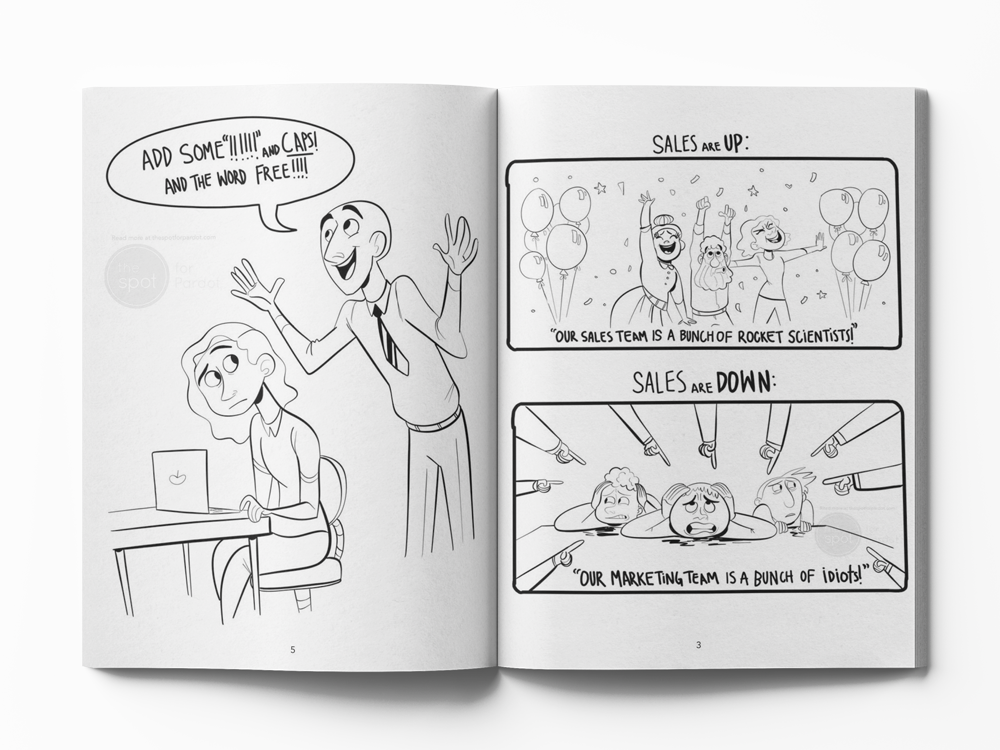
In the category of super random side projects, I made a coloring book.

Nope, not the kind for the little humans in your life.  It’s called “Why Marketing Automation Experts Drink.”

It’s a stress-relieving, fun, and slightly snarky adult coloring book for marketing automation professionals.  If you (or someone you love) works with Pardot, Salesforce Marketing Cloud, Hubspot, Marketo, Eloqua, or email marketing — this book is for you.

Marketing automation pros need a break

I wrote this because gosh darn it, sometimes it’s hard to be a martech pro.

We have to carry the torch for change and relentlessly advocate for a new way forward in our organizations.

Technology advancements move a mile a minute.

Our jobs look easy to people who know nothing about it.

And wow, is it emotionally exhausting to arm wrestle sales & finance every day.

Gift it to your martech & email friends

This little book is dedicated to the marketing technologists who are fighting the good fight, building stunning strategic campaigns, and moving the needle on results.

So when the going gets tough, pull out the sharpies and highlighters. I highly recommend this book for the moments when you need to blow off steam, reduce stress, or pretend like you’re listening during your 8th straight conference call of the day. (Not that you multitask during those or anything.)

Check it out on Amazon here.

Hope you enjoy it, and happy coloring!

(PS — Interested in a bulk order?  I can hook you up with a deal.  Ping me at [email protected])

I went into a retail store a few weeks ago. I should have known better, but I was leaving for a vacation and desperately needed to buy a swimsuit.

I poked around online, but realized what I wanted couldn’t be shipped in time. So I drove to the mall. Ugh, gross.

I browsed the store, desperately avoiding eye contact with the floor reps, until I gave up on finding what I was there for. I asked for help. A very nice 16-year-old associate listened to my questions, but had no idea what I was talking about.

So she got a manager. Manager confirmed they did have inventory, but it was in the back.

She radio’ed someone to go get it and walked away.

I stood there for like 10 minutes. That 600 seconds was punctuated by several chipper “Hi, have you been helped?” moments with a few other staff members.

Someone finally came. With the wrong product. I tried it on anyway, but it had like 4 inktags/anti-theft devices attached, and I couldn’t really tell how it would fit without them.

I tried to find the manager again for help, but no dice.

Finally I just gave up and left.

When our CX feels like the mall circa 2018

As B2B marketers, we create awesome, lead-magnet content. We map it to the buyer’s journey, and build out drips to stay top of mind for prospects.

When someone finally raises their hand in response, this is our moment to shine.

We are missing huge opportunities if our hard-earned leads end up being volleyed from rep to rep once they get in the door.

What opportunities are you missing if your smoking hot lead feels like they’re standing in the middle of the retail floor being asked “have you been helped” on an infinite loop and not getting the info they need?

The gap in data needed for effective lead routing

Salesforce makes it easy to build lead assignment rules based on explicit criteria — location, company size, industry, and more. Pardot lets you add things like demonstrated interest, level of activity, score/grade to make that routing even smarter.

Other critical things to ask are:

  • What other dependencies are there?
  • Are they already in the system, or is this a net new individual?
  • Is their account/company in Salesforce already?
  • Is there an open opportunity with their company, or has one of their colleagues bought from us in the past?

The answers to these questions are critical to get your leads to the right person at the right time.

This is even more pronounced if you’re ramping up an ABM strategy. For example, let’s say you’ve invested in targeted advertising, direct mail, and personalized content for a list of 1,000 named accounts. If a new lead from one of those organizations raises their hand… do you really want that hitting the BDR queue?

Where LeanData takes this to the next level

LeanData is lead routing on steroids. A few of our customers are using it right now… and my elevator explanation is that it extends native Salesforce/Pardot functionality to build more context into the routing equation.

When a lead comes in the door, LeanData looks for related Accounts and lets you build routing logic that references that account-level opportunity history, activities, cases/support tickets, and all of the rich context of marketing interaction that you need for effective routing.

It is such a powerful thing that Salesforce and Pardot have all of their data on the same platform — and LeanData taps into this shared repository of interactions to help match and appropriately route leads.

(Let me know if you’d like to see a demo in our sandbox environment — I’m geeking out hard on this platform right now.)

A different end to the retail story

Imagine if the swimsuit retailer in the story above (who shall not be named) had more context to manage their walk-ins, including any buying or browsing history from other people in the same household?

If they would have seen my hubby Googling “can you swim in the Dead Sea” (yes), known that I mostly buy things in/black/dark black/blackest black, known the category of product I was looking at, past time-to-close, and more — then the conversation when they tried to make a sale would have been very different.

Does this challenge resonate with you? What “whoops” moments have you run into with lead routing? Let’s hear it in the comments!

To read more on LeanData, check out their recent post on the Pardot blog.

As B2B marketers, we spend a lot of time thinking about the buyer’s journey… maybe drawing cool looking funnels… mapping our content to different decision making phases… you know the drill.

But this energy is wasted if your hard-earned leads end up being tossed like hot potatoes from rep to rep once they get in the door.

Often leads get sent to a BDR queue as the first line of defense, regardless of whether those prospects would be better served talking to someone else. The BDRs then call and email the lead in hopes to further qualify them and get the next meeting — and they treat them the same, whether they’re talking to Joe Schmoe or Oprah Winfrey.

Getting these leads routed to the right rep at the right time is essential for the kind of buyer experience people have come to expect.

Lead routing based on greater context

What would the ideal future state be for lead routing? In my mind, there are three questions to logically ask when determining which sales rep should act on a lead:

1. Who are they?

What demographic information do we know? Do we have data to indicate how well they match our ideal customer profile, like location, company size, industry, etc.?

2. What did they do?

What content did they interact with? What did they do, say, or request, and what does this tell us about intent?

3. Why does that matter?

What other dependencies are there? Are they already in the system, or is this a net new individual? Is their account/company in Salesforce already? Is there an open opportunity with their company, or has one of their colleagues bought from us in the past?

Salesforce’s native lead assignment rules make it easy to route based on #1. Pardot’s completion actions, groups, scoring, and automation rules make it easy to layer on #2.

#3 is something that a lot of marketers have been challenged to systematize. Sure, if you manually search by company name in Salesforce, you can usually identify any dependencies right away and get it to the right person. But how do you scale this?

Lead routing failures when you don’t have the full picture

Without a process for this, all kinds of “whoops” moments can emerge. Things like:

  • Two reps calling on different people from the same account
  • Hitting a new C-Suite lead with all of your prospecting firepower — only to have them respond “we already work with you guys”
  • A well-intentioned BDR outreach to a customer who’s having a complete service melt down
  • An engagement from a high value Named Account being sent to a BDR… after months of marketing and sales nurturing with the intent of getting it to a specific rep.

A better way forward for lead routing

If you’re cringing at any of those scenarios in recognition — you’re not alone.

This is a challenge several of my customers are wrestling with, and they’re using a company called LeanData to step up their game. You’ll be seeing more posts on this blog as I continue learning the ins and outs of it — but suffice it to say I’m low grade geeking out so far.

Is this something you’ve run into in your business? How do you manage complex routing scenarios and avoid those “oops” moments? Let’s hear it in the comments!

To read more on LeanData, check out their recent post on the Pardot blog.

No more posts to show