Category

Real Talk

It’s not a secret, so many growth teams, marketing, sales, and customer success, want to be using AI to streamline processes and elevate customer experiences, but when it comes to adoption, they’re a little stuck on how to get started with AI. 

After hearing a few of the experts at Sercante share their insights and having conversations with marketing leaders who have taken the plunge on applying AI to their initiatives, plus some first-hand experience with our own marketing, I was able to create this collection of tips for how to get started with AI. 

For those thinking, TLDR, let’s cut to the chase, I recommend downloading Sercante’s AI Starter Kit.

Tip 1: Pinpoint the pain

After attending a Connections 2025 Recap Webinar, Sercante’s Salesforce Product Director, Heather Rinke, advised the audience to get started with AI by writing down the biggest pain points they have today.

What is a manual, repetitive, and mundane task, sucking up your bandwidth?

Then consider, of those pain points, which is the lowest barrier to entry? What might have dependencies that might need a little more technology configuration, data setup, or the involvement of multiple departments?

Focus on the low lift, but quick-win initiatives first. Often, this would be an internal process that you could see how it performs, measure impact, and then scale from there.

[Watch On-Demand 2025 Connections Recap]

Tip 2: Do your research

As Laura Curtis, Senior CRM & Marketing Automation Strategist at Sercante said on the Connections Recap, “You don’t know what you don’t know.” 

In fact, 71.7% of non-adopters say “lack of understanding” is their biggest barrier to AI adoption (Influencer Marketing Hub AI in Marketing Benchmark Report). So if you’re feeling overwhelmed, you’re not alone. But it’s also fixable.

One way to start doing your research: Download the Sercante AI Starter Kit. It’s full of:

  • Real use case examples
  • Tips you can steal
  • Customer stories
  • Common pitfalls to avoid

Also, check out Rinke’s article, Five Tips for Getting Started with Agentforce.

Tip 3: Try out-of-the-box tools first

Don’t build the Death Star on day one.

There’s zero need to spin up a complex custom solution to get started. Many platforms—especially Salesforce Agentforce—already have out-of-the-box agents and AI functionality you can activate right now.

Use them.

Start small. Test how it works. See how it helps. Then decide if you want to scale or customize.

Tip 4: Get your data house in order (but don’t wait for perfect)

As Sercante VP of Growth & Alliances, Lauren Noonan,  shared on the Connections Recap, “Very few people buy a home and it’s perfect.”

You can start with AI even if your data isn’t a 10/10. But the better your data hygiene, the better your AI output.

Start by asking:

  • What data is critical for our first use case?
  • Where does it live?
  • What’s messy that could block us?

Then clean it as you go. Consider what other data optimizations you can make along the way to support the future AI initiatives on your roadmap. Like updating the kitchen before you renovate the whole house, and then mapping out what renovations make sense to do next.

Tip 5: Measure what matters

But what metrics are worth tracking to measure the impact of AI?

It depends on your use case, but as an example, Noonan shared the idea of using AI to generate a campaign brief instead doing it manually.

How long does it take you to do it manually versus using AI? 

Before getting started with using AI internally, get benchmarks for how long it typically takes your team do the processes you’ll be using AI for and then measure how long it takes after.

Now, the bigger question that Noonan posed is “What are you going to do with the time you get back and how will it impact the organization?”

If you’re trying to champion AI in your organization and get your leaders on board to support the initiative, answering questions like these can be a huge part of the business case—other than the increased efficiency, maximized output, and better customer experiences that’ll lead to growth.

Tip 6: Taking a crawl, walk, run approach to AI

As the CMO of Mogli, Christina Scarmeas, shared on my recent conversation with her on the Innovator Series about her team’s approach to using AI and Agentforce: 

“One of the biggest things we learned was, it’s okay to slow down and take a crawl, walk, run, approach to AI. Take a step back, look at the infrastructure that we need to deploy, and what we’re trying to do with these agents. Be okay with having a phased approach with expectations of how it’s going to be implemented, and if you put that infrastructure together and have a team that is dedicated to the strategy behind it, the results come fast.”

[Watch the Innovator Series]

This aligns with Rinke’s advice of starting with an initiative that is low-barrier-to-entry, perhaps something internal where you can point to productivity gains. 

A customer in the healthcare industry’s story of getting started with AI

For example, one of Sercante’s customers in the healthcare industry serving multiple practices implemented Service Agents with Salesforce Agentforce.

The Service Agents were set up to help the human agents query knowledge faster to support them in their calls to better serve patients and providers.

The solution has been rolled out to one practice area first, so the team can continue to learn and adapt the solution as needed before scaling to their other practice areas.

This is a great instance of a team starting small, with rolling out an AI-powered solution in one area of their business to then evaluate and see how it can be applied to the other areas of their business..

Tip 7: Build your AI roadmap

Once you’ve dipped your toe in, it’s time to zoom out.

As the Director of Marketing at Mogli, Evan Thomas shared on the Innovator Series:

“AI is the next evolution of technology and like all the tools that came before it, you have to have a plan. Just getting AI into your org isn’t going to fix it. You have to have a plan for that AI. What is it going to do for you? What is the process it is going to supplement or help your team focus on? What is the reason you’re doing it?”

Creating your AI Roadmap for quick wins and long-term success

Therefore, the next step is creating your plan or your AI roadmap. Identifying your pain points and use cases is the first step of this. The other piece of this is evaluating the customer lifecycle through the lens of the customer and identifying points of friction that could benefit from a solution to help your team scale and make the engagement seamless. However, as this can be overwhelming for teams to do, experts have started collaborating to put together resources for this.

Sercante’s session, AI Roadmap: The Strategy for Driving Growth with AI, is a great resource that includes insights from experts on how to approach creating a plan that:

  • identifies high-impact use cases
  • considers dependencies and how to address roadblocks
  • outlines key metrics to track for measuring success
  • clearly defines your path for quick wins and long-term success

Take advantage of training opportunities for creating your AI plan

Another option for getting started with creating your AI Roadmap is to get training. According to SurveyMonkey, 70% of employers don’t provide training on AI, even though 70% of marketers say it’s essential. Therefore, any time you can get training and advance your skills on how to approach AI or how to use it, take advantage!

One training offered is Sercante’s AI Workshop: Building your roadmap for real impact. This is the deep dive where the experts will guide you through creating your 30-60-90 day plan to help your organization get started with AI and scale for the future.

One last thing: Pick yourself in this era

CEO of Sercante, Andrea Tarrell, shared this sentiment during her opening keynote at MarDreamin’ Summit, encouraging the community to take action asking, “If not you, then who?”

This technology is at our fingertips, and it’s up to us to decide how we’re going to use it to streamline processes, meet customers where they are at scale, and create a truly seamless experience.

It’s time to get started with AI.

Learning how to use and customize Salesforce can be a rewarding experience, but it can also present unique challenges for individuals with disabilities. Whether it’s navigating the interface, processing complex data, or communicating effectively with colleagues, users with disabilities may encounter barriers that hinder their learning journey.

It’s a topic that’s near and dear to my heart, and I had the pleasure of presenting a session on this topic at WITNess Success, a Salesforce community conference.

In this blog, we’ll explore the experiences of individuals who have learned Salesforce while managing disabilities, highlighting their strategies, successes, and the resources available to support them.

Emphasizing the importance of accessible online learning modules to learn Salesforce while overcoming disabilities

The Salesforce community includes inspiring members who have shared insights into the experiences of individuals with disabilities learning Salesforce.

Here’s what they have to offer.

Akasia Parran

Akasia Parran, who has been legally blind for five years, found her path to a Salesforce career through the support of the Blind Institute of Technology and Salesforce’s accessible online learning modules.

Akasia completed her Salesforce Administrator certification in just six months. “I wouldn’t have a career without Salesforce’s continuing efforts to create accessible software,” she shares.

This accomplishment showcases the significant impact of accessible technology on career development​ (Salesforce)​​ (Trailhead | The fun way to learn)​.

Thomas Frantz

Thomas Frantz, Senior Manager of Accessibility Partnerships and External Communications at Salesforce, emphasizes the role of inclusive design and community support.

He has been instrumental in promoting accessibility within Salesforce and shares how the company’s efforts have helped him and many others thrive in their careers.

His work continues to foster a culture of inclusion and accessibility within the tech industry​ (Salesforce)​.

Leveraging Assistive Technologies

A range of assistive technologies is available to help users with disabilities learn Salesforce.

  • Screen readers like JAWS and NVDA help visually impaired users navigate the Salesforce interface.
  • Voice recognition software such as Dragon NaturallySpeaking enables users to input data and commands through speech, which can be particularly beneficial for those with mobility impairments or dyslexia.
  • Alternative input devices, like adaptive keyboards and mice, provide valuable support, allowing users to interact with Salesforce more comfortably and efficiently.

Seeking Personalized Support

One of the most effective strategies for learning Salesforce with a disability is to seek personalized support.

The Salesforce Trailblazer Community is a fantastic resource where users can connect with others who share similar experiences. Local user groups and accessibility resources provide additional guidance and support. By reaching out to these communities, users can access tailored advice, mentorship, and encouragement.

Embracing Universal Design

Inclusive design practices ensure that Salesforce training materials and resources are accessible to users of all abilities. Organizations should advocate for and implement universal design principles, ensuring their training content is user-friendly and accommodating. This includes providing alternative formats for materials, ensuring compatibility with assistive technologies, and creating an inclusive learning environment.

Building a Supportive Community

Fostering a culture of empathy and support within the Salesforce community is essential for empowering disabled users. Encouraging open dialogue about challenges and sharing strategies for overcoming them helps create a more inclusive and understanding environment. Users should feel empowered to share their experiences, learn from one another, and support each other in their Salesforce journeys.

Learning Salesforce with a disability may present unique challenges, but it is possible to succeed with the right strategies, resources, and community support.

Remember, your unique perspective is a source of strength, and your experiences can inspire and empower others on their learning journeys.

Well, we’ve got another TrailblazerDX completed and in the history books, and boy was it a good one. While it seemed like a smaller crowd this year compared to 2023, the vibe and excitement of what’s on the horizon for Salesforce was off the charts! 

I’ve never been more excited to be a part of this community. Keep on reading for my top takeaways from this year’s event and what this means for technologists. 

#TDX24: Get your sunglasses, cuz the future is looking bright!

We headed to San Francisco along with several thousand of our Salesforce friends for the annual Salesforce developer-focused conference. The conference took place March 6-7, 2024, and it included more than 300 technical sessions and hands-on workshops. The focus for the conference was the Einstein 1 Platform and the era of AI.

This year, Heather Rinke and I had the pleasure of presenting a session at TrailblazerDX along with our friend Arvind Raman, who is a director of partner product success, at Salesforce. The session is called 5 Tips for Getting Started with Data Cloud, and you can check out the recording on Salesforce+ here.

My top 2024 TrailblazerDX takeaways

These are the biggest takeaways I have from the 2024 TrailblazerDX conference.

Smart AI for smarter decisions

TrailblazerDX 2024 showcased Salesforce’s cool AI updates all made possible through the Einstein 1 Platform, making data work harder for businesses. Think better insights, smarter analytics — it’s like having a crystal ball for making savvy decisions. And bonus points for now supporting unstructured data! That’s going to truly be a game-changer.

Keeping it simple, keeping customers happy

Salesforce — the Customer Company — is about making life easier for businesses. They’re focused and committed to simplifying the complexity of connecting the dots between customer data via Data Cloud — across the entire tech stack and more recently multi-org, so you can give your customers that “wow” experience every time. No more guessing games — just happy customers.

Coding made easy

Forget the days of complex code. At TrailblazerDX 2024, Salesforce rolled out tools like Einstein 1 Studio that make coding a breeze. It’s like giving developers and administrators superpowers to create awesome stuff without breaking a sweat. And to be clear this goes beyond the clicks, not code theme in past years. We’ve gone from a click-based GUI to a conversational experience. 

Locking down security

Cybersecurity’s a big deal, and Salesforce knows it. They’ve beefed up security features to keep your data safe from prying eyes both externally and internally (check out data spaces). It’s like having a digital security guard on duty 24/7. 

Learning and growing together

TrailblazerDX 2024 wasn’t just about tech — it was about community — a community that broke the Guinness Book World Record for Einsteins. It’s a place where people come together to share ideas, learn new things, occasionally color, and grow together. Because when we collaborate, amazing things happen.

Why we techies should get excited

  1. Innovation at Your Fingertips: With Salesforce’s AI goodies, we tech nerds can get creative and drive innovation like never before. It’s like having a toolbox full of cool gadgets to play with.
  2. No more spreadsheets: Unified customer data means less hassle. No more manual list pulls, digging through endless spreadsheets, or joining multiple tables together using SQL — we can now spend our efforts actually using the data versus trying to get the data. One of my favorite sayings: Work smarter not harder!!
  3. Coding, Simplified: Low-code tools mean less time coding and more time creating awesome stuff. It’s like having a shortcut to building cool features without all the headaches.

What this means at Sercante 

As a trusted Salesforce partner, we’ve been keeping a pulse on the latest platform innovations and future planned roadmap developments and as a result, have refocused too. ICYMI you might have noticed we had a bit of a glow-up!  

“Our rebranded mission, the statement that guides us through our day-to-day, is to use Salesforce to create seamless digital experiences with radical impact. Looking toward our long-term goals, our vision is a tech-driven future where real connections thrive.”

Based upon the key takeaways mentioned earlier related to AI, keeping it simple, and less code — we see a future where it will be less about the how and more about the why. The why is strategy.  

Of course, you’ll still find Salesforce consultants performing hands-on keyboard work on our team, but we’re so much more than that and will continue to lean into it. We’re focused on the human side of technology with strategies that get to the heart of impactful growth. As I stated at the beginning, there has never been more of an exciting time to be part of the Salesforce ecosystem and Sercante. 

So, in closing, I hope you enjoyed my top takeaways from TrailblazerDX 2024, served up with a side of Sercante expertise. Send us a message and let’s make some magic happen together!

Dragons Out! 🐉

Product Note: Marketing Cloud Growth and Advanced are editions of Marketing Cloud Next and have also been referred to as Agentforce Marketing.

Marketing Cloud Growth Edition is here and its infrastructure represents a fundamental shift compared to Account Engagement. While Account Engagement is “near core,” Marketing Cloud Growth Edition is built on the Einstein 1 platform and leverages Data Cloud, Flow, and Einstein capabilities. This signals a shift in the skills that marketers will need in the future. But don’t worry, we’ve curated some resources to help you get a head start.   

Is Marketing Cloud Account Engagement being retired? 

Absolutely not. This question has come up in just about every social post that I’ve seen and has been addressed in detail in the blogs below by Andrea Tarrell and Erin Duncan, so we’re not going to dig too deeply into it here. 

The short reason is that Marketing Cloud Growth Edition is a distinct offering geared toward small to medium-sized businesses (SMBs). However, innovations and features from this product will make their way into Marketing Cloud Account Engagement, so there will be a need for marketers to evolve their skills.

What are these new skills that you keep mentioning? 

After playing with Marketing Cloud Growth Edition a bit, three areas really stood out to me.

  • Audiences are created using Data Cloud
  • Assets are built with Experience Cloud
  • Automations (including email series) are powered by Salesforce Flow

While Data Cloud, Experience Cloud, and Flow might sound a little scary, these represent great opportunities for Account Engagement pros to develop new skills. To make things even easier, Salesforce has provided excellent learning resources for all these topics in Trailhead. Let’s get started!

Data Cloud

Data Cloud is a dream come true for marketers. Imagine having all your customer data from different applications centralized in a single location and available when creating your marketing segments. Imagine no more as that’s exactly what Data Cloud delivers.

Marketers need a general understanding of the tool and key terminology. They will also need to be able to utilize Data Cloud to build segments.

Key Data Cloud Terms

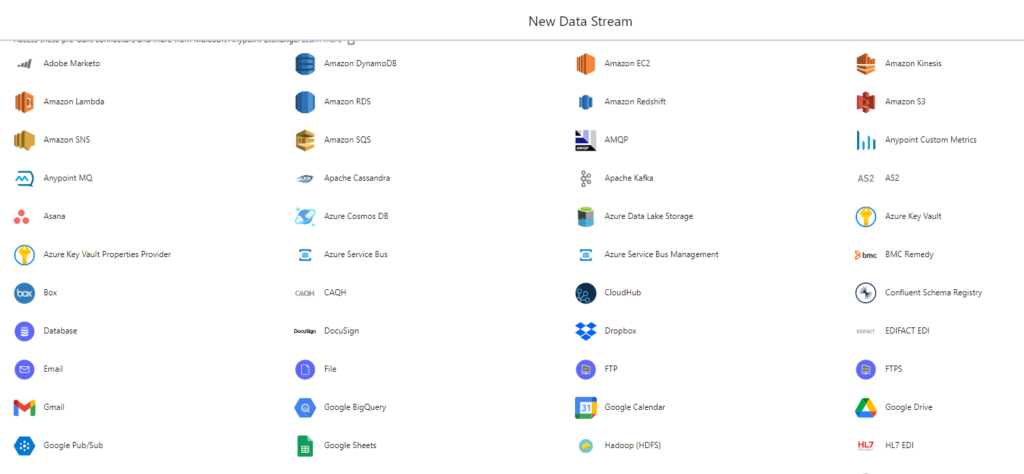
  • Data Stream: A data source ingested into Data Cloud. Examples include Salesforce CRM and Amazon S3 – and many more.
  • Data Lake Object (DLO): A storage container for the data ingested into data streams.
  • Data Model Object (DMO): A Data Cloud object created from data streams, insights, and other sources.
  • Customer 360 Data Model: Data Cloud’s standard canonical data model. Data ingested into Data Cloud is mapped to DMOs found in the Customer 360 Data Model.
  • Starter Data Bundles: A Salesforce-defined data stream that includes mapping to the Data Cloud DMO structure.

Here are some of the sources that can be used as data streams in Data Cloud

Recommended Trailhead Modules

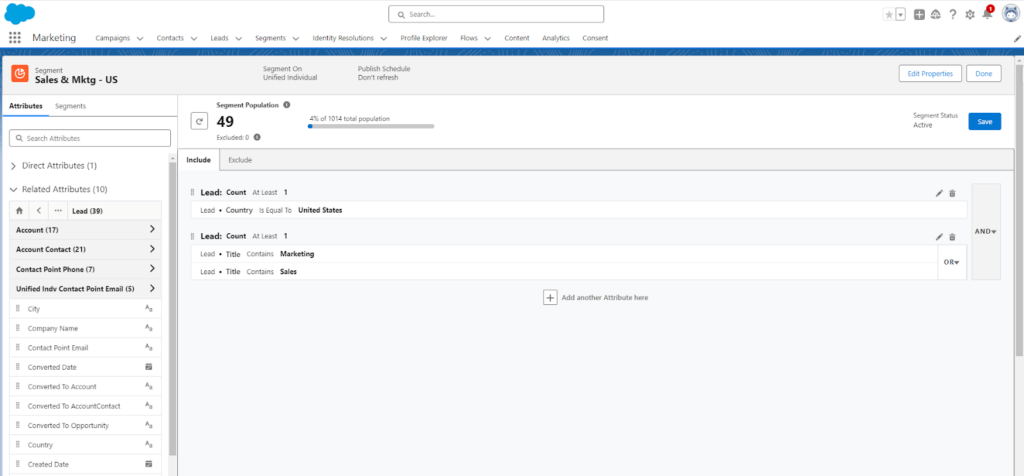
Here’s an example of how a segment focusing on Sales and Marketing titles based in the United States would look in Marketing Cloud Growth Edition.

Experience Cloud

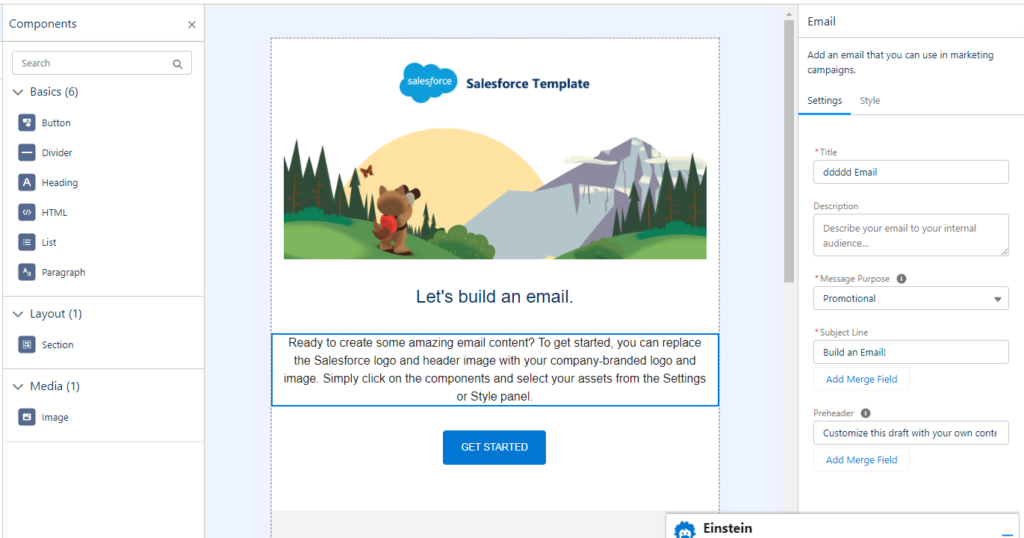
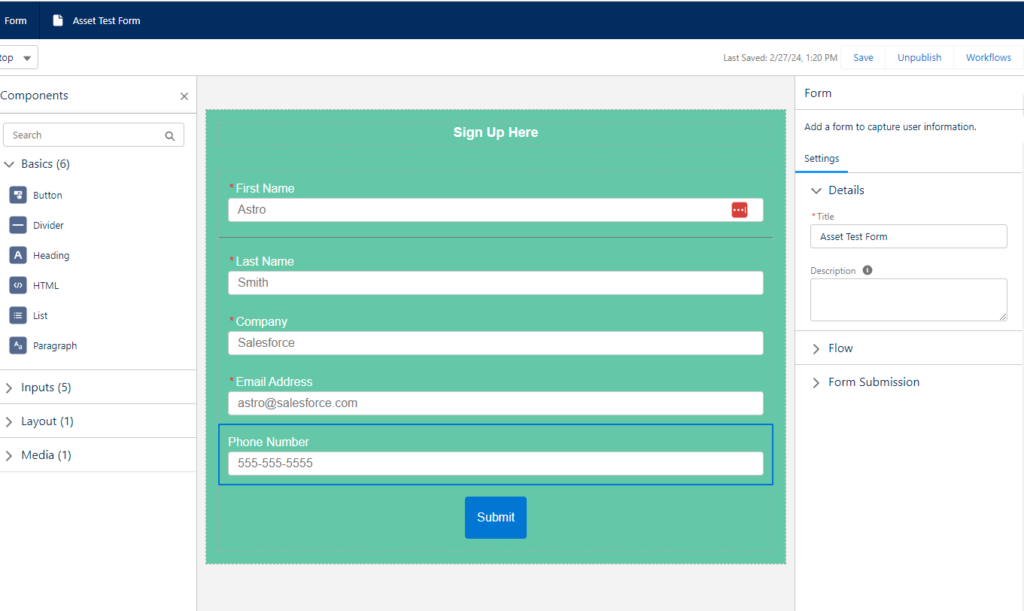
Assets in Marketing Cloud Growth are built using Experience Cloud. The experience feels similar to the Account Engagement Lighting Builders, but the foundation is different and there are some cool upgrades. I’m a big fan of the campaign-based workflow, the ability to publish/unpublish forms, and the ease with which forms can be styled — without the need for CSS.

Marketing Cloud Growth Email Builder


Marketing Cloud Growth Form Builder

At this time, the best way to prepare for the asset-building experience in Marketing Cloud Growth is to get hands-on with the lightning builders in Account Engagement. If you have not yet enabled them in your org, take a moment to do so using this blog as a guide. You can still access and use the classic builder after the lighting builder is activated, so you are not locked into a single builder.

Recommended Trailhead Modules

Salesforce Flow

Salesforce Flow is at the heart of Marketing Cloud Growth and represents a great learning opportunity for account engagement pros. Flow has historically been the solution of choice for Salesforce admins when creating declarative automations within Salesforce, but it’s now a marketing tool as well (and you’re going to love it).

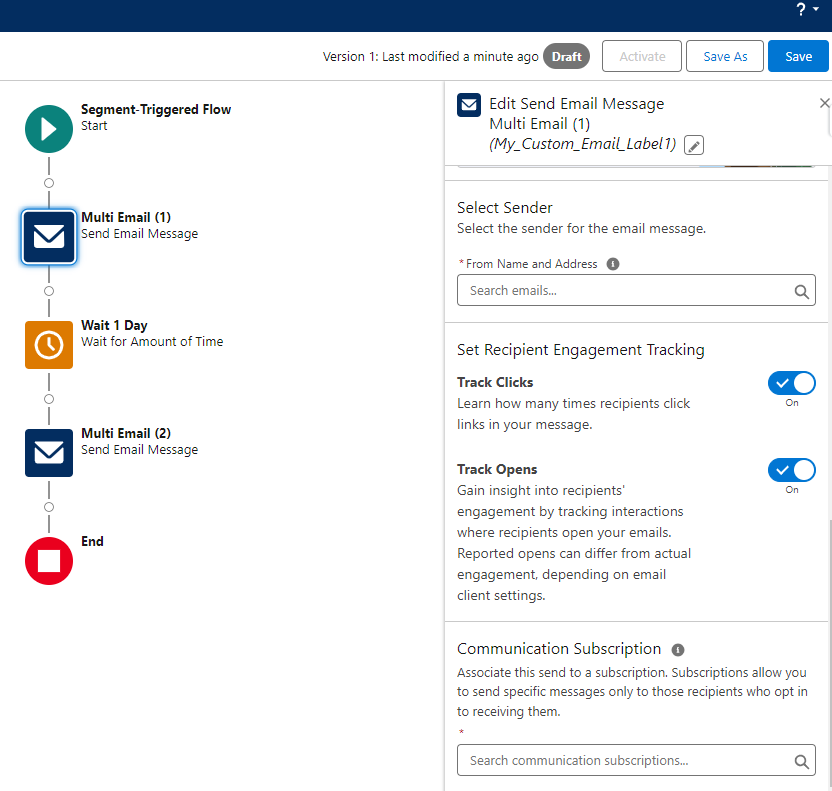
Marketing Cloud Growth generates a pre-built flow when assets are created. These are an excellent starting point and can be customized to specify tracking (for emails), subscriptions, and wait step times (in minutes, hours, days, months, or a specific time of day).  Branch logic can also be added to further customize the recipient journey and more features are on the roadmap for future releases.

Flow is one of the tools that is best learned by doing. Fortunately, there are plenty of great Trailhead modules, projects, and superbadges on this topic. If you learn better with the help of an instructor, our Salesforce Flow Basics For Marketers Workshop is for you!

Recommend Trailhead Modules

There are also a few posts on the Spot that will guide you, step-by-step, through creating flows that address common marketing needs. These are fun little projects that are highly relevant, so be sure to check them out. As always, practice in your sandbox or Trailhead org.

Start building your Marketing Cloud Account Engagement skills for the future 

The current release of Marketing Cloud Growth Edition is not a replacement for Account Engagement, but it does give us a glimpse into the future. Many innovations and features from  Marketing Cloud Growth Edition will make their way into Marketing Cloud Account Engagement, so it’s time to begin evolving your skills in preparation.

Product Note: Marketing Cloud Growth and Advanced are editions of Marketing Cloud Next and have also been referred to as Agentforce Marketing.

The role of marketers is continually evolving. This is especially true for those working within the Salesforce ecosystem. With the advent of advanced technologies, products, and functionalities to support — all while sticking to data-driven strategies — marketers are expected to adapt and expand their skill sets to stay competitive and relevant in the industry. 

One significant shift that I see for Marketing Cloud Engagement professionals is the need to add Data Cloud and Flows into their skill repertoire

In this blog post, we’ll explore why Marketing Cloud Engagement professionals should upgrade their skills to include Data Cloud and Flows, along with practical steps to start this learning journey.

Why upgrade your Marketing Cloud Engagement skills?

1. It’s the future for the Mothership

Unless you’ve been living under a rock, you’re likely very aware of how much rapid growth and development Salesforce has invested in its Data Cloud product — not only are the release cycles happening much more frequently than other products. This in turn unlocks new features and integration points with other products in the ecosystem, and there’s also a version of Data Cloud being offered at $0 for Sales and Service Cloud customers and just recently announced for Marketing Cloud Customers too. 

If that’s not a sign, I’ll give you one more reason: Data Cloud is the data foundation and Flows power automation for Salesforce’s new product, Marketing Cloud Growth Edition. Marketing Cloud Growth Edition is built on Einstein 1, which has been the pipe dream for many of us Marketing Cloud Engagement fans who have dealt with wonky UX, and clunky integrations over the years. Reading between the lines, cough cough SAFE Harbor cough cough sometime in the future (likely a few years), there will be a single marketing automation application that current Marketing Cloud Account Engagement and Engagement users will want to use.

So now that I’ve convinced you (hopefully) of the WHY — let’s dive into how these tools/features can help you as a marketer.

2. Become a better marketer by offering better customer experiences  

Enhanced Targeting and Personalization

Data Cloud can enable you to take your target and personalization efforts even further when using Data Cloud with Marketing Cloud Engagement through segmentation and activation. 

Data is the lifeblood of modern marketing. By incorporating a solid understanding and foundation of data models and the Data Cloud platform into your skill set, you’ll be able to visioncast and architect how to leverage vast repositories of consumer data, enabling you to create more targeted and personalized marketing campaigns and customer experiences. 

Understanding how to leverage data effectively within Data Cloud allows you to segment your audiences more precisely, tailor your messaging, and deliver content that resonates with individual preferences and behaviors in Marketing Cloud Engagement and beyond. (you also might want to read up on Consent Management)

Seamless Automation and Optimization

For those who have no clue about Flows (no I’m not talking about the Progressive Lady), let’s give you a breakdown:  Flows allow you to build complex business automation using clicks instead of code. For Salesforce admins, Flows are your best friends because they allow you to be able to handle the majority of complex business requirements without the help of a Salesforce developer.

Flows are not currently a feature/functionality in Marketing Cloud Engagement however it accomplishes many of the same needs you’d use Automation Studio and Journey Builder for. While the need and exposure for flows in your immediate feature might be limited, getting familiar and a basic foundation will allow you to go further faster in the future.

3. Gain a Competitive Edge and Future-Proofing

Marketers who embrace emerging technologies and methodologies gain a significant advantage in a competitive landscape. By upgrading your skills to include Data Cloud and Flows, you position yourself as a forward-thinking marketer capable of leveraging cutting-edge tools to drive results. Moreover, as the marketing landscape continues to evolve, proficiency in these areas ensures that you remain adaptable and prepared for future developments in the industry.

How to start your learning journey

1. Make time for training and education

For many practitioners, finding or making the time for training and education can be hard. As the old adage goes, “Investing in yourself is the best investment you will ever make.” So, invest!  As your reward for reading through this entire article, we’ll provide you with our recommended learning path to begin upskilling in these areas.

Begin by seeking out training programs and educational resources focused on Data Cloud and Flows. Many online platforms offer courses and certifications specifically tailored to marketers looking to expand their skill sets in these areas. Look for reputable sources such as industry-leading tech companies, online learning platforms, or professional associations.

2. Be realistic

Just like most things — be realistic with your goals. As they say, Rome wasn’t built in a day. Getting a shiny new certification might be the goal for some but doesn’t necessarily mean it’s the right goal for you. Set learning goals that make sense for your current role, day-to-day responsibilities, and where you want to go in your career.

3. Look for hands-on practice and experimentation

Theory is essential, but practical experience is equally crucial. Take advantage of sandbox environments or trial versions of Data Cloud and Flows functionality. (Unlike Marketing Cloud Engagement — these do exist!) 

From experimenting with building automated workflows, setting up data streams, mapping data, and creating segments to exploring data analytics tools, and analyzing results, hands-on experience will deepen your understanding and proficiency in these areas.

4. Collaborate and Network

Engage with peers and industry professionals who are already proficient in Data Cloud and Flows. Join online communities, attend webinars, and participate in networking events to exchange knowledge, seek advice, and learn from others’ experiences. Collaborating with experts in the field can provide valuable insights and accelerate your learning process.

Conclusion

As marketing continues to evolve in the digital age, we see Data Cloud and Flows becoming increasingly vital for success. By upgrading your skills in these areas, you can unlock new opportunities for not only yourself but also for ultimately driving better results for your organization. Start your learning journey today:

Data Cloud Learning Path

Flows Learning Path

Product Note: Marketing Cloud Growth and Advanced are editions of Marketing Cloud Next and have also been referred to as Agentforce Marketing.

There’s some fear in the air.

I’m sensing major mixed emotions swirling for many with the announcement of Marketing Cloud Growth Edition and the vision of marketing automation on the Einstein 1 (a.k.a. Salesforce core) platform.

On the one hand — it’s everything we’ve all been asking for. True one platform, no-integration-needed shared infrastructure for marketing to work seamlessly with all customer data. 

But there’s a glimmer of doubt with people thinking: “What does this mean for me? Are my skills still relevant? What does this mean for my product, my team, or my consulting business?” 

Don’t bet on innovation being slow 

There is a very large population of people who benefit from the status quo as it sits today. 

Employees benefit from their skills being in demand to drive up compensation. 

Consultants benefit from their experience being rare and slow to accumulate to stay relevant.

Product companies have grown to address a specific product gap or market need in today’s toolset.

But if the technology changes, all of that gets disrupted. When I hear people asking about timelines for the expansion of Marketing Cloud Growth Edition, I feel like they’re actually hoping that the pace of innovation on this will be slow. When I tell them I don’t think that’s going to be the case, that statement is met with uneasiness, and it’s clear that‘s not what they were hoping to hear.

Big change takes time, for sure. But I really wouldn’t bet on this freight train moving slowly. This has been a long time coming, and there’s momentum behind this new product that is incredibly exciting.

Remember that the technology is only one piece of the puzzle

I think that the fear of change here is somewhat misplaced.

Yes, there is a lot of power in the technical knowledge of any platform — Marketing Cloud Engagement, Account Engagement (Pardot), Salesforce, and any number of new tools.

But even harder to come by are the soft and business skills that make you successful with those platforms. Things like: 

  • Understanding business process
  • Mapping out data relationships 
  • Wrangling colleagues from across sales, marketing, customer service, and product to get agreement on content 
  • Training and driving the adoption of a new tool or process
  • Defining project plans and dependencies with the work of other teams 
  • The logistics that go into the execution of any complex campaign 
  • Spotting a gap or a need, and the extreme ownership you bring to “I’m going to figure out how to solve it” 
  • Spreading best practices & defining standard processes
  • Breaking complex terminology into terms anyone on your team can understand

Just think about your job today: How much of it is actually hands-on configuration in a tech platform, and how much of it is “tech-adjacent” planning, organizing, collaborating, and communicating? 

I bet it’s a blend of both, and as you move up the ladder in your career the “tech adjacent” becomes more critical.

Time to go back to school 

So, if we could flip a switch and change all customers to the new platform overnight — the skills and experience we’ve all gained from many years on Pardot and Marketing Cloud are still super useful, even if we’re logging in at a different URL. 

We’re not being sent back to the starting line. But we do probably have some relearning to do to keep our edge and stay relevant. But I choose to view that as exciting and not daunting. (Well maybe a little daunting. But I’m going to crack open a Red Bull and push through.) 

The way I think of it is this: Someone has to emerge as leaders, thinkers, and builders on any new platform. Who better than you and I? Let’s leverage the hard-won experience in this ecosystem as a springboard in this next chapter. 

Let’s lean into the next-gen set of tools that are going to bring marketing strategies to life on the Salesforce platform, and let’s go build some cool stuff.

Some quick shameless plugs

I can’t resist sharing two more things on this topic…

#1: Check out our Salesforce Flow for Marketers course

Flow is a big piece of how Marketing Cloud Growth Edition users can automate customer journeys. Need to brush up on your skills? Sercante has a Salesforce Flow Basics for Marketers Workshop that will kickstart your learning.

#2 Come join a team of growth-minded learners

When change is in the air, it’s a great time to be among like-minded learners. If this article resonated with you, I would invite you to come check out roles on the Sercante team. We’re committed to always learning, always chasing that edge, and we are eagerly seizing opportunities to get our team’s hands on the “next gen” ASAP. It’s a great spot to try on new skills and figure out the role you want to play in the next chapter of your career. Drop us a note at [email protected] if you’d like to chat!

No more posts to show