Category

Industry News

Product Note: Marketing Cloud Growth and Advanced are editions of Marketing Cloud Next and have also been referred to as Agentforce Marketing.

Since the announcement of Marketing Cloud Growth Edition on February 20th, we’ve been digging into the features of this new product as well as listening closely to the community’s questions about Marketing Cloud (Growth and Advanced Edition). We’ve compiled the most common questions from Salesforce webinars, Slack communities, our internal team, and our clients to get all your Marketing Cloud questions answered in one place. 

NOTE: This blog post was updated in May 2025 to reflect new release features and product updates.

Answers to all of your Marketing Cloud questions

Here’s a list of the most common questions we’ve seen.

Wait, what is the “official” name

So, this product was originally launched as “Marketing Cloud Growth Edition”. A few months later Advanced Edition was released and the product evolved to “Marketing Cloud Growth or Advanced Edition”. However, this was later shortened to just “Marketing Cloud”.  Now I know “Marketing Cloud” means “Marketing Cloud Engagement” to a large portion of the community so I also refer to this tool as “Marketing Cloud on Core” so no one assumes I mean “Engagement”. 

What is Marketing Cloud (on Core)?

Marketing Cloud is a new marketing automation platform from Salesforce. Marketing Cloud is built on the Salesforce Platform (aka “on Core”) and allows you to build multi-channel campaigns with Data Cloud, personalize marketing assets with Experience Cloud, and automate journeys with Flow. Marketing Cloud also includes Einstein and Agentforce capabilities throughout the platform as well as out-of-the-box content approval processes. 

Is Marketing Cloud Account Engagement and/or Engagement being retired?

This is the most common question we’ve heard so far and the resounding answer is No, Engagement and Account Engagement are not being retired. Marketing Cloud is another option for organizations that want to bring their marketing operations into Salesforce. Engagement and Account Engagement will continue to have their own robust product roadmaps. 

Which Salesforce Editions does Marketing Cloud work with?

Currently, Marketing Cloud works with Salesforce Enterprise Edition (EE) and Unlimited Edition (UE).

Is this the direction the Marketing Cloud Platform is going? All bundled within Core?

Yes, building Marketing Cloud’s foundation on core allows Marketers to get full access to customer data across the CRM and other clouds connected to the Salesforce platform. Breaking down data silos and uniting your data on one platform also allows Marketers to better leverage Einstein’s AI functionality as well as personalize every step of the customer journey. 

Can Marketing Cloud be purchased without Data Cloud?

Marketing Cloud requires Data Cloud. If you do not yet have Data Cloud, check if you’re eligible for the Free Data Cloud SKU or Salesforce Foundations

What is included out of the box with Marketing Cloud?

This is subject to change as the platform changes and grows but, as of May 2025 Growth Edition includes: 

See our previous blog post for more information on the credit consumption model of Marketing Cloud. 

Does Marketing Cloud consume super messages for email and SMS?

Marketing Cloud has different entitlements, emails and SMS do not consume super messages.

Do users need Salesforce licenses to access Marketing Cloud?

Currently users do need Salesforce licenses to access Marketing Cloud, but support for Identity Licenses is expected in the Summer ‘25 release (June).

Can clients with their own Data Warehouses use Marketing Cloud? 

Yes, Marketing Cloud is built on top of Data Cloud, which means they can connect to your data wherever it lives.

What is the setup of Marketing Cloud like? 

Setup for Marketing Cloud is being streamlined with each new release. Users with the Marketing Cloud Admin permission set can access the setup assistant for easier implementation of Marketing Cloud. Use the setup assistant to install or update all the required data marketing kits.

Is the intention to have customers self implement Marketing Cloud and do everything themselves?

The intention is to reduce the amount of energy spent on behalf of the customer to get to where they need consultants. Simply put, Marketing Cloud has very good defaults and a streamlined setup process, but there is still value to be added by consultants. If you’d like support setting up or optimizing Marketing Cloud, send us a message.

Can you configure marketing asset branding/brand standards within Marketing Cloud?

Yes! Users can create Brand Guidelines within Marketing Cloud that allow you to specify brand colors, typography, button styling, margins, and borders that can be applied to your marketing assets. If your brand standards are later updated, any marketing assets using that brand will also be updated. You can have multiple brand guidelines and also set a default Brand for your CMS Workspace so any new assets that are created for Marketing Cloud will be automatically branded. 

Does Marketing Cloud use a different Flow than the Salesforce Admin Flow?

Marketing Cloud uses the same Flow that users would have access to when building a backend, or admin, Flow. However, the elements and processes that the Marketing Cloud Flow has access to are limited by permission sets. Out of the box, the Marketing Cloud Flow is tailored elements and actions that focus on automating Marketing Campaigns and Marketing processes. Additional Permissions can be added or removed to custom tailor what users can do within the Marketing Cloud Flow. In short, Salesforce Admins are not giving Marketers full Flow functionality by granting them access to the Marketing Cloud Flow Builder.

What scoring features are included with Marketing Cloud?

Marketing Cloud has both People and Account Scoring. 

  • People Scoring
    • Engagement Score: Adds or removes points based on how engaged a person is with your Marketing initiatives.
    • Fit Score:  Similar to Account Engagement Grading, Fit Scoring tells Marketing and Sales how closely the prospect and their company aligns with the ideal client persona.
  • Account Scoring
    • Engagement Score: Aggregates how engaged Contacts associated with the Account are with your Marketing initiatives.
    • Fit Scoring: How closely the Account matches your ideal customer.
    • Intent Score: Optional AI driven scoring that measure how likely an Account is to make a purchase.  

What Einstein features are included with Marketing Cloud?

This is another area that is growing and changing with each release, but at of May 2025, Marketing Cloud includes:

  • Agentforce: Assists in building campaign briefs and campaign assets as well as generates copy for subject lines, preheaders, and body copy.
  • Einstein Metrics Guard: Uses predictive AI to filter bot activity from your org’s engagement metrics
  • Einstein Send Time Optimization: Send messages to your customers when they’re most likely to engage.
  • Einstein Segment Creation: Assists in building Data Cloud segments from natural language prompts.

Three additional Einstein features are available in Advanced Edition:

  • Campaign Designer (currently Beta): Assists in crafting campaign flows based on campaign objectives.
  • Einstein Engagement Frequency: Uses Predictive AI to determine how frequently to contact customers and improve the likelihood of engagement. 
  • Einstein Engagement Scoring: Uses predictive AI to assign individual contact-level scores and determine the most efficient way to message recipients to increase customer engagement.

Does Marketing Cloud include Campaign Influence models?

Marketing Cloud has Opportunity Influence rather than Campaign Influence.  Opportunity Influence assists marketers in identifying which campaigns were impactful for opportunities but relies on engagement rather than Campaign membership. 

Can Marketing Cloud personalize messages based upon the individual record? 

Yes, any fields connected to the Unified Individual can be used for personalization, this allows Marketers to even pull in data from other objects for cross object personalization. Dynamic Content is also available for use in email subject lines, email preheaders, and email components. 

Variation Targeting Rule screenshot

Does Data Cloud segment creation mean that SQL Queries will become a thing of the past?

Eventually, Salesforce is moving in the direction of clicks-not-code. Marketing Cloud includes prompts to help marketers build the appropriate filters in the segmentation builder, but you can also start from scratch within the builder. 

Will SMS have the same process around provisioning and approvals as MC Engagement?

There are two SMS code options available in Marketing Cloud, Short Code and Long Code. The short code option follows the same provisioning process that exists today for Marketing Cloud Engagement today. Check out our blog post for more information on the Short vs Long code and the provisioning processes.

Does Marketing Cloud include A/B Testing capabilities?

Yes! Except it is called Path Experiment and it does even more than simple A/B Testing. Take a look at our blog post on Marketing Cloud Advanced Edition for more info on this feature. 

How does Marketing Cloud handle pre-lead, unassigned records?

Salesforce introduced a new CRM Object for Prospects as part of the Spring ‘26 release. This new object can be used to store pre-lead records in CRM, similar to how Account Engagement keeps Prospects within its system and only sends Prospects to Salesforce when they are Sales/Lead ready. 

How can Account Engagement and Engagement Customers start using Marketing Cloud?

Account Engagement Customers get access to Marketing Cloud as part of their current contract. Check out our blog post for more details

Marketing Cloud Engagement customers will get a similar provisioning path soon (Safe Harbor!)

How has Sercante been involved in the launch of Marketing Cloud? 

Members of the Sercante team have been involved with Marketing Cloud since the pilot in 2023. We were also members of the Pioneer Program at launch in 2024 and have over 30 customers using Marketing Cloud today. We were also the first partner to be provisioned a Marketing Cloud Growth Edition Partner Org so we could provide feedback, documentation help, and FAQs to the development team. 

Learn more about Marketing Cloud Growth Edition

Want to learn more about Marketing Cloud Growth Edition? Check out some of our previous blog posts and subscribe to The Spot so you stay in the loop as we dive deeper into this new product.

Send Sercante a message if you still have questions that aren’t on the Marketing Cloud Growth Edition FAQ list.

Well, we’ve got another TrailblazerDX completed and in the history books, and boy was it a good one. While it seemed like a smaller crowd this year compared to 2023, the vibe and excitement of what’s on the horizon for Salesforce was off the charts! 

I’ve never been more excited to be a part of this community. Keep on reading for my top takeaways from this year’s event and what this means for technologists. 

#TDX24: Get your sunglasses, cuz the future is looking bright!

We headed to San Francisco along with several thousand of our Salesforce friends for the annual Salesforce developer-focused conference. The conference took place March 6-7, 2024, and it included more than 300 technical sessions and hands-on workshops. The focus for the conference was the Einstein 1 Platform and the era of AI.

This year, Heather Rinke and I had the pleasure of presenting a session at TrailblazerDX along with our friend Arvind Raman, who is a director of partner product success, at Salesforce. The session is called 5 Tips for Getting Started with Data Cloud, and you can check out the recording on Salesforce+ here.

My top 2024 TrailblazerDX takeaways

These are the biggest takeaways I have from the 2024 TrailblazerDX conference.

Smart AI for smarter decisions

TrailblazerDX 2024 showcased Salesforce’s cool AI updates all made possible through the Einstein 1 Platform, making data work harder for businesses. Think better insights, smarter analytics — it’s like having a crystal ball for making savvy decisions. And bonus points for now supporting unstructured data! That’s going to truly be a game-changer.

Keeping it simple, keeping customers happy

Salesforce — the Customer Company — is about making life easier for businesses. They’re focused and committed to simplifying the complexity of connecting the dots between customer data via Data Cloud — across the entire tech stack and more recently multi-org, so you can give your customers that “wow” experience every time. No more guessing games — just happy customers.

Coding made easy

Forget the days of complex code. At TrailblazerDX 2024, Salesforce rolled out tools like Einstein 1 Studio that make coding a breeze. It’s like giving developers and administrators superpowers to create awesome stuff without breaking a sweat. And to be clear this goes beyond the clicks, not code theme in past years. We’ve gone from a click-based GUI to a conversational experience. 

Locking down security

Cybersecurity’s a big deal, and Salesforce knows it. They’ve beefed up security features to keep your data safe from prying eyes both externally and internally (check out data spaces). It’s like having a digital security guard on duty 24/7. 

Learning and growing together

TrailblazerDX 2024 wasn’t just about tech — it was about community — a community that broke the Guinness Book World Record for Einsteins. It’s a place where people come together to share ideas, learn new things, occasionally color, and grow together. Because when we collaborate, amazing things happen.

Why we techies should get excited

  1. Innovation at Your Fingertips: With Salesforce’s AI goodies, we tech nerds can get creative and drive innovation like never before. It’s like having a toolbox full of cool gadgets to play with.
  2. No more spreadsheets: Unified customer data means less hassle. No more manual list pulls, digging through endless spreadsheets, or joining multiple tables together using SQL — we can now spend our efforts actually using the data versus trying to get the data. One of my favorite sayings: Work smarter not harder!!
  3. Coding, Simplified: Low-code tools mean less time coding and more time creating awesome stuff. It’s like having a shortcut to building cool features without all the headaches.

What this means at Sercante 

As a trusted Salesforce partner, we’ve been keeping a pulse on the latest platform innovations and future planned roadmap developments and as a result, have refocused too. ICYMI you might have noticed we had a bit of a glow-up!  

“Our rebranded mission, the statement that guides us through our day-to-day, is to use Salesforce to create seamless digital experiences with radical impact. Looking toward our long-term goals, our vision is a tech-driven future where real connections thrive.”

Based upon the key takeaways mentioned earlier related to AI, keeping it simple, and less code — we see a future where it will be less about the how and more about the why. The why is strategy.  

Of course, you’ll still find Salesforce consultants performing hands-on keyboard work on our team, but we’re so much more than that and will continue to lean into it. We’re focused on the human side of technology with strategies that get to the heart of impactful growth. As I stated at the beginning, there has never been more of an exciting time to be part of the Salesforce ecosystem and Sercante. 

So, in closing, I hope you enjoyed my top takeaways from TrailblazerDX 2024, served up with a side of Sercante expertise. Send us a message and let’s make some magic happen together!

Dragons Out! 🐉

I’ve been to Dreamforce twice. Once as an attendee. Another time as a Campfire speaker. And both times as a marketer. 

Going to Dreamforce as a marketer is probably a different experience than, say, attending as an IT professional. I got so excited at Dreamforce whenever I saw a session geared toward marketers. Or when I randomly met other marketing people.

That’s actually how I found out about Sercante. I was watching my colleague present a session and saw that the next person presenting had a marketing-focused session. So, I stuck around to watch the presentation. The next presenter happened to be Sercante Founder & CEO Andrea Tarrell, and the rest is history.

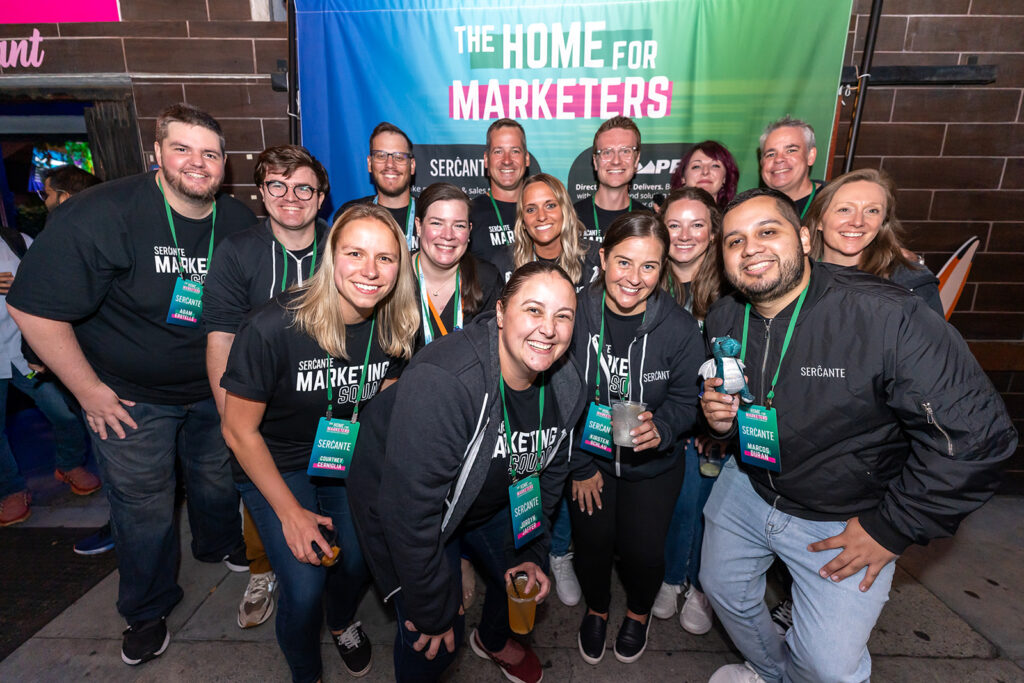
Sercante team at Dreamforce 2023

The Sercante Home for Marketers at Dreamforce

Being a marketer herself, Andrea knows what it’s like to be a marketer at Salesforce conferences. So, she created the Sercante Home for Marketers with that idea in mind. The goal was to build a space where marketers could go and find their people at Dreamforce while supplementing all the things they’re learning at Dreamforce with even more marketing insights and strategies. And it has been super successful.

Now in its second year, The Home for Marketers welcomed more than 2,700 people across 16 events in 2023. Visitors represented a range of marketing hats, which included marketing managers, CMOs, marketing operations professionals, content marketers, and marketing consultants, among others. 

Here’s a few things that went on there:

Dreamforce 2023 Session Highlights 

It’s awesome that all the marketers at Dreamforce had a place to hang out in between sessions and find their people. After all of the marketers filled up on grub and made new friends, they went down to Moscone to catch a few sessions. 

Here are a few that our friends were there to see:

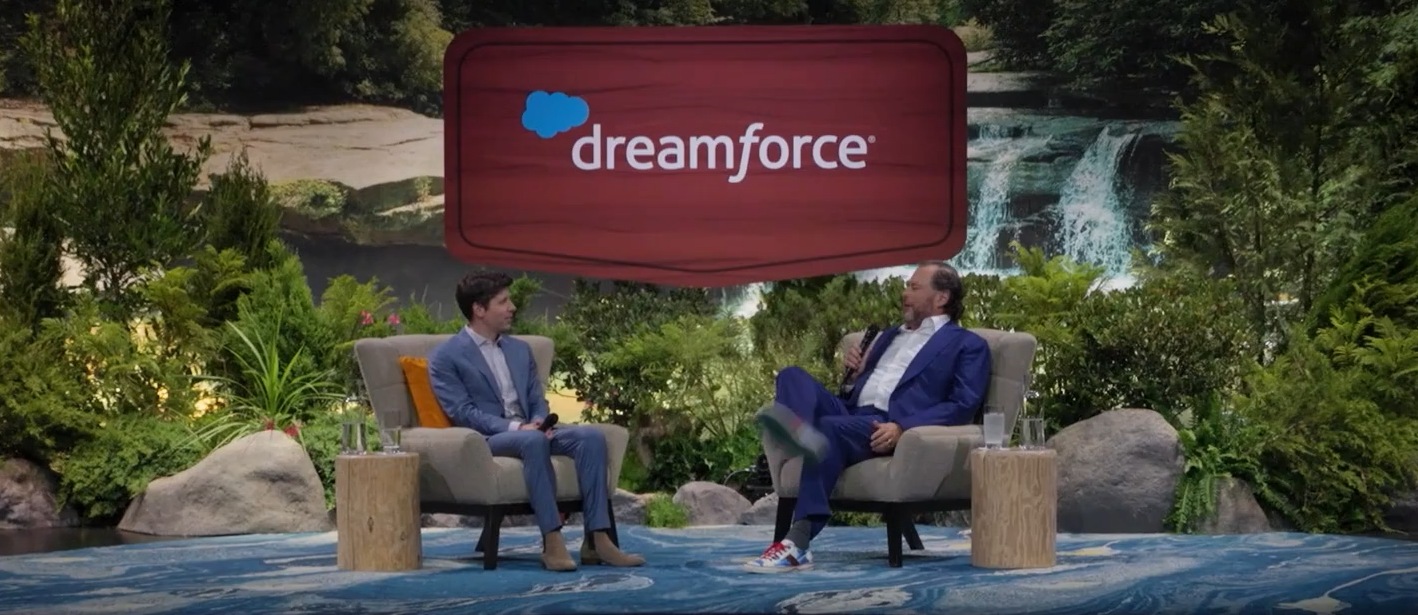
The Future of Trusted AI with Marc Benioff and Sam Altman

Salesforce CEO Marc Benioff had a candid conversation with OpenAI CEO Sam Altman about the future of business and how AI is affecting it. 

The biggest takeaway from the conversation was the idea that in the coming years, every new product will incorporate AI in some way. It may even become unthinkable to use technology that doesn’t use AI to complete tasks. The pair also talked about the process OpenAI went through to develop ChatGPT and the direction the company is taking to make sure it continues to be a revolutionary product moving forward.

Watch the replay here.

Marketing Keynote: Marketing in Generation AI

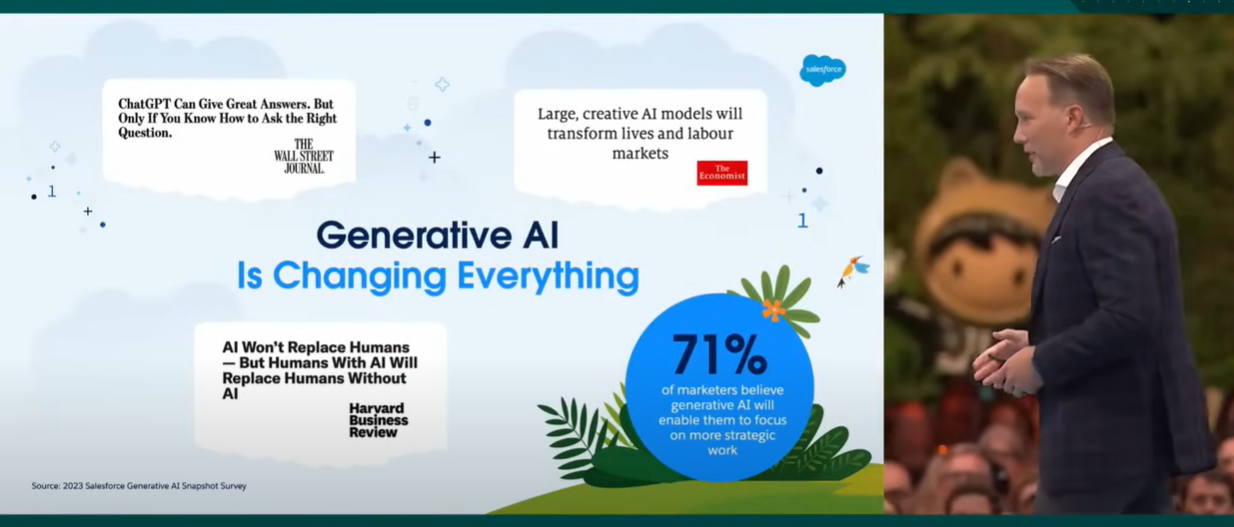
The Marketing Keynote at Dreamforce ’23, titled “Marketing in Generation AI,” unveiled innovations from the Marketing Cloud engineering teams. Salesforce Marketing Cloud GM Steve Hammond emphasized efficiency and the role of AI in scaling personalization. The session introduced prompt engineering and grounding, emphasizing that AI’s effectiveness depends on data quality.

Watch the replay here.

Winter ‘24 Marketing Cloud Release Highlights

This was a big one for all the marketers who attended Dreamforce 2023. That’s because it highlighted all the major enhancements coming to Marketing Cloud this winter.

Sercante Salesforce Product Director Heather Rinke had the honor of co-presenting the Marketing Cloud Release Highlights session with two members of the Salesforce product team: Ruth Bolster, product marketing manager, and Whitni Freeman, lead solution engineer. 

Read the recap here.

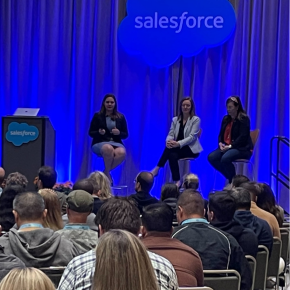
Empowering Nonprofits in Times of Change with Data + AI + CRM + Trust

This session introduced Einstein, Salesforce’s proprietary AI, for Nonprofit Cloud, promising nonprofits the ability to leverage predictive and generative AI to enhance donor engagement and data management. It focused on how these tools can simplify the creation of annual reports, segment and standardize donor data, and craft compelling donation appeals.

Overall, the combination of Einstein for Nonprofit Cloud and Data Cloud is seen as a potential game-changer, offering nonprofits automation and insights to better communicate with donors and fulfill their core missions.

Read the recap here.

Biggest Dreamforce 2023 Takeaway: AI is the Future of Business

As we saw in the sessions highlighted in this blog post, AI truly is infiltrating all aspects of business. And Salesforce is investing deeply in the tools. 

Have any other big takeaways from the conference? Tell us about them in the comments. And make sure to sign up for MarDreamin’ 2023, a marketing-focused Salesforce community conference held virtually in November, to keep the AI conversation going.

At 8 p.m. ET on Wednesday 9/13, the second full day of Dreamforce, I was sitting in front of my computer curious and a little anxious. I was using my usual evening streaming service catch up hour to tune into the live Salesforce+ broadcast of Dreamforce session, Empowering Nonprofits in Times of Change with Data + AI + CRM + Trust

As a former boots-on-the-ground nonprofit employee and current consultant primarily working with nonprofit clients, I am acutely aware of the ever-increasing demands on nonprofits. I understand and empathize with the daunting task nonprofits face to tell their story and convey their impact in novel ways and through a multichannel approach. 

I also am acutely aware that nonprofits are frequently hindered by low ROI on donor dollars due to the immense staff effort needed to cultivate donations. I was especially eager to hear what Salesforce has to say about the future of nonprofits on their platform and how they might help solve some of these big issues for the sector.

graphic from empowering nonprofits in times of change dreamforce session

A Year of Change for Nonprofits on Salesforce

This has been a year of big changes for nonprofits and Salesforce. A few headlines were the sunset of Elevate and the rollout of the new Nonprofit Cloud platform

This session added a few more items to the list of highlights, namely the announcement of Einstein, Salesforce’s proprietary AI, for Nonprofit Cloud*. This promises to allow nonprofits to tap into predictive and generative AI to go further and dive deeper with their donor data, with their programmatic metrics and outcomes, and with their tenacious and often time-strapped staff. 

Having the ability to leverage data more robustly than ever before is further extended by the offerings of Data Cloud — Salesforce’s data management and harmonization tool. At the core of Salesforce’s Einstein for Nonprofit Cloud + Data Cloud message, they vow to help you do more with less.

* Currently, the Einstein AI features advertised in the session Empowering Nonprofits in Times of Change with Data + AI + CRM + Trust are only available as a part of the Nonprofit Cloud curated solution package.

Einstein for Nonprofit Cloud + Data Cloud Promise to Make Annual Reports Easier and Better than Ever

I am going to use the example of building an annual report (a thought that may give former or current nonprofit employees shudders of anxiety) to illustrate the key promises of Einstein for Nonprofit Cloud + Data Cloud. 

First let’s start with a short overview of what an annual report is from a nonprofit standpoint. An annual report usually serves as a physically manifested summation of the prior year for a nonprofit. They typically contain programmatic impact data (frequently with fancy charts), thank yous and recognitions of various groups from the highest dollar donors to volunteers, financial data for the year, and a call to action. They are intended to be compelling, illustrate transparency, and highlight mission, vision and outcomes. They are also an absolute BEAST to create.

Here are some of the ways Einstein for Nonprofit Cloud + Data Cloud can help nonprofits complete the daunting task of creating an annual report:

Compiling Programmatic Data and Communicating Meaning

Einstein for Nonprofit Cloud offers the ability to summarize programmatic data over a specific amount of time with consideration to the intended audience. In the case of an annual report this would look like a summary of your programmatic data for the prior year, intended for an external audience. 

Einstein for Nonprofit Cloud also allows you to choose if this summary should be long form (more detailed) or short form (less detailed) increasing flexibility to help you meet the needs of your specific annual report requirements with less manual work.

Segmenting and Standardizing People Data for Acknowledgement Lists

Data Cloud shines in its potential ability to solve the problem of disjointed data for Nonprofits. We all know the pain of manually sleuthing through and deduplicating your database and external systems of that one historical volunteer record for one of your major donors who is also an event attendee and auction lot buyer. This hypothetical generous philanthropist could have upwards of 4 records in your Salesforce CRM and connected systems! Data Cloud to the rescue! 

Through the power of the unified profile you can see all of that disorganized and disconnected data in one place. This is especially helpful in the annual report example as it allows you to be absolutely sure you are thanking and acknowledging your kind supporters for ALL the ways they support, financial contributions, event support, volunteerism through a single 360 view.

Crafting a Compelling Donation Appeal

Admit it or not, a key function of an annual report is to compel folks to donate. Einstein for Nonprofit Cloud + Data Cloud have your back in your daunting donor segmentation and compelling storytelling efforts. 

Through use of the 360 Constituent view made possible by Data Cloud, you can use Einstein for Nonprofit Cloud to segment your donors and its predictive AI capabilities to draw conclusions based on historical data. 

You could put together a segment of those donors identified as having high propensity to give, high affinity for your organization and high capacity and really hit them in the feels with your call to action. Generative AI can then help you craft an irresistible donation appeal and from there the dollars are sure to roll in to support your important work.

Einstein for Nonprofit Cloud + Data Cloud: Getting Nonprofits Closer to their Core Missions

Overall, I am cautiously optimistic that, together, Einstein for Nonprofit Cloud + Data Cloud have the potential to improve the way nonprofits communicate with their donors and the public. By automating time-consuming tasks and providing insights that were previously unavailable, or extremely time or resource-intensive to procure, these tools can help nonprofits focus on their core mission of making a difference in the world. 

I encourage nonprofit leadership to explore and invest in these powerful tools. I think they can help support and extend the capabilities and impact of a nonprofit’s greatest strength, its team.

Need help navigating these new announcements and ever growing suite of Salesforce products? Sercante is here to guide you through and help you achieve your nonprofit’s mission by leveraging the power of the Salesforce platform. Reach out!

Today’s trailblazers in the higher education industry are facing trends and challenges that they have not had to before. Navigating a recent global pandemic, the rise of artificial intelligence, marketing to Gen Z, and shifting enrollment levels. 

Dreamforce 2023 – Out of the Home for Marketers Vault

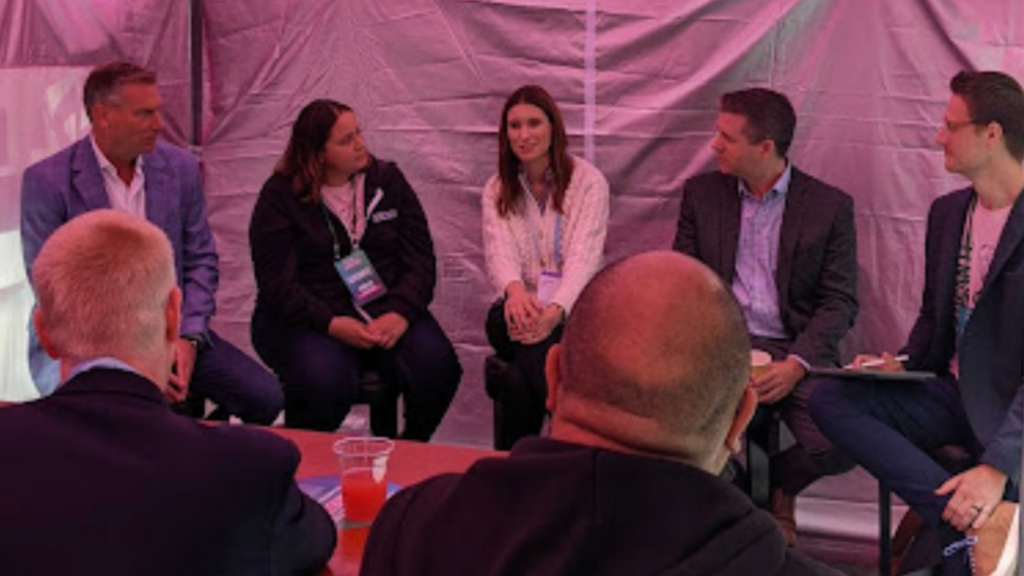
To help trailblazers gain insights into how to deal with these modern-day higher education trends and challenges in the digital age, we held an event at the Home for Marketers during Dreamforce with industry thought leaders. The top takeaways from their panel discussion are below.

Panel: Modern Day Trends in Higher Education

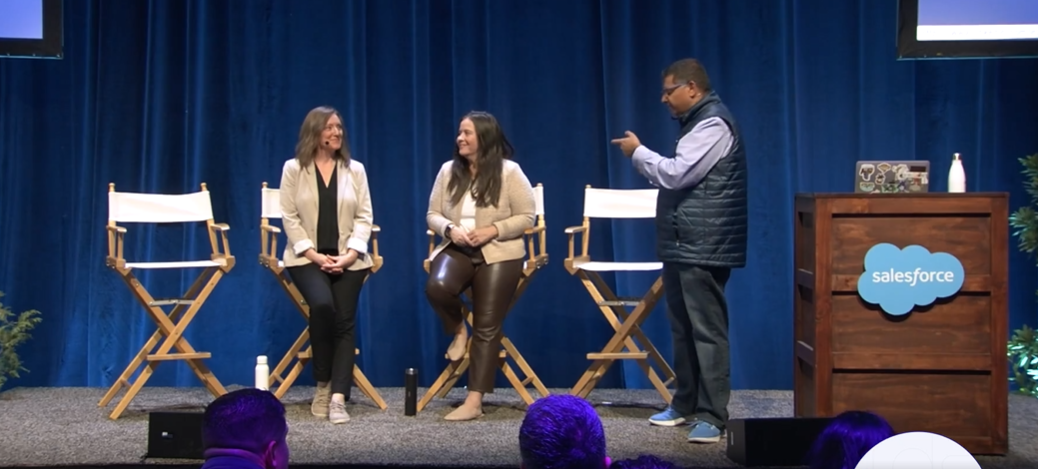
education panel at Dreamforce Home for Marketers

Moderator: Adam Berry, Senior Account Director, Sercante

Panelists (from left to right in photo):

  • Clark Burk, Chief Client Officer, Red Van Workshop
  • Jordyn Jaffer, Senior Salesforce Solution Engineer, Serante
  • Michelle Bates, Assistant Vice President for IT, CRM and Data Analytics, Purdue for Life Foundation
  • Brent Wege, VP Sales, Engagement Solutions, Salesforce

Data Silos Are Still a Major Challenge for Higher Education Institutions

Across universities there are different owners of separate subsets of data making it difficult for teams to collaborate, share insights about their constituents, and have an overall view of the organization’s performance. 

Each panelist emphasized that if universities are going to provide that personalized 1:1 experience that so many of their diversified audience, in particular Gen Z, is desiring then they are going to have to make breaking down their data siloes a priority.

Centers of Excellence Are Being Leveraged to Increase Adoption

As more higher education teams are acquiring systems to their tech stack for a digital transformation many roles and responsibilities are changing. Team members are having to learn new platforms and think through their data in a different manner and getting them to adjust to the change can be difficult.

The panel shared how they have seen teams use Centers of Excellence where education and training on the technology systems are provided to empower users to be more efficient on the platforms

Assigning champions such as administrators or power users in each department can be helpful as they support and help team members in their day-to-day to navigate and leverage the technology to achieve their goals.

It was noted that some teams may not be able to form an organized Center of Excellence in their institution, but making sure training is provided and identifying the champions in each department can be a huge first step towards increasing adoption.

Personalization is a Must in Higher Education

As people are experiencing personalized engagements across their retail, entertainment and content consumption journeys, they expect the same out of their alma mater or the university they are attending or applying for. 

Now more than ever it is critical for higher education teams to have access to all the data touchpoints that happen throughout the prospect, student, and alumni journey. Without accurate data, personalizations will not seem as relevant or authentic. 

As digital natives, Gen Z can easily spot inauthentic marketing, and, according to 2021 Forrester Technographics data, “nearly a third of Gen Z say that they unfollow, hide, or block brands on social media — at least weekly.” This means that universities need to make sure the customized communication and engagements they are crafting accurately align to each stage of the individual’s journey to provide an authentic experience.

For example, if you are starting a fundraising campaign and want to target alumni, using the clubs and organizations they were a part of during their time as a student to share where they are now and where they hope to be is a great way to make your communication to that individual relevant. Having access to this data and managing it in a way that makes it easy to execute personalizations like this is key.

University Teams Are Navigating Their Journey With Artificial Intelligence

Some higher education organizations are already using AI in their day-to-day with chatbots and smart searching in their IT knowledgebase. The biggest concern here is trust and security. Like many, trailblazers in higher education want to ensure that constituent data is secure when leveraging AI-powered tools to ensure a high level of trust.

There are so many exciting new developments happening such as conversations around how AI could track student performance and predict when they are trending towards an at-risk status to alert advisors, so they can better guide students and be more proactive to battle against dropout rates. 

However, these developments will only truly be able to be taken advantage of if all departments are accurately capturing data and have it architected in a way to be centralized and easily accessible across the organization.

A Word of Advice for Your Digital Strategy

A lasting piece of advice from our panelists was don’t just throw technology at your challenges. Consider how you are going to use it to truly deepen relationships with your audience, how it will better help you to manage your data, and who will be the champion for that system. 

There may already be solutions that you have access to that can provide a solution, so have a strategy in place for how it will be used and managed before purchasing new technology.

Reach out to the team at Sercante for help making the right decisions when you’re ready to shake things up with your digital marketing strategy.

Are you a small business owner who is interested in using Salesforce for your business all the way up until you saw the pricing? If so, Salesforce Starter was created just for you!

I know what you’re thinking: Salesforce is a big, expensive CRM platform. But Salesforce Starter is different. It’s a low-cost, lightweight version of Salesforce that’s designed specifically for small businesses. Coming in at $25 USD per month/per user, it’s a downright smoking deal to be honest.

There’s even a 30-day free trial to test it out and see if it’s right for you and your team! 

Salesforce Starter Capabilities

Here’s a quick rundown of some of the stuff you can do with Salesforce Starter RIGHT OUT OF THE BOX!

  • Track your leads and customers
  • Manage your sales pipeline
  • Automate your marketing campaigns
  • Manage customer cases
  • Write knowledge articles for your support reps  

Ease of Use is key to Salesforce Starter

What do I mean by that? I mean, it literally guides you through accessing objects (types of records) based on a picklist (dropdown) menu right after you log in (via your homepage)! 

Also featured on the home page are premade dashboard components that display your leads, contacts, opportunities, tasks, and any recommended actions! You can also see any recent records.

If your team’s focus is centered around Sales (Revenue), Marketing (Hello, Sercante) or Service (Support), choose those in the Quick Look picklist and your options change. 

Salesforce Starter for Sales

First up is Sales, the lifeblood of your business. If Sales is your focus, then Salesforce is built for you! Choosing Sales as your focus brings up Contacts (people), Leads (prospects), Opportunities (deals), To Do list (Tasks) along with Tutorials and Setup. 

Salesforce Starter for Marketing

Selecting Marketing as your focus gives you the option to import your Contacts (people), create Campaigns (think email or direct mail campaigns), and has links directly to tutorials and setup. 

Salesforce Starter for Service

Choosing Service opens up access to Cases (customer support requests), Connecting Support Channels (think email or web forms), Knowledge (think help articles), Reports (probably the most important part of Salesforce!), along with links to tutorials and setup.  

Clicking on any of these will take you directly to a list of records of that type (List View) that you have in your organization, and allow you to view, edit, or delete them as you desire. 

Connect Salesforce Starter to email accounts for Einstein Activity Insights

Salesforce Starter even prompts you to connect your Microsoft or Google email accounts so you can sync your calendars and get Einstein Activity Insights (AI recommendations) on your incoming emails. 

The data science and machine learning from Einstein is built to analyze external new sources and your account data to help build a data model that provides relevant updates to help you win more deals. Sounds like a win-win!

Go for all three

One last thought here, you aren’t limited to one or the other, you have access to Sales, Service, AND Marketing!

OK Jason, that’s great. But what if we grow out of Salesforce Starter? 

Salesforce Starter is built on the same foundation as Salesforce Professional, Enterprise, and Unlimited. So as your CRM needs grow, Salesforce can grow with you. All you have to do is contact your Account Executive (AE) to upgrade your edition and I’m pretty sure they just hit a magic button* and BOOM you’ve upgraded! 

(*This is unverified, but I imagine that they have a big red upgrade button they smack when a client wants to upgrade followed by a confetti explosion and 30-second dance party.)

Alright, I’m kind of convinced. Where do I start? 

Well any good SaaS (Software-as-a-Service) has a trial and that’s where you begin with the Salesforce Starter package. 

Sign up for 30-day Salesforce Starter trial

Click this link and you’ll head over to the Salesforce Starter site, where you can sign up for your own 30-day trial, check out a demo, or read some customer stories. 

Then, what’s next?

If you want to know more about how it works, I would recommend taking a look at the Salesforce Starter Quick Look Module on Trailhead. 

If you’re not familiar with Trailhead, it’s where all of us Salesforce nerds go to learn about our favorite CRM in a fun, gameified way! It’s free to sign up, and use and can lead to some awesome new skills. 

Please feel free to leave any questions in the comments below.

No more posts to show