Category

Joanna Rotter

As a marketing team, you spend tons of time and resources building marketing campaigns that drive people to your website. Your website is the perfect place for prospects to learn about what you do and, most importantly, let you know who they are. As one of your most valuable assets, capitalizing on website visitors is just as important as getting them there. 

That’s where conversational marketing platforms, like Qualified, come into play.

Why use conversational marketing strategies? 

Conversational marketing is becoming a common tool in many marketers’ belts because, well, it works a lot better than standard marketing forms at increasing website conversions and capturing leads from target accounts. (See more in our blog post: When ABM Meets Conversational Marketing).  

As Qualified has said in their recent financing announcement, “Every year, B2B marketers spend more than $6 billion driving buyers to their website, but sales teams have no way of knowing when a qualified buyer has arrived, and no way of speaking with that buyer in that pivotal moment.” 

When you’re spending that much money to get people to your website, two things come to mind: 

  1. You need to have a top notch strategy to convert them and alert the right people on your team when a target account is on your site
  2. You need to be able to report on how your conversion tools are providing a return on investment

This post is focused on #2. Once you’re bringing in Leads and qualified accounts through a Conversational Marketing tool, how do you make sure you’re getting credit for those conversions and tying the work you did back to revenue? 

If you really want to make your execs and sales leaders heart-eyed, connect the dots between what’s happening on the marketing side of the house and what’s influencing and closing deals. Here’s how. 

Step 1: Campaign attribution 

To understand who’s engaging with your Conversational Marketing platform, you need to be able to attribute engagement to marketing campaigns. With Qualified, you build your Conversational Marketing reports in Salesforce where your entire team can access and understand them. 

The first step is to set up experiences in Qualified so that, when someone engages with your Conversational Marketing tool, they are attributed to the right Salsforce campaign with a designated member status. 

Campaign Attribution shows how multiple Campaigns can have influence over a particular Lead/Contact. If you’re already tracking marketing activities like Email, Webinars, and Events, you can add Conversational Marketing as a Campaign “type” to track alongside your other Campaign Dashboards to measure Conversational Marketing impact. 

Step 2: Configure Campaign Influence 

If the Contacts you’re attributing to Campaigns in Step 1 are also tied to Opportunities through Contact Roles, then we’re in business. You can start reporting on how Conversational Marketing experiences are driving ROI for your business by enabling Campaign Influence in Salesforce. 

Side note: If you’re missing Contact Roles on Opportunities, check our our app to help you automate who is linked to Opportunities upon their creation: Automated Opportunity Contact Roles 

With Campaign Influence, the Contact links the Campaign to the Opportunity, allowing you to see which Campaigns are influencing Opportunities. Then based on the Opportunity value, you can see how much money marketing campaigns are contributing to your pipeline. 

Now that your Leads and Contacts who have engaged with Qualified are being tied to the right Salesforce Campaign through Campaign Attribution, you can start reporting on that engagement in really cool ways. The next step is to understand how your Conversation Marketing tool is helping seal deals and bring in valuable Contacts that you didn’t have insight into before. 

Example reports

Here are some of the reports you can build once you have Campaign Influence ready to go to show how Conversational Marketing Campaigns are influencing the bottom line. Just set up your Campaign Influence dashboard with a filter for Campaign Type. If you’re capturing Leads through your Conversational Marketing tool and attributing them to the right Campaigns in step 1, then, when those Leads convert to Contacts and are tied to Opportunities, they will pull into these reports as Campaign Influence records. 

Report Type: Campaigns with Influenced Opportunities

Filter: Campaign Type = Conversational Marketing  

  • Total Influence Opportunities – Shows how many Opportunities have been influenced by Conversational Marketing 
  • Total Influenced Pipeline  (First Touch, Last Touch, and Even Distribution Models) – Shows how much money in the pipeline has been influenced by Conversational Marketing. The different distribution models allow you to see whether Conversational Marketing was the campaign that brought them in (first touch), the campaign that sealed the deal (last touch), or influenced the Contact anywhere along their journey (even touch). 
  • Total Influenced Pipeline, filtered for Target Accounts – Shows how much money in the pipeline Conversational Marketing has influenced for Target Accounts only (this could be eye opening when you compare with other Campaign Types because tools like Qualified are especially adept at personalizing experiences for target accounts and getting them to convert when they’re hot.)
  • Won Influence Revenue YTD – Shows how much revenue in the bank Conversational Marketing has contributed to 
  • Won Influenced Revenue, filtered for Target Accounts – Shows how much revenue in the bank Conversational Marketing has contributed to from Target Accounts only 

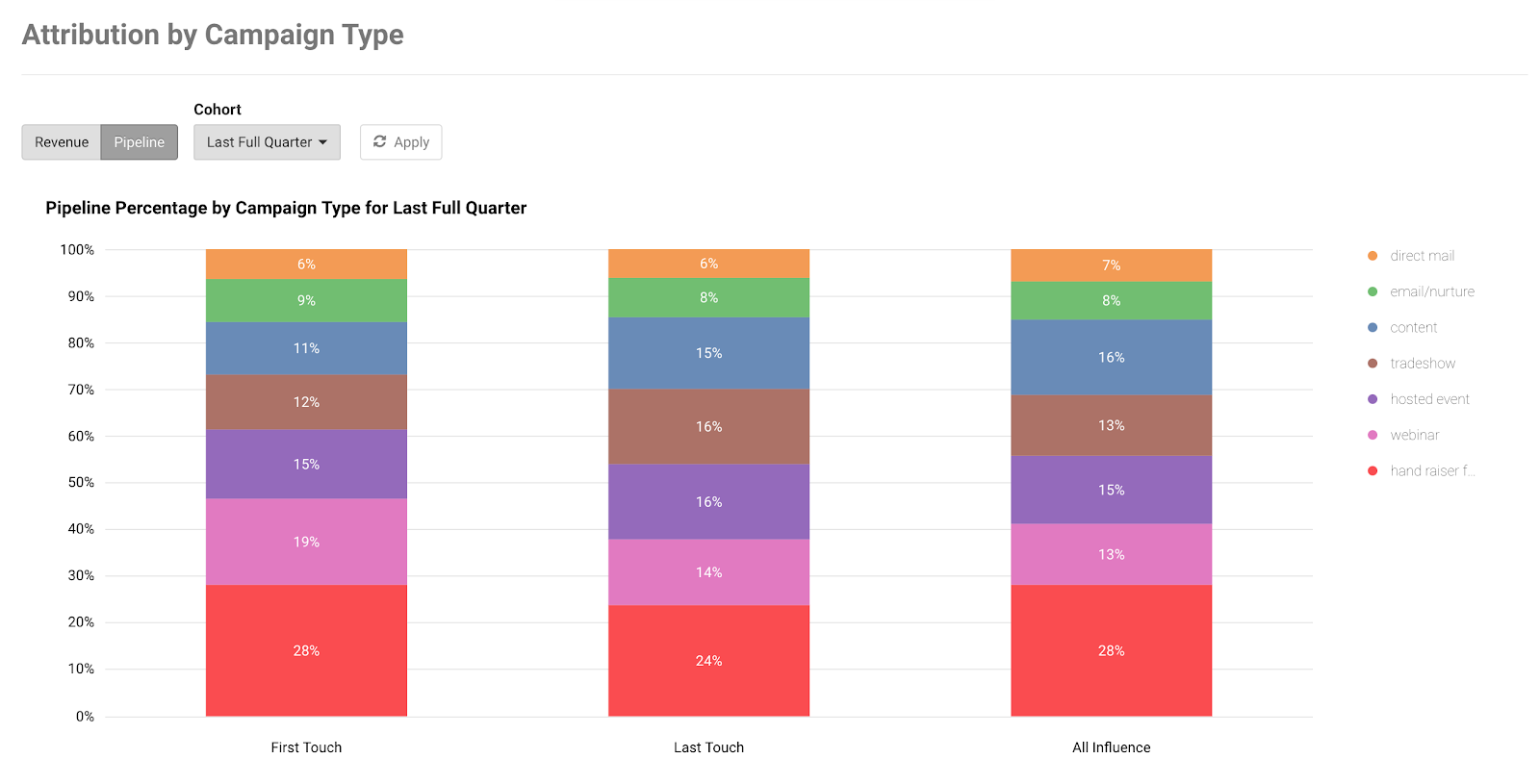
Here’s an example of what your Campaign Influence Dashboard could look like for all Campaign Types. You could then set up a filter for Campaign Type = Conversational Marketing  to see a honed-in view of how your Conversational Marketing campaigns are bringing in the dough. 

Take the next step with conversational marketing 

Conversational Marketing is a great way to make your website work for you and to keep the sales team busy with high-intent visitors. Once you have a consistent Conversational strategy in place, getting credit for your efforts is the next step, and Campaign Influence is the most direct way to show results around Opportunities and revenue. 

Want to see how you can grow your sales pipeline with Qualified? Let us know how we can help, or feel free to give them a shout directly at https://www.qualified.com/ (mention you came from The Spot for Pardot and they’ll hook you up!)

Need help getting started with Campaign Influence? We’d love to learn more. Get in touch! 

Whether you’re new to account based marketing or your strategy centers on ABM, you’re going to want to check out the Terminus + Pardot integration.

Terminus’ recent blog post outlines some of the new tools, which promise to help marketers drive an account-centric strategy with the benefit of shared data, improved analytics, advanced reporting, and lead-to-account mapping capabilities. 

Major benefits of the Pardot and Terminus integration

In a nutshell, here are the major benefits the integration provides: 

Bi-directional data sync

Build better segments for targeted advertising in Terminus based on Pardot data, or activate drip marketing campaigns in Pardot at precisely the right time with account engagement data from Terminus. Alert sales and customer success in real-time about important or at-risk accounts or opportunities

Improved analytics

Observe account-based engagement simultaneously with Pardot marketing activities, understand the impact of email marketing campaigns on revenue

Sales and customer success intelligence

Help outbound teams prioritize outreach to the most engaged and best-fit target accounts, and provide timely alerts about at-risk accounts coming up for renewal 

Lead-to-account matching and data hygiene

Improve Salesforce data hygiene by mapping all orphaned leads to the appropriate account, build customized marketing programs around the entire buying group within an account, uncover missing decision-makers within a target account 

Because ABM is all about putting accounts front and center across Sales and Marketing, this integration is great for marketers looking to combine account data from Terminus with prospect records in Pardot 

How Pardot admins can put the Terminus integration to work for them

If you’re already using Pardot and Terminus, this is a happy day for you! Your two tools can now talk to each other and you can start combining campaigns that span across Terminus ABM ads and Pardot marketing and nurture programs. Read on to explore some interesting use cases.  

If you’re not using Terminus, but you’re a Pardot admin with an ABM strategy, this could be a great time to expand your tech stack while keeping your ABM efforts nice and organized within Pardot, making sure you get credit for all your hard-earned marketing wins.  

10 examples of the Pardot + Terminus integration in action

Once you’re up to speed on the integration and your ABM strategy is ready to rock, here are some use cases for how you can take Terminus fields and reports and make them actionable in Pardot : 

1. Segment your data in Pardot using Terminus Account Segments and intelligence data 

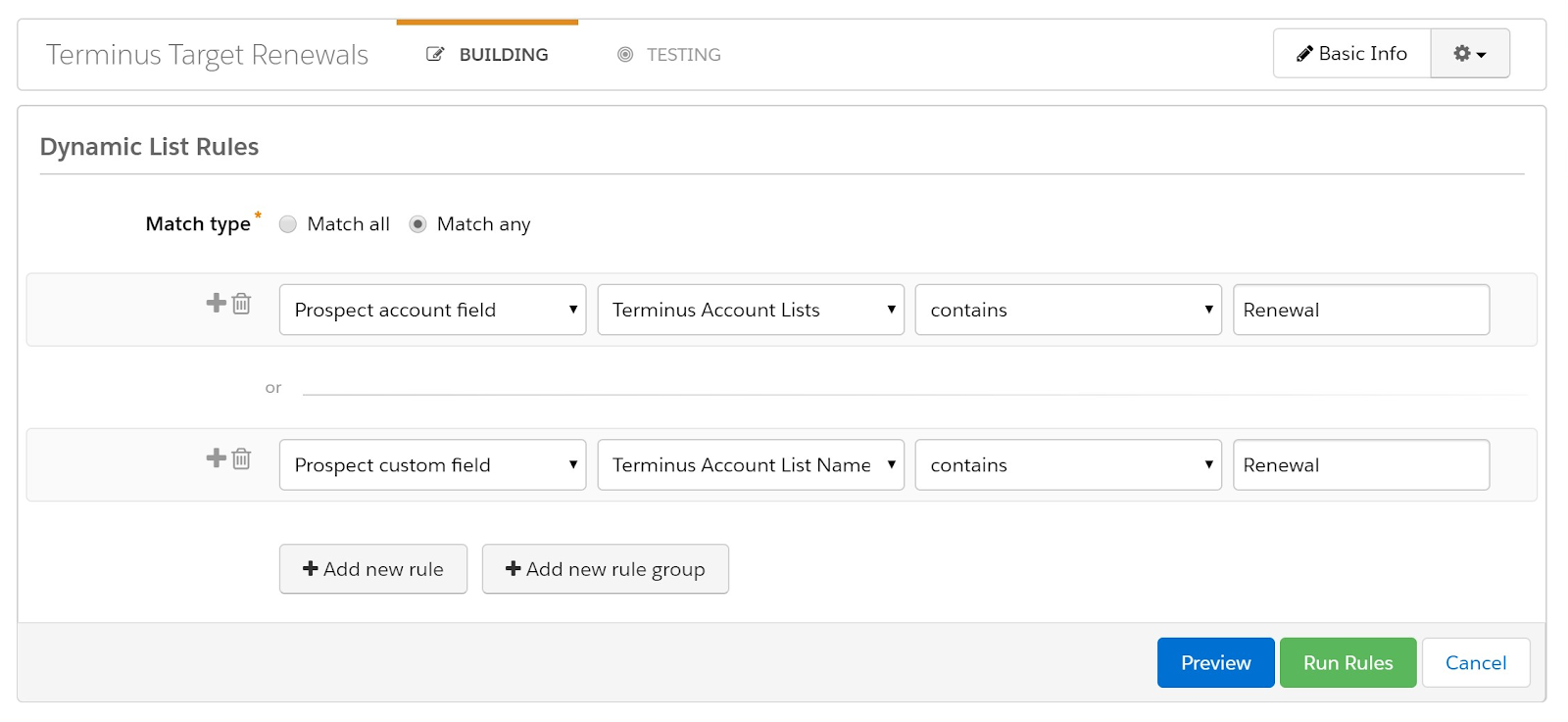
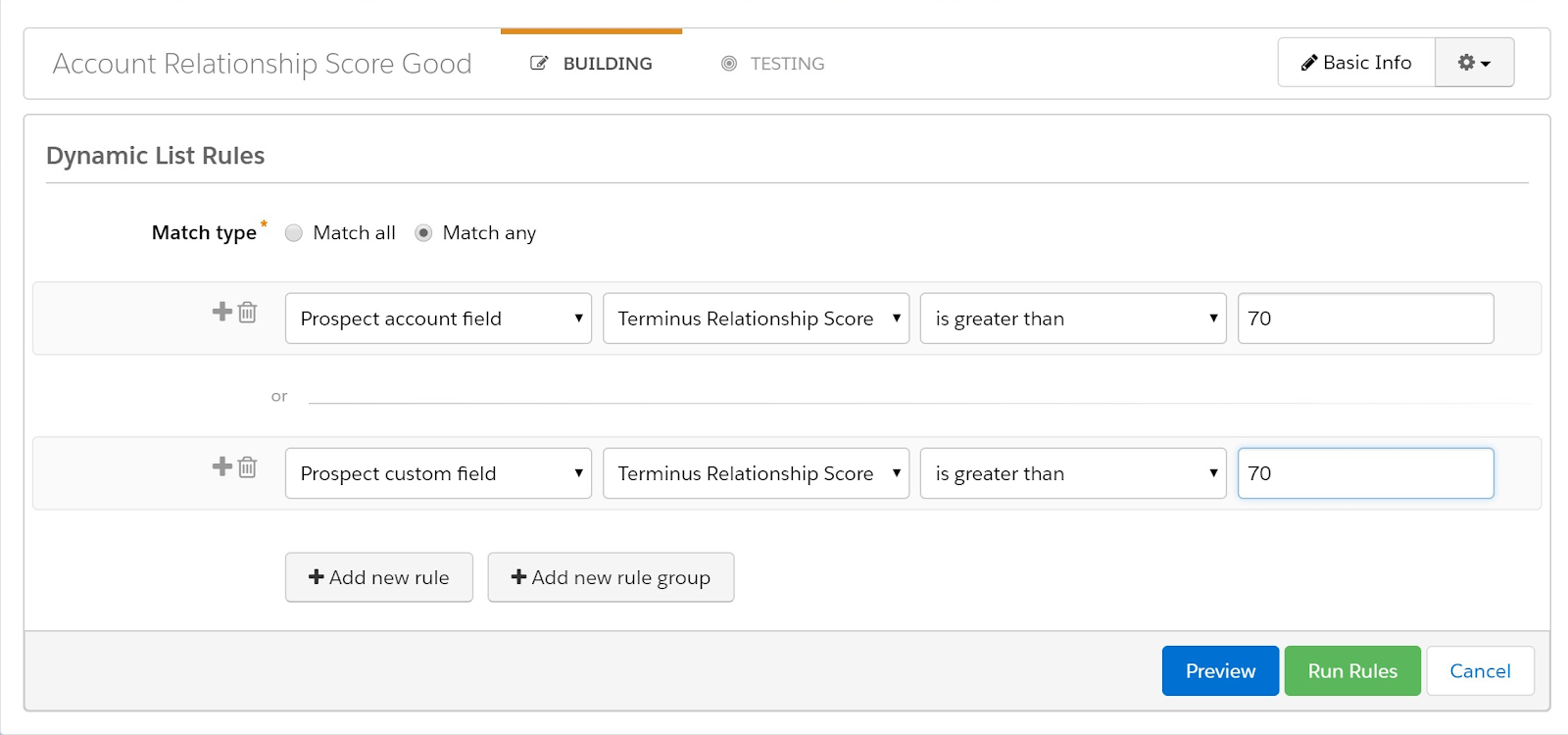
Segmenting your Pardot database through dynamic lists is a key Pardot feature. With the Terminus integration, you can now create custom fields in Pardot that map to Terminus account fields. From there, you can build dynamic lists and automations based on Terminus data and how you want to segment your lists. 

Here are some examples…

Access Terminus account lists in Pardot segments:

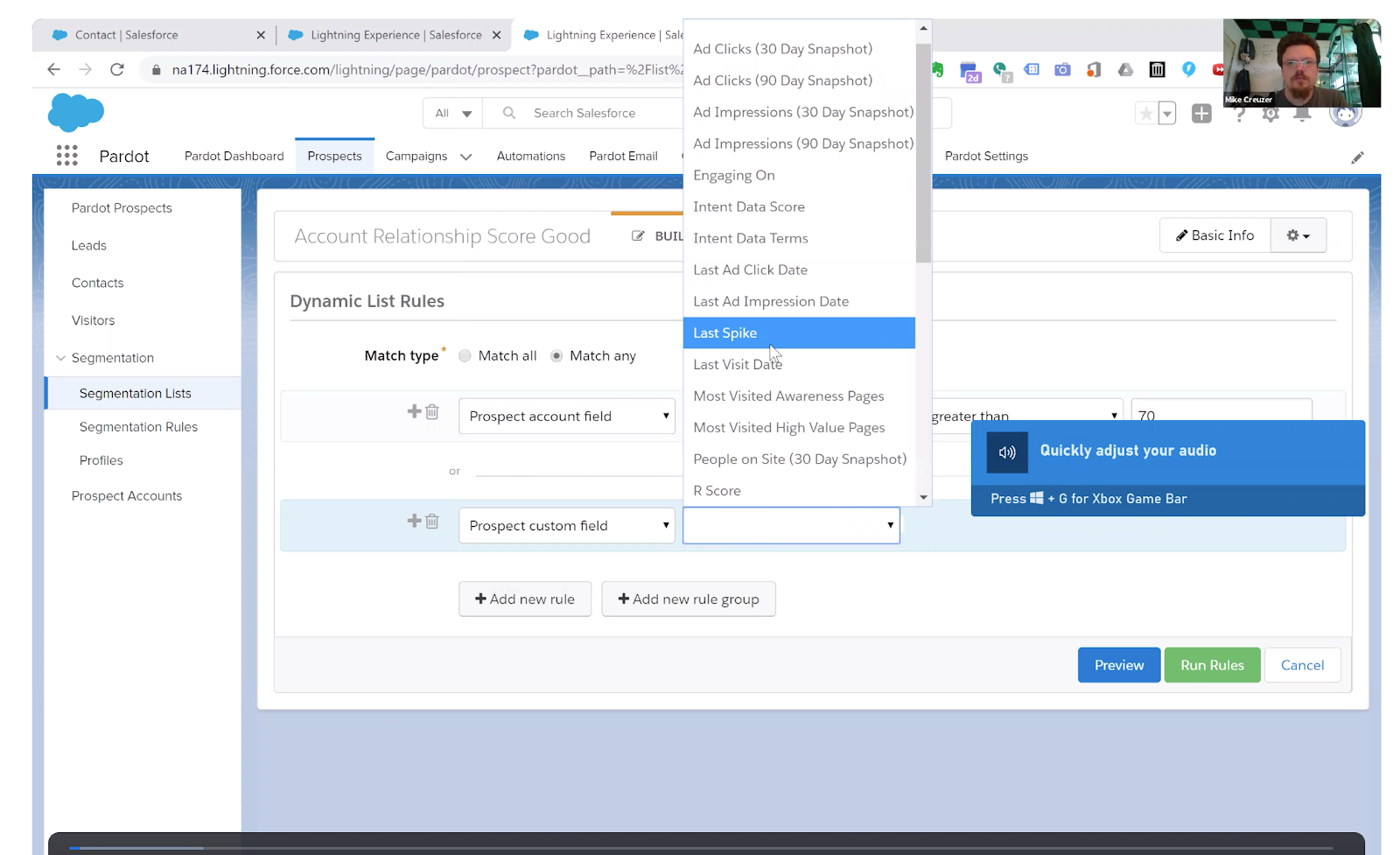
You can also access Terminus behavioral signal in Pardot segments: 

There are LOTS of possible applications of having this data avaliable in Pardot. Additional Terminus fields available in Pardot include: 

2. Engage entire buying teams easily from within Pardot Engagement Studio

Building off of point #1, once you’ve segmented your lists using Terminus account data, you can then use those lists to fuel Engagement Studio to lead prospects down a funnel in Pardot.

Support an ABM strategy using Terminus account data to guide your sales cycle and nurture strategy, keeping the messaging and steps focused on guiding your target accounts to the next stage. 

3. Use Pardot program logic with Terminus data to drive customer-facing workflows 

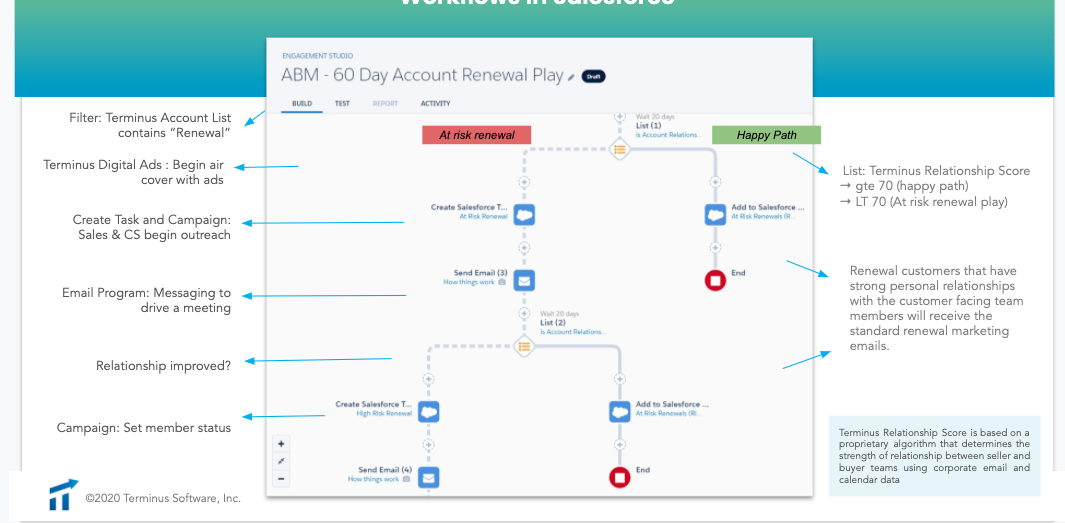
Taking Pardot’s Engagement Studio to the next level, Terminus helps create complex workflows that guide prospects down a path based on various account scores gathered by Terminus. 

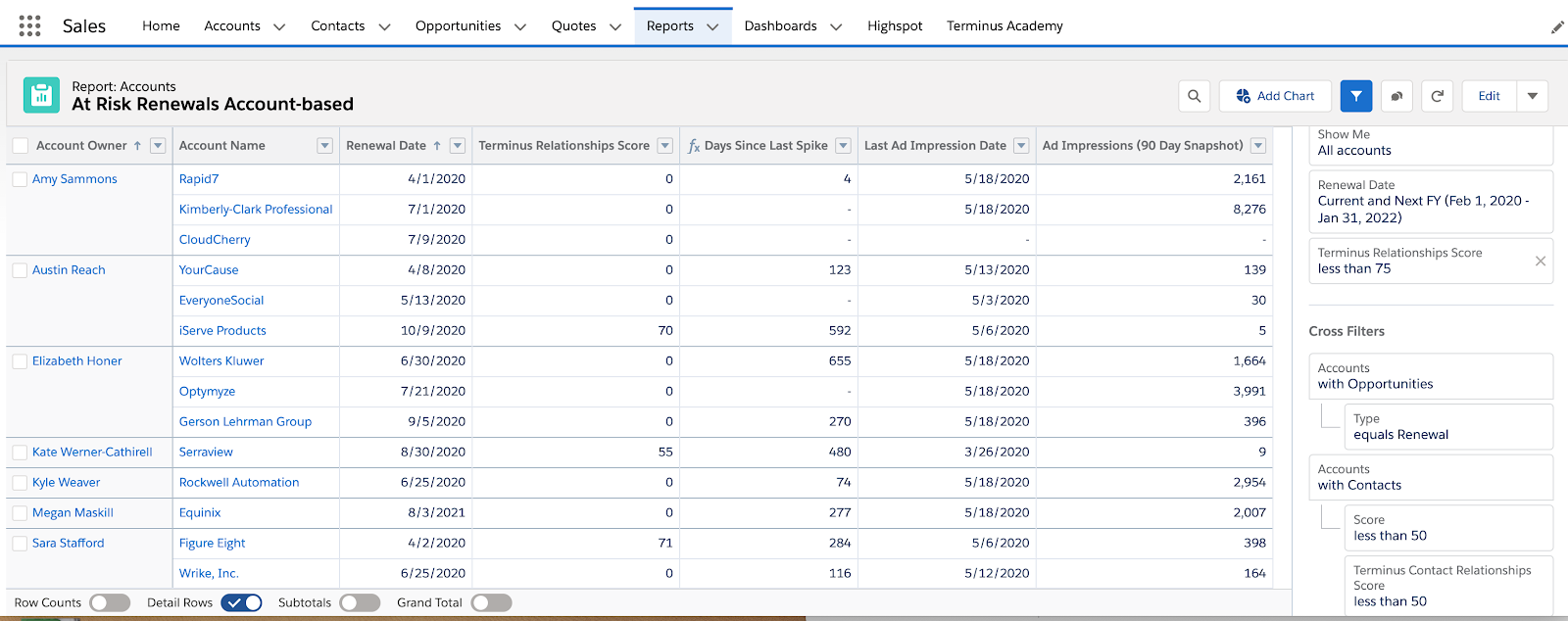
In this example, target renewal accounts run through different paths based on whether they’re at risk or happy. The ESP attempts to improve account relationships by creating Salesforce tasks, adding prospects to Salesforce campaigns and making the Terminus relationship status visible in Salesforce. 

4. Pardot + Terminus ABM reporting and dashboards in Salesforce 

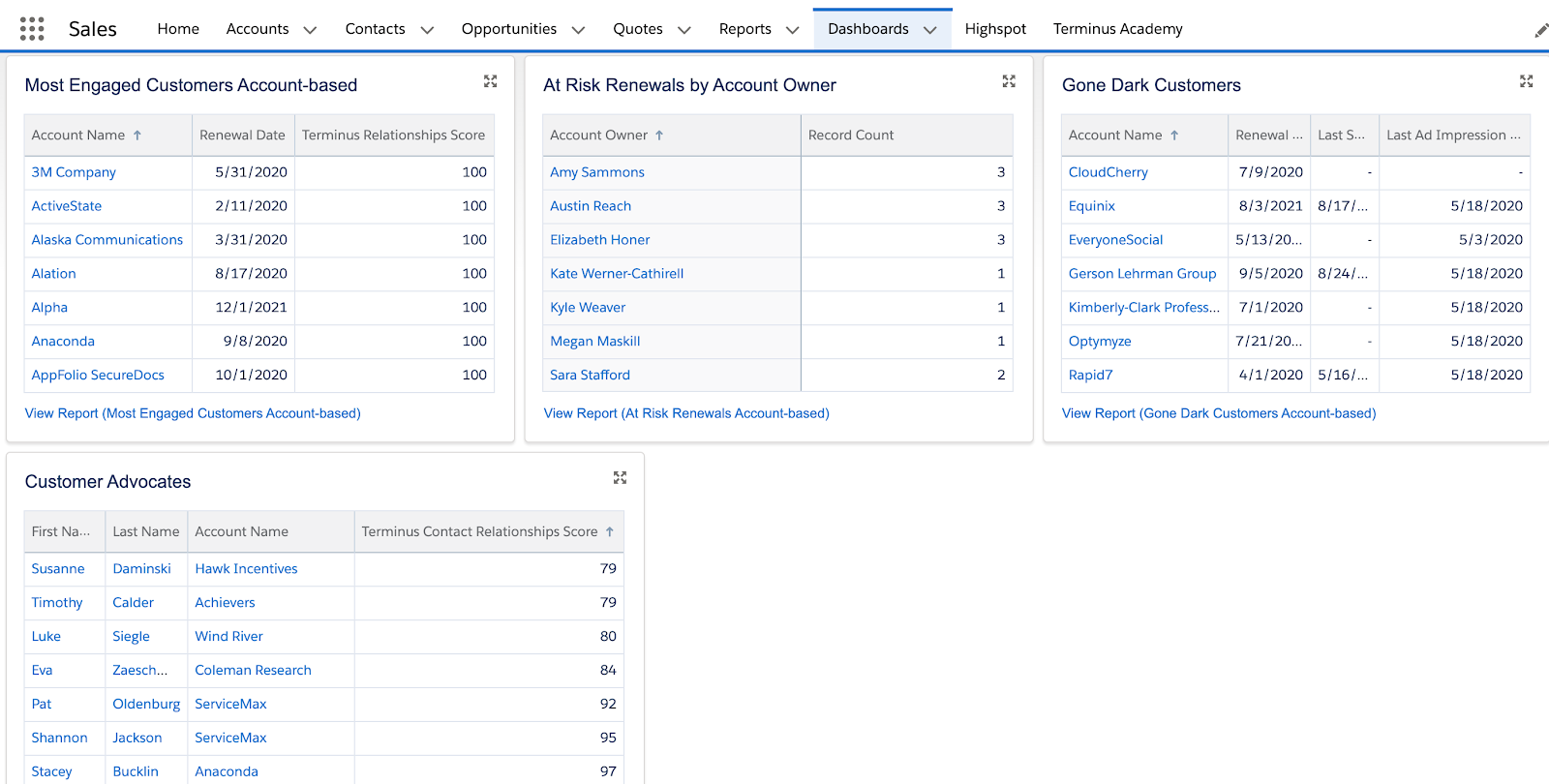
Being able to identify an account’s level of engagement or whether they’re at risk is incredibly important when personalizing messaging and prioritizing Sales efforts. By combining Pardot engagement metrics with Terminus account data, marketers and sales teams can focus their efforts more efficiently. 

Here are some examples of Terminus dashboards that could be used to inform and alert sales based on which accounts are engaging with marketing. 

5. Build on scoring categories for target accounts 

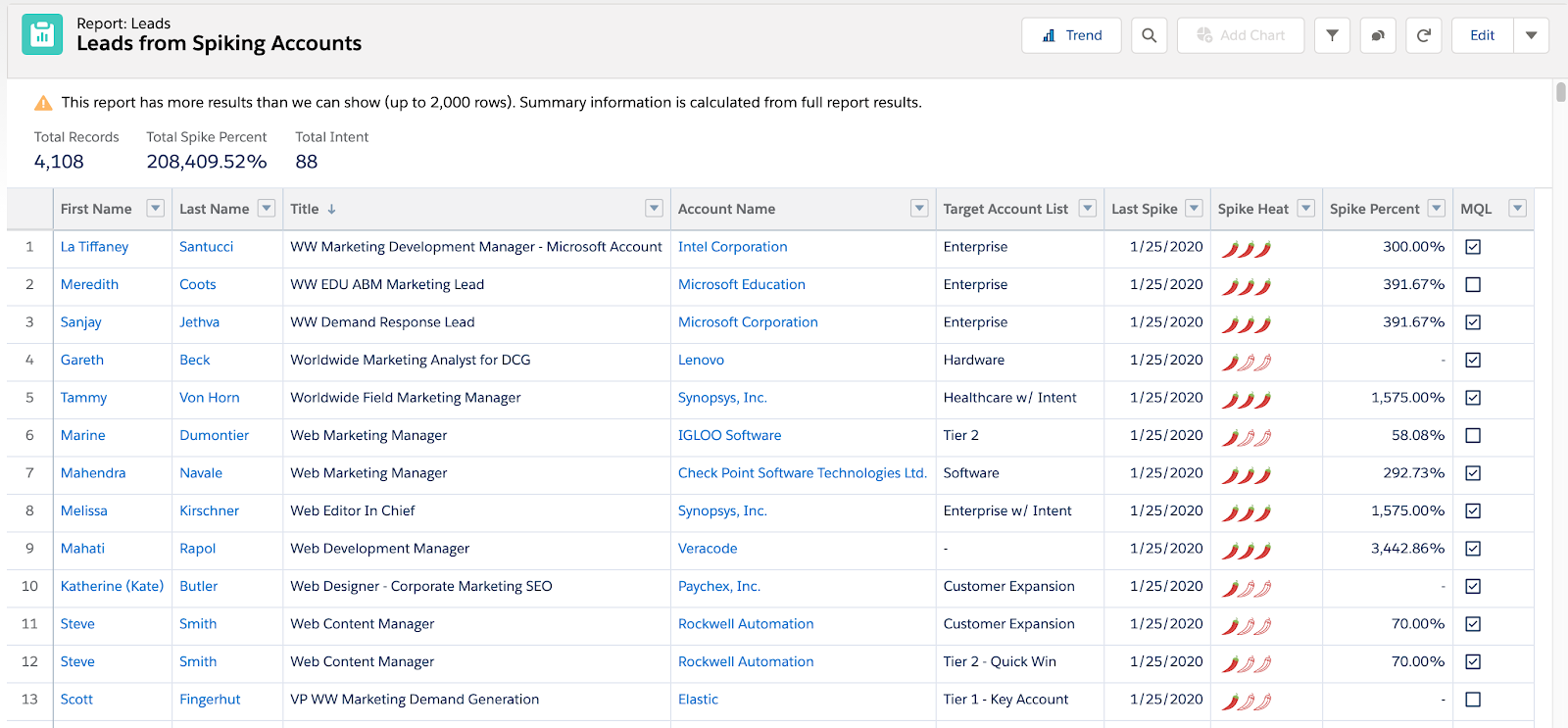
One specific report you could build in Salesforce using Pardot and Terminus data is to combine Terminus spiking accounts with Pardot scoring category data using a joint report. This view will allow you to see what marketing content is resonating with your highest potential accounts. 

(More to come on this use case in a future blog post.)

6. Temporarily bump Pardot grade up when an account is spiking

Pardot grading is great for highlighting prospects on an account for possible escalation to the Sales Team via Tasks when they do something “interesting.”

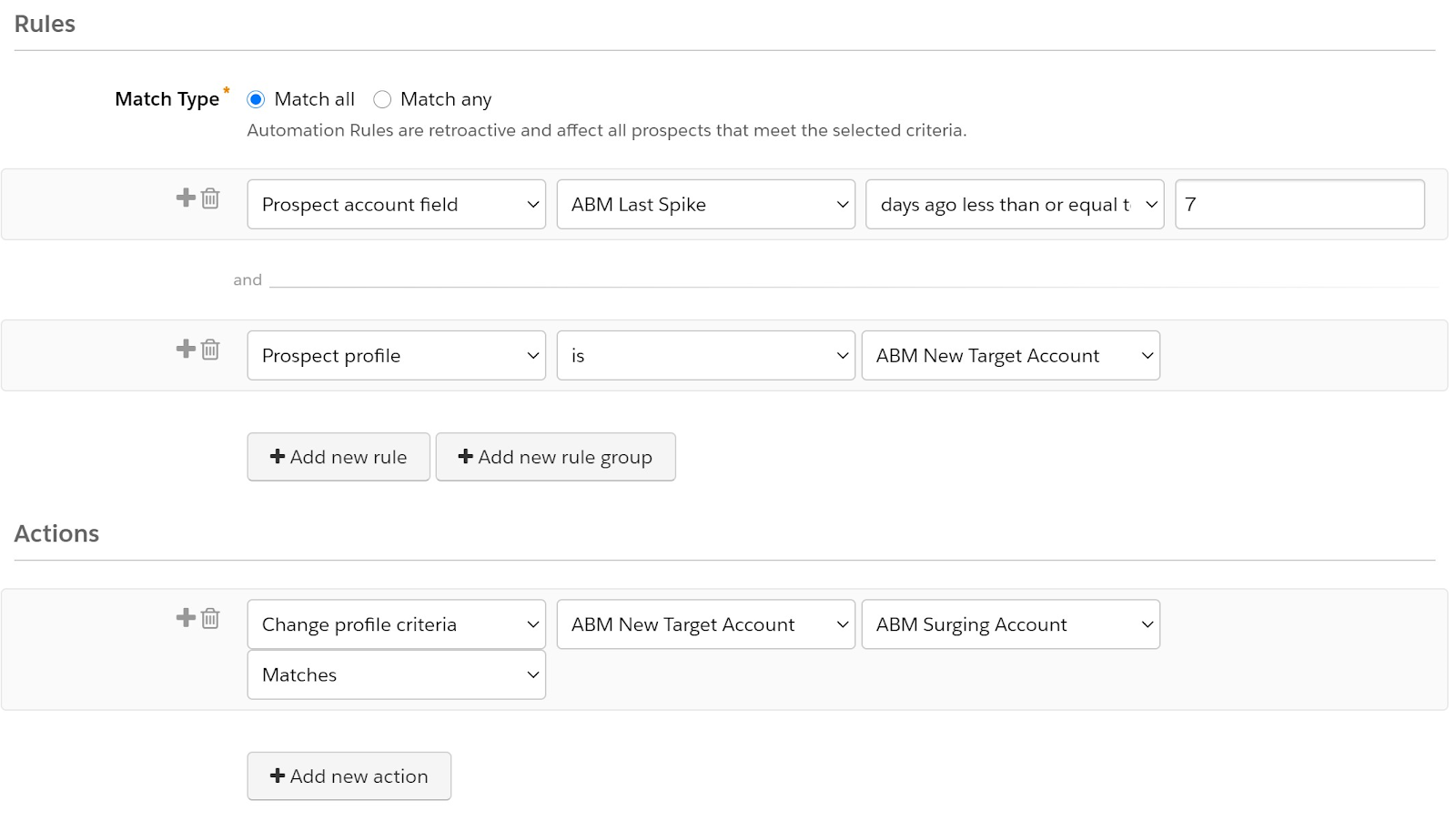
In this example, you’ll create an Automation Rule that looks to see if an account has spiked in the last 7 days and is considered an ABM New Target Account. If it matches those criteria, then change the grading profile criteria.  

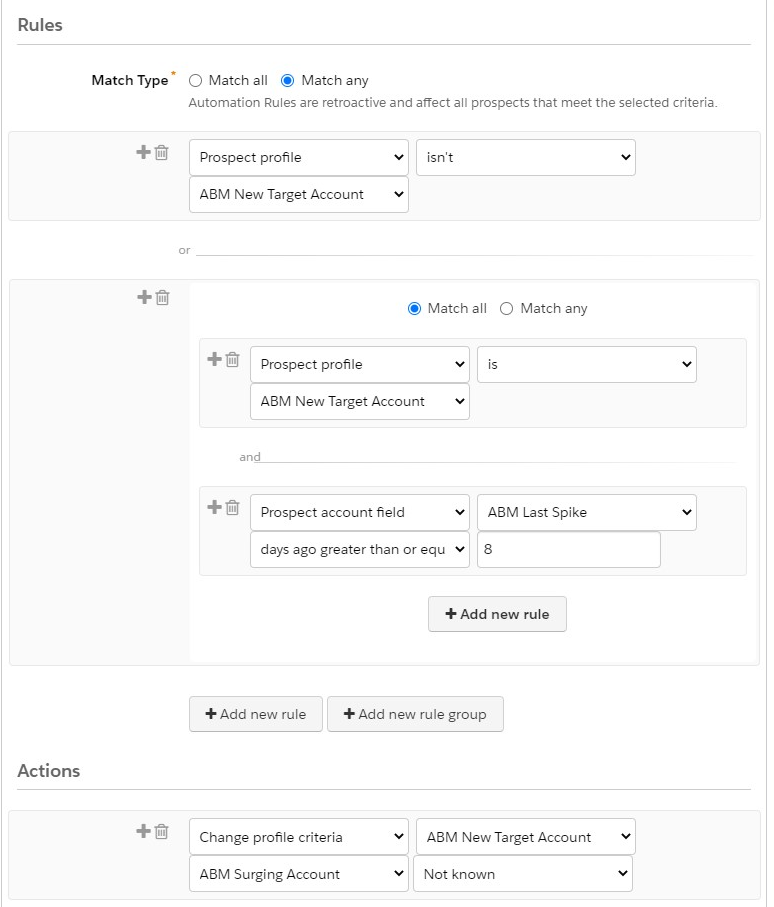
And when the Account isn’t spiking, you’ll want to put that temporary scoring bump back down. Notice: you can set the rule to identify when the prospect is no longer in the ABM New Target Account profile OR that the most recent spike has ended.

This trick allows you to use Pardot grades to keep Sales focused on accounts that are most active and highest potential in a given moment. 

7. Automations to flag prospects and keep your data clean and up to date

Moving your ABM strategy into Pardot can help you develop creative strategies and automations to keep your database clean and focused on the highest potential accounts. Based on your target account list, you can filter Pardot prospects into lists, add to campaigns, assign to queue, change prospect custom field value, apply tags, and more. 

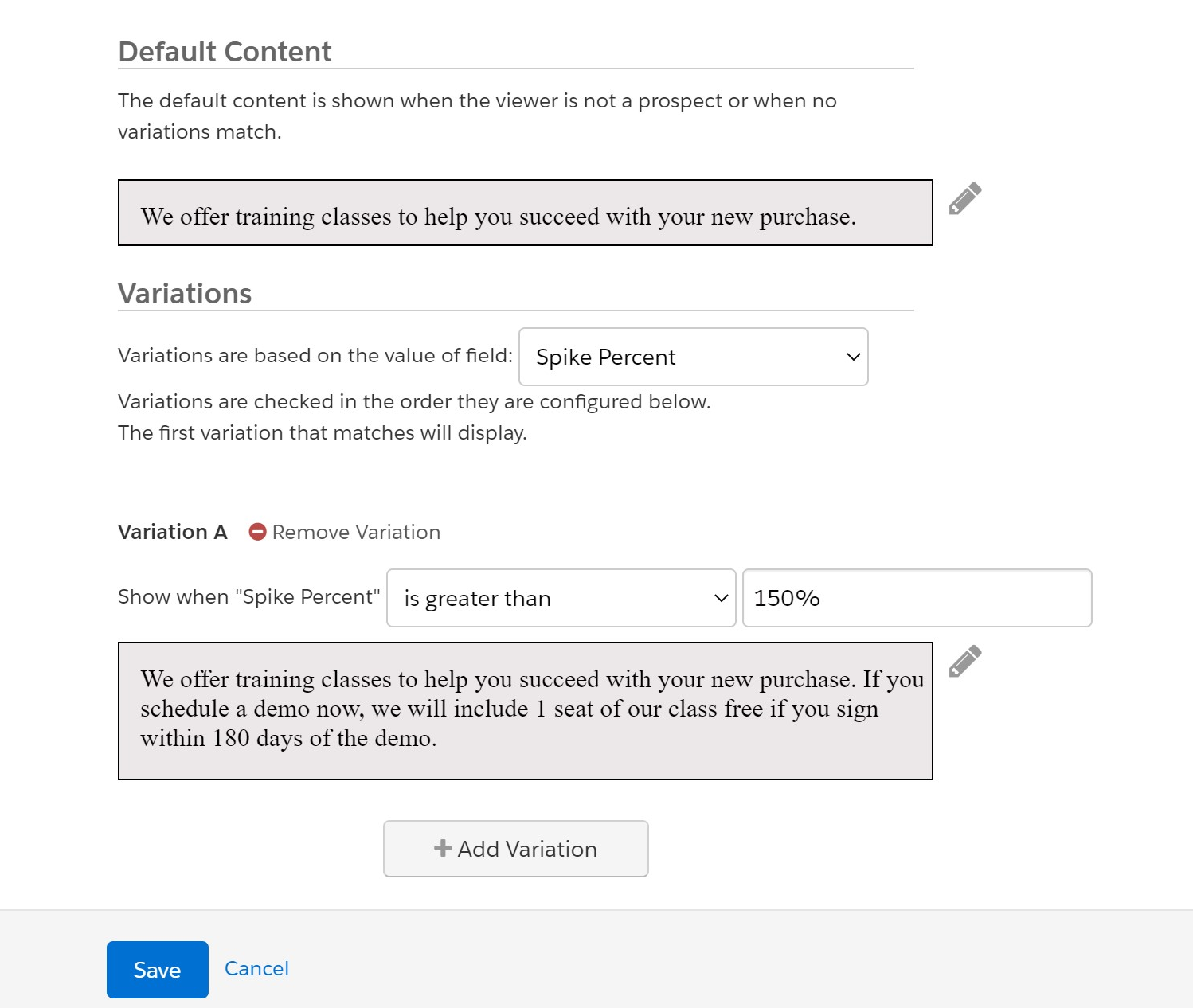
8. Use Dynamic Content to tailor messaging for target accounts 

As you pull in Terminus field values like behavioral score and spiking accounts, you can use that data to personalize content through Pardot features like Dynamic Content. 

For example, maybe you send an email promoting a new feature, but want your top target accounts to feel a little extra love. Use Dynamic Content to serve spiking accounts a promotion or exclusive offer that the rest of the email recipients don’t see. 

9. Use data to improve marketing performance 

Take the guess work out of where to focus your efforts in Pardot by measuring engagement at the account and campaign level. By building campaign influence reports that allow you to see which marketing activities are driving pipeline and revenue, you can you use the data to: 

  • See which content is driving results
  • Allocate budget to the channels that fill your funnel
  • Work seamlessly with Pardot Programs and Email
  • Measure revenue results of every Pardot interaction not just on the records synced to Salesforce

10. Read inferred account data on Salesforce leads from within Pardot 

Terminus writes inferred account data on leads allowing sales and marketing teams to operate with total account-centricity from Sales Cloud and Pardot.  

Now, with the Pardot integration, you can sync this lead-to-account data into Pardot so even your leads can be account-centric! 

Tighten your sales and marketing alignment by running an ABM strategy through Pardot 

Many companies are adjusting their sales and marketing strategies to be more account-centric. This integration between Terminus and Pardot will make that shift easier and more effective as marketers are given the tools to support sales’ efforts to reach and engage a set of target accounts. 

What are some creative ways you’ve targeted, engaged, and measured target accounts through an ABM strategy? Let us know in the comments. 

The education industry is undergoing one of its most transformational shifts in history, one in which institutions are having to rethink their approach not only to learning (i.e. virtual classrooms and facilitating online education), but also how they navigate recruitment, advancement, and general student affairs. 

Marketing technology is now front and center in higher education as institutions embrace this digital transformation and the opportunities it could bring. In the midst of this monumental shift, we wanted to find a way for higher ed folks to find their people, share ideas, and learn from each other about digital strategies and martech tips & tricks. And so was born the collaborative, virtual event: MarTech for Higher Ed: A Sercante Seminar

The 4-hour seminar is a multi-track, virtual experience that allows you to choose your own adventure by attending the sessions most relevant to your role and institution. From chatbots to Pardot, we’re seeing a big uptick in colleges and universities that want to evolve and personalize the experience across their student lifecycle.

Look out for feature presentations on:

  • Recruiting & Admissions
  • Student Success
  • Online Learning
  • Advancement

After the keynote and breakout sessions, we’ll be running a virtual Circle of Success, a collaborative learning space where you can chat with marketing pros about any challenges you’re facing.

The Details

  • When: Tuesday, June 2nd
  • Time: 12pm – 4pm ET, 9am – 1pm PT
  • Cost: Free
  • Speakers: Salesforce, CSU Bakersfield, Worcester Polytechnic Institute, University of Colorado Law School, IMD

Register here

Learn How the Higher Ed Institutions around the World are Accelerating Their Digital Efforts 

Sercante’s Higher Ed Seminar is leading up to Salesforce’s Higher Ed Summit on June 9. The two events together will give you a full-circle view of how institutions are transforming their recruiting, learning, and advancement efforts in this new digital landscape. 

We look forward to seeing you on June 2nd! 

Sign Up Now!

Building and sending emails is Pardot’s bread and butter. The ability to customize the look and feel, decide exactly who to send to, and how you want to use emails is key to any marketing automation operation. 

In Pardot, there are two types of emails that can work together but have distinct purposes: List Emails and Email Templates. (more…)

This week, you may have noticed lower-than-average email deliverability from your Pardot email sends.

That’s probably because of the Barracuda Email Firewall issue that occurred this week, which incorrectly blocked more IPs than usual from many email vendors — including Pardot. (more…)