Category

Community

In a move that extends beyond the chatbots used to formulate interview questions or write email subject lines, Salesforce is expanding automation capabilities by integrating Einstein GPT and Data Cloud with Salesforce Flow.

So, what does the announcement from Salesforce mean for marketers? 

Bringing Einstein GPT and Data Cloud capabilities into Salesforce Flow means marketers can use the automations to create impressive real-time experiences for customers. And they’ll accomplish that using clicks rather than coding skills.

It’s something that will make the tools easily scalable for Salesforce customers at every growth stage.

How and when can Salesforce customers access it?

The announcement actually involves two initiatives Salesforce is launching. The first is a tighter integration between Salesforce Data Cloud and Flow. And the second is the integration of Einstein GPT and Flow. 

According to John Kucera, senior vice president of product management at Salesforce, customers can use Flow currently with Salesforce database data. The integration updates between Data Cloud and Salesforce Flow are opening up the possibilities, and incorporating Einstein GPT is adding an efficiency edge to the technology. 

Kucera said the Einstein GPT capabilities will be available on an early adopter basis in early fall as part of the Salesforce Winter ‘24 release. He went on to say that the Data Cloud integration will probably be offered as part of a standard Salesforce subscription, and Einstein GPT for Flow may carry an additional charge once those details are worked out.

Einstein GPT and Data Cloud Capabilities

Salesforce introduced Einstein GPT in March 2023 as the world’s first generative AI CRM technology, which infuses proprietary Salesforce AI models with generative AI models from OpenAI and other large AI models. And Data Cloud takes customer data from any source inside or outside the Salesforce platform and harmonizes it in real time.

So what in the world does that mean for marketers?

That means marketers can use information from Data Cloud to generate content and build workflows via Einstein GPT. Since Data Cloud reacts to data changes in real time,  marketers can serve content that adapts dynamically and creates personalized experiences every time.

For example, a marketer could use Einstein GPT to generate an email with dynamic content blocks that update in real time when a Data Cloud field updates based on customer activity.

John Kucera said to SiliconANGLE, “You can give it a prompt such as ‘I want to create a guided workflow for a new customer or create a rule to follow up with an email to customers who haven’t responded in five days.”

Infusing Einstein GPT and Data Cloud with Salesforce Flow

The new integrations are going to turn things up a notch for marketers. Here’s what happens when we incorporate Salesforce Flow into the Einstein GPT and Data Cloud mix. 

What is Salesforce Flow?

Salesforce Flow is a declarative automation tool. It allows you to create complex automations inside the platform using clicks rather than code, so users can get in there without the need for developer skills.  

Marketers use Salesforce Flow for things like managing campaign activations, automating customer onboarding steps, or creating a custom task series for sales teams. 

How can marketers use Salesforce Flow with Einstein GPT and Data Cloud?

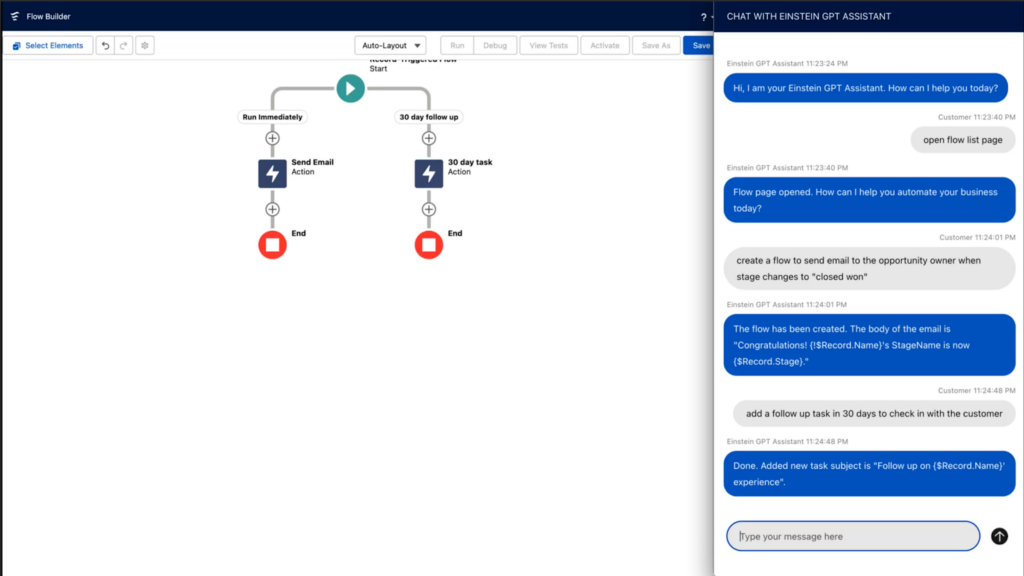
Using the Einstein GPT and Data Cloud integration alongside Salesforce Flow is changing the game for marketers who use the platform. That’s because marketers will be able to use conversational chatbots to automate complex workflows and trigger actions in real time.

Users and admins can describe the type of flow they want to build, and then they’ll sit back and watch the chatbot complete the tasks. Or, it can be used to build formulas or search for functions. It removes much of the manual and tedious work that goes into creating complex flows and automations.
Source: Salesforce

For example, a field in Marketing Cloud Engagement detects that a customer added items to their shopping cart, but they left the page without completing the purchase. That triggers an immediate email notification, created via generative AI, that goes to the customer and offers a discount code for them to complete the purchase.

In summary, the three benefits to marketers include: 

  • Reduced flow build time
  • Access to more options to automate with flow
  • Improved real-time personalization for customer interactions  

Get ready for generative AI inside your Salesforce org

We’re on the edge of our seats with anticipation for combining Einstein GPT with Salesforce Flow and Data Cloud capabilities. 

These technologies make us feel like we have a front row to the future of CRM and marketing automation. So, in the meantime, we’ll be thinking about all the ways we can use conversational AI to do all the things us busy marketers do. 

Have any aha use cases you’d like to share? How do you think Einstein GPT, Data Cloud, and Flow are going to work together in your org? Let us know in the comments! 

You can also drop us a line if you’re wondering how you can incorporate these tools into your marketing operations strategy.


Those of you who have been followers of The Spot for a few years now know that we have shared our favorite Marketing Cloud Account Engagement (Pardot) Ideas from the Salesforce IdeaExchange either in blog posts or the Pardashians Slack group.  

This tradition started in 2017 with Andrea’s initial post highlighting 8 ideas on the IdeaExchange that Pardot admins should upvote.  We’ve seen great features come to life in the most recent Salesforce releases (looking at Conditional Options for Completion Actions), and we’re hoping you can help prioritize ideas for future releases.

Salesforce has three releases throughout the year and uses their IdeaExchange to help drive which features are prioritized in future releases. As a marketer, you have most likely entered a situation where your team is requesting a solution that is currently not available in Marketing Cloud Engagement or Marketing Cloud Account Engagement as a feature. 

Your first stop is to see if this feature/solution has been mentioned or resolved via the IdeaExchange. Checking there first is going to help you understand how others have solved it, and then you can add in your own vote to the idea.

What is the Salesforce IdeaExchange anyway?

Back in 2006, the Salesforce #Ideaexchange was born as a way to involve its customers (big and small) in a modern effort to crowdsource ideas for its product roadmap. This ensures the community gets a platform to contribute their ideas and wishes — you know, a place where the margods can go for inspiration if you will as they build the world of tomorrow.

How does one enter their idea into the Salesforce IdeaExchange?

  • Come up with an idea and submit it to the exchange
  • You then get trapped and spend 2-4 hours going through other people’s ideas (definitely optional, but highly encouraged). 
  • If your idea gets enough votes (10+ points for you) then a product manager gets involved
  • The idea is developed and then delivered, and we all cheer!

Need more details? We wrote a little about the history of the AppExchange.

Top Salesforce IdeaExchange items for marketers

As Salesforce continues to work on improving their marketing automation platforms, our team has put together a list of ideas that we recommend you upvoting and adding to your wish list in hopes of getting them added to the top of the prioritization list.

Here is our current list of Salesforce IdeaExchange items that marketers should check out and upvote.

Salesforce

  1. Ability to Customize Campaign Member Status Values for all Campaigns

This feature would help with needing to update campaign member statuses for each individual campaign. We wrote about how to fix this with Protected Campaign Member Statuses.

Upvote >>

Marketing Cloud Engagement

  1. Access to a Marketing Cloud Engagement Developer Edition

This feature would help trailblazers gain hands-on experience working within Marketing Cloud Engagement without being a customer.

Upvote >>

  1. Include Dynamic Links in Engagement Split Activity

This feature would ensure Journey Builder engagement splits based on clicks can monitor the clicks on any dynamic link as well as static links.

Upvote >>

  1. Access to a Recycle Bin in Marketing Cloud Engagement

This feature would give Marketing Cloud Engagement admins the same abilities as the Marketing Cloud Account Engagement recycle bin.

Upvote >>

  1. Include the “De-Duplicate by Email Address” Feature in Journey Builder

This feature would give users the same abilities they have when sending a normal email through Marketing Cloud Engagement.

Upvote >>

  1. Allow Data Extensions as Suppression Lists in Journey Builder

This feature would allow marketers to use data extensions for suppression lists in Journey Builder instead of lists.

Upvote >>

Marketing Cloud Account Engagement

  1. Track and Record Direct Replies to an Email Sent from Marketing Cloud Account Engagement

This feature would provide an additional, much needed KPI for marketers to be able to determine which CTAs are working for their emails that do not go directly to links or forms.

Upvote >>

  1. Reduce Errors Post-Sending Email

This feature would allow you to either recall or edit emails that have not been opened yet after an email is sent with an error.

Upvote >>

  1. Allow or Operational Email Sending in Engagement Programs

This feature would bring the operational email checkbox to the entire Engagement Program or individual Email steps to ensure those who need to receive these emails still are even when in an Engagement Program.

Upvote >>

  1. Audit changes to Marketing Cloud Account Engagement Assets

This feature would bring a tool similar to what Salesforce Admins have available to them to be able to view all changes made to lists and assets throughout Marketing Cloud Account Engagement.

Upvote >>

  1. Allow Variable Fields in SFDC Tasks

This feature would allow for more variability and customization when creating a Salesforce Task from within Marketing Cloud Account Engagement.

Upvote >>

  1. Notifications for SFDC Connector Errors

This feature would bring forth a notification system for your team to understand when there are Connector errors between Salesforce and Marketing Cloud Account Engagement.

Upvote >>

  1. BRING BACK “PARDOT”

This feature needs no explanation as many people are hoping we can reverse the name rebrand and move back to calling the tool “Pardot” at some point in the future.

Upvote >>

Analytics

  1. Ability to Include Cross Filters in Report Filter Logic

This feature would allow users to be able to use standard filters and cross filters together in a report with filter logic.

Upvote >>

  1. Reporting on Email Activity from Salesforce Inbox or Standard Inbox Integrations

This feature would bring email activity into the Activity records to allow for reporting between emails and other activities.

Upvote >>

  1. Allow Reference Lines on Dashboard Components

This feature would bring an amazing reporting feature to dashboards so marketers can include reference lines on any report chart within a dashboard.

Upvote >>

We Want to Hear From You!

While some Pardot admin recommendations get picked up and implemented faster than others, it all depends on community participation and perceived need from the Marketing Cloud product team. In fact, to help drive ideas, Salesforce created a prioritization system where you can see top feature suggestions across the ecosystem battle it out!

Are there any features or functionality you wish you could see? If so, let us know below. With a little bit of luck and support from your Salesforce Ohana, you might also uncover the secrets of the IdeaExchange and get your idea on the scoreboard.Don’t forget to vote for these ideas, submit your own and chat with us on Twitter, LinkedIn or simply subscribe to the blog. 

I saw an email pop in my inbox last week from our pals at Stensul. The subject line read “Simple and quick subject lines? The Stensul way it is.” Inside the email was a link to try out an AI-powered email subject line generator.

I had to check it out.

I spend lots of time in my role at Sercante writing and editing copy for marketing assets like emails, blog posts, landing pages, and social media posts. And I can’t tell you how many times I’ve gotten in an editing hole testing different variations of words for email subject lines until I find the perfect one.

That’s what got me so excited about the tool.

Note: Stensul has updated the tool since this post was written. It is now called the Stensul email toolkit, and it includes more features for generating email copy including CTA text, style rewrites, and preheader text assistance. This post is only about the email subject line function.

Email Subject Lines that Inspire Action and Curiosity

Each email you send through your marketing automation tool has such a small chance to get people to do the things you’re asking them to do. So, it’s especially important to write an impactful email subject line to get people curious about what your email has to offer. You also have to provide value by offering your reader clear expectations about what’s inside the email. 

I’m thinking the Stensul email subject line generator will be helpful for achieving those goals. I’m also thinking we can use it to create subject line variations for A/B testing.

Trying the Stensul Subject Line Generator on Sercante Emails

I guess the best way to see how this thing works is to dive in. First, I went to the subject line generator landing page and traded my info for access to the tool. A few seconds later, I got an email with my magic link to use it.

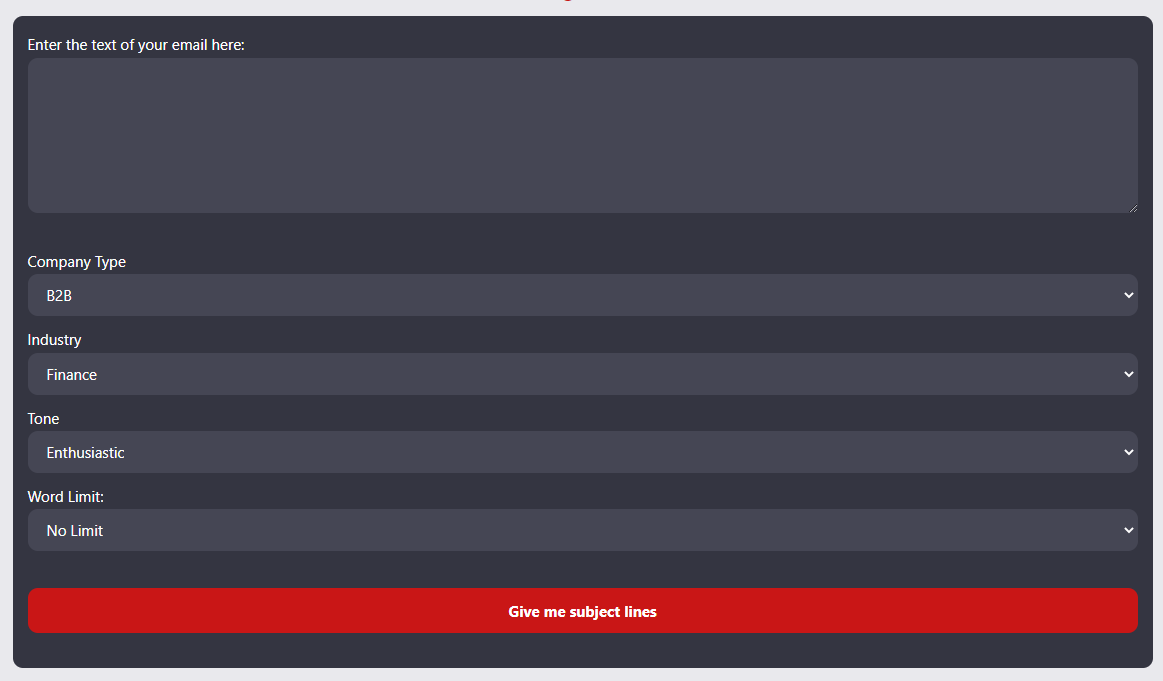
Here’s what it looks like:

You’re prompted to enter the text of your email along with details like your company type, industry, and tone of voice along with word limit for the subject line. 

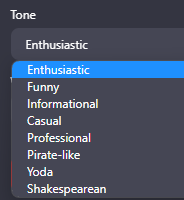
The tone of voice options range from average to entertaining. Here are the options:

Tone of voice options
  • Enthusiastic
  • Funny
  • Informational
  • Casual
  • Professional
  • Pirate-Like
  • Yoda
  • Shakespearean

I tested it out using a few older Sercante emails to see what subject lines it produces.

Here are examples from my exploration:

Sercante 2022 Year in Review Email Example

Here’s what I got when copy-pasted the content from our 2022 year in review email and asked for 10-word subject lines.

Original subject line: ➡️ Join Us In Celebrating Our Milestones ❇️

The email:

Results with Enthusiastic Tone:

  1. 🎉 Celebrating a Year of Growth & Opportunity with Sercante! 🚀
  2. 2022 Highlights: Sercante’s Unforgettable Journey 🔥
  3. 🌟 Sercante’s 2022 Milestones: Thanks for the Support!
  4. ✨ Sercante’s Incredible Growth: Join our 2023 Adventure!
  5. 🚀 Cheers to Sercante’s Success: Let’s Make 2023 Even Better!

Results with Funny Tone:

  1. Hold Our 🍾: Sercante’s Wild & Wonderful 2022 Recap!🎉
  2. 🚀Blast Off! Sercante’s Stellar 2022 Highlights Inside😄
  3. Unleashing the Fury: Sercante’s 🐉-Filled 2022 Adventures
  4. 🎂Sercante Turns 5: Our Side-Splitting, Record-Breaking Year!😂
  5. Brace Yourself: Sercante’s 2022 Rollercoaster Ride Awaits!🎢

Note: I love that it’s intuitive enough to throw a dragon emoji in there.

Results with Yoda Tone:

  1. Growth & Opportunity, 2022 We Celebrate, Yoda Says
  2. Memorable Year, Sercante’s Journey, Learn You Will
  3. Gratitude and Success, 2022 Recap, Stronger Together
  4. Salesforce Support, Sercante Achievements, Future Yoda Sees
  5. Embark 2023, Marketers’ Galactic Adventures Await Us

The Spot & Jenna Molby Partnership Email Example

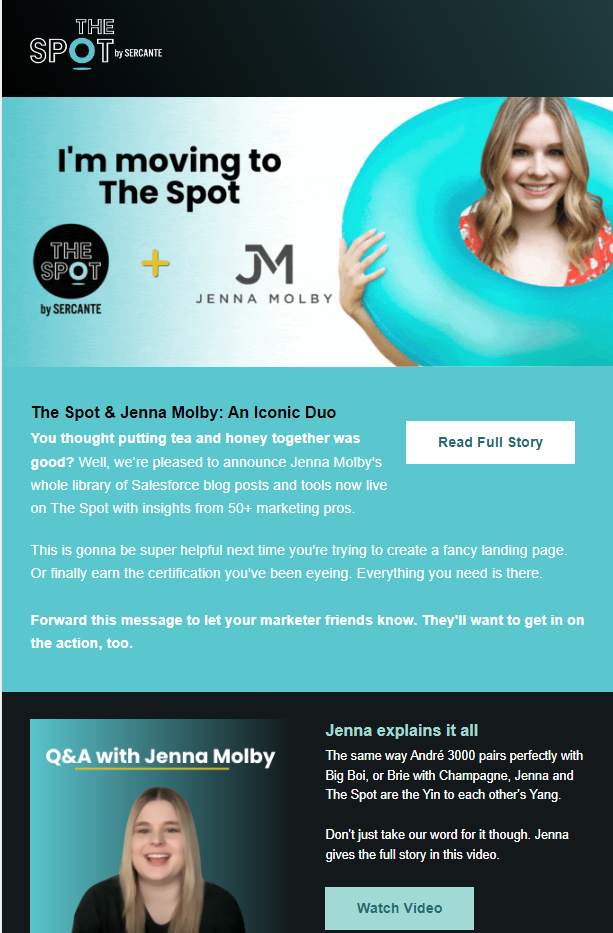
Here’s more email subject line generator exploration using an email we sent to announce Jenna Molby’s partnership with The Spot.

Original subject line: A shining Salesforce star is joining The Spot 🤩

The email: 

Results with Informational Tone:

  1. Discover Jenna Molby’s Salesforce Insights on The Spot
  2. Elevate Your Marketing with Jenna Molby & The Spot
  3. Master Pardot: Jenna Molby’s Tools & Tips Now Live
  4. Unleash Your Salesforce Potential: Jenna Molby & The Spot
  5. Jenna Molby’s Salesforce Expertise Joins The Spot Library

Results with Informational Tone:

  1. Jenna Molby Joins The Spot: Upgrade Your Salesforce Game
  2. The Spot + Jenna Molby: A Match Made in Salesforce Heaven
  3. Jenna Molby’s Salesforce Secrets Now on The Spot!
  4. Boost Your Salesforce Skills with Jenna Molby & The Spot
  5. Unleash Your Marketing Superpowers with Jenna Molby & The Spot

Results with Pirate-Like Tone:

  1. Ahoy Mateys! The Spot & Jenna Molby’s Treasure Trove Unveiled
  2. Sail into Salesforce Success with Jenna Molby’s Insights
  3. Chart Yer Course with Jenna Molby’s Ultimate Salesforce Guides
  4. Discover the Hidden Gems of Salesforce with Jenna Molby
  5. Jenna Molby’s Swashbuckling Salesforce Secrets Unleashed

Results with Shakespearean Tone:

  1. Behold! Thee Spot & Jenna Molby: A Veritable Pairing
  2. Pray, Joineth The Spot for Molby’s Salesforce Wisdom
  3. Salesforce Mastery: Jenna & The Spot Unite in Harmony
  4. Rejoice! Jenna Molby’s Tools Now Grace The Spot
  5. Hark! Jenna Molby’s Top Guides, Now on The Spot

My thoughts overall on the email subject line generator

This tool is super handy for coming up with subject line variations for emails. I especially see it being helpful when my brain is done and I simply can’t write another word — let alone something that grabs people’s attention.

And that’s the thing about email subject lines. Writing them is often the last thing we do in the email copywriting process. But we should be paying closer attention so we have greater chances of getting clicks from our email recipients.

The more copy the better

I did learn one caveat while using the subject line generator tool. It works better on emails that have a higher volume of copy. My first example was a true newsletter with 667 words of copy, while the second example had about 415 words of copy. 

The generator results were spot on in my opinion for the first email while I was underwhelmed by the results for the second email. That may be because the second example had significantly less copy and sections. It makes sense because the tool needs enough information to pull from so it can summarize into a short subject line. I’m also loving the emoji suggestions, but I didn’t get those with all of my results.

Where AI Tools Fit in Content Marketing

You’ve probably heard lots of talk lately about OpenAI’s ChatGPT tool and other AI-powered chatbots that we’re seeing in the content marketing world. The Stensul Email Subject Line generator belongs to the wave of tools that are powered by GPT4, which is the latest iteration of OpenAI’s chatbot. 

I’ve seen blog and social posts from people who aren’t seeing the potential in these tools. But I think these tools are giving more power to individual content creators.

I was recently discussing how AI tools affect content marketers with my fellow dragon, Marcos Duran. He brought up a great point that he heard in conversations with people at a martech networking event.

Someone said something to the effect of “ChatGPT turns a content creator into an editor.” And I couldn’t agree more.

I don’t know about you, but I’d rather fix a mediocre sentence than start from scratch. And that’s what these AI tools are all about. They create a starting point, and you still need highly skilled individuals to add the human touch. 

What are your thoughts on the impact of AI chatbot tools on content marketing? Be sure to let us know your thoughts on the AI debate in the comments section. Or reach out to team Sercante if you’re looking to add a human touch to your marketing campaigns.

Like many big software companies, Salesforce has an honor they bestow to most influential supporters. They call this the Salesforce MVP program. The Trailblazer Community team recently announced the 2023 Salesforce MVP program inductees, and we were thrilled to see many of our favorite marketing voices on the list.

Marketers don’t always get the recognition they deserve, which is why we’re on a mission to showcase all of the amazing things marketers do. We’re especially excited to highlight the people who are shining the limelight on Salesforce marketing tools for a change.

Background of the program

If you haven’t already noticed, there’s a whole lot to learn about using marketing automation and CRM tools. Salesforce does everything they can to make resources available to customers so the tools are easier to use and customize, but everyone learns in their own way. 

Sometimes we need real people who have been working closely with these tools to teach us what’s possible with them. (You know, like, other customers and people with an outsider’s perspective)

That’s where the Salesforce MVP program comes in. These are all people who share what they know about the platform and personally connect with others who are still learning. 

According to the Salesforce MVP Code of Conduct, MVPs are “lifelong learners who go above and beyond to share their expertise and help the entire community succeed… [and] leaders in the Trailblazer Community who encourage each other, celebrate others’ successes, work collaboratively to make our community and the world a better place, and have a lot of fun along the way!”

Here’s the MVP Hall of Fame and Member Directory, which goes into complete detail about the program.

How Salesforce MVPs are Selected

Wondering how people get a spot in the program? Here’s how the process works:

  1. Salesforce opens nominations for MVPs around November each year.
  2. Community members either self nominate or can share stories to nominate others.
    • Current MVPs do not need to take action, they are automatically reviewed for renewal.
  3. The Trailblazer Community team completes the first round of nomination reviews. 
  4. Then, the nominations go through a second round of reviews from a team of Salesforce employees who are active in the Trailblazer Community
  5. After that, current Salesforce MVPs provide feedback to new nominations and nomination renewals. 
  6. The Trailblazer Community team completes a final review before the Salesforce leadership team makes final calls and approvals.

The 2023 Salesforce MVP Class

Congratulations to everyone who was selected to join the 2023 Salesforce MVP Class! 

MVP NameMVP Name
Aaron CrosmanMichael A. Grandel
Andy Engin UtkanMihoko Yamashita
Ankit TanejaOleh Mykytyn
Asterisk LoftisPatricio Sapir
Ben LaMothePhaneendra Arigachetta
Gian Piere Vallejos BardalesRachel Park Brayboy
Johann FurmannSamantha Shain
Kannan NarayananSkye Tyler
Kristi BrownSwati Taunk
Kristin HubbardThomas Theunen
Lilith Van BiesenVicki Moritz-Henry
Maham HassanWarren Walters

Marketers Who Made the New 2023 Salesforce MVP List

We were thrilled to see two people we know from the Salesforce marketing community who made the list. Special congratulations to Ben Lamothe and Vicki Moritz-Henry and thanks for all the work you do for the community!

In fact, we know these two MVPs thanks to their work with the MarDreamin’ conference. Both have presented at MarDreamin’ in past years and have contributed in other ways. 

Our team reached out to them to get their thoughts on their new Salesforce MVP honors. Here’s what they had to say:

Ben Lamothe

“Being selected as a Salesforce MVP is an honor and is truly humbling. Giving back to the Salesforce and Account Engagement (Pardot) Trailblazer community that has changed my life and given me so much, is so important to me.”

Vicki Moritz-Henry

“When I transitioned careers into Salesforce, I was astounded by how supportive the community was. There were so many people who encouraged, mentored and taught me over the years. I honestly wouldn’t be where I am now if it wasn’t for them. My motivation is to spread that impact and be that same person for others.”

Andrea Tarrell Added to the Salesforce MVP Hall of Fame

Last but most certainly not least, we wanna send a huge congratulations to the person who started this whole blog (and Sercante) in the first place. Andrea Tarrell has been an influential voice in the Salesforce community for close to a decade, and she’s served as a Salesforce MVP enough years for Salesforce to add her to the MVP Hall of Fame in 2023.

Launching The Spot for Pardot blog is only a small fraction of everything Andrea has contributed to Salesforce Trailblazer Community through the years. She’s spoken at countless events including Dreamforce, Connections, Dreamin’ conferences and user group meetings. Andrea even launched the first virtual conference for marketers on Salesforce in 2020 — MarDreamin’ (formerly ParDreamin’).

Keep being helpful and the rest will fall into place

The Trailblazer Community team received over 2,400 MVP nominations in 2023, so of course some people were disappointed to learn they weren’t among the 24 new MVPs who were selected. The most important takeaway though is to keep going! While the MVP program brings inherent benefits along with it (i.e. free entry to conferences, getting asked to participate in high-profile marketing content), the true benefit is that helping others helps you, too.

When the community grows, we all grow together. And there’s room for us all to be successful in the community. So, keep sharing what you know. Start a Salesforce blog (or you can write for this one!). Apply to speak at community events. Volunteer with a Salesforce mentorship program, like Merivis, for instance.

The possibilities to give back are endless. Tell us how giving back to the tech community has enriched your life in the comments section.

Guess what? Big changes are coming to two Salesforce industry clouds. Salesforce is launching massive revamps this spring to target users working in the nonprofit and education sectors. The new Nonprofit Cloud and Education Cloud are a reimagining of the data model for these industries. 

What’s even better is that they are now inclusive of tools and features that you won’t find in the existing managed packages for those products.

Wait, didn’t Salesforce already offer Nonprofit Cloud and Education Cloud?

You may have seen mentions of these products before, but here’s how they’re different now. 

In the past, Nonprofit Cloud and Education Cloud were a set of solutions Salesforce packaged under an umbrella with those names. Or, many nonprofits relied on the managed package Nonprofit Success Pack (NPSP) in combination with Sales Cloud. Additional managed packages and services were stacked to build custom and highly individual solutions. 

For example, a university marketing department may have used Marketing Cloud Account Engagement (Pardot) while other divisions on campus are using Sales Cloud and third-party CRM for student admissions.

While the new offerings do not include customized marketing solutions like Pardot and Marketing Cloud, they do offer a single license solution that can take the place of Sales Cloud and third-party tools. 

Salesforce Nonprofit Cloud

The new Nonprofit Cloud takes the learnings from this industry and creates a single, unified product that is truly tailored to nonprofit needs. Get the full scoop from the Salesforce Spring ’23 Release Notes.

Say hello to a new product based on your feedback, and that is all about YOU, not adapting an existing product to fit. 

Salesforce Education Cloud

Education is also stepping into the spotlight at long last. You can take a closer look in the Salesforce Spring ’23 Release Notes.

To replace Salesforce Education Data Architecture (EDA) + Sales Cloud, the all new Education Cloud rolls out a single product for student recruitment and admissions.

Salesforce Nonprofit Cloud and Education Cloud Launch Dates & Product Details

So, when can you get your hands on the all-new Nonprofit Cloud and Education Cloud offerings? 

Today! New clients can evaluate these new products starting March 14, 2023.

Read more about the new Nonprofit Cloud and pricing here.

Who should consider Salesforce Nonprofit Cloud?

Here are questions you can ask yourself if you’re considering a move to the new Nonprofit Cloud:

  • Are you looking for a unified approach to program and case management that leverages the newest industry cloud tools like the Actionable Relationship Center? 
  • Is your team at a good place to go through a new implementation? 

Who should consider Salesforce Education Cloud?

You can ask yourself these questions if you’re thinking about moving to the new Education Cloud:

  • Are you looking for a unified solution to recruitment and admissions that leverages the newest industry cloud tools? 
  • Do you have the resources to complete a new implementation? 

Help! What if I already have NPSP or EDA as part of my solution?

Sit back, relax and enjoy new product demos (only if it doesn’t stress you out). Hopefully the demos will get you thinking about the possibilities the new offerings can bring.

Nonprofit Success Pack (NPSP), Education Data Architecture (EDA), and other existing products that currently support these industries will continue to be supported with no sunset on the horizon. 

Wait a minute — something’s missing here! 

More features will continue to be added to the impressive roster for Nonprofit and Education Clouds. 

For Nonprofit Cloud, you can expect to see fundraising, outcomes and engagement coming soon. And for Education Cloud, next up is Student Success. 

Learn more at the upcoming Salesforce.org Education Summit.

Get help figuring out your next steps

So, we may know where you can get help understanding these tools and how they fit into your team’s overall marketing and operational strategy. 

Whether you’re already using a set of Salesforce solutions and products or thinking about implementing one of the new ones, you can reach out to team Sercante for help understanding what’s best for your long-term vision.

Are you already using NPSP or other Salesforce solutions at a nonprofit or school? Tell us about your experiences with the tools in the comments!

You are 72% more likely to keep reading a blog post when the author uses a data point in the first sentence. That’s because sharing numbers makes it sound like you looked at studies related to your topic. And using those statistics in marketing content makes the information you share seem reliable so people find value in it.

But more often than not, marketing writers do a quick web search to find a statistic. Their quick web search takes them to a blog post where the author uses a statistic but doesn’t say where the stat came from. It seems legit enough, so they grab the stat to use in their blog post.

Our dear marketers have the best of intentions. But these wearers of many hats are usually short on time.

Who knows, they may just pull a number out of thin air and hope nobody looks into it. 

(seriously, don’t cite the 72% stat I just gave you)

Always Check the Numbers

As someone who’s been proofreading and editing marketing things other people write for almost 15 years, I can tell you that I always double check the statistics authors use. 

That’s because the statistics aren’t adding any real value to the piece unless the numbers are reliable and include context around them.

How to Use Statistics in Marketing Content

I’m not knocking using statistics in marketing content at all. I think it’s super important to research what you’re writing about so you can focus on collective knowledge rather than just your own thoughts. And using numbers does catch the attention of your audience and give you an authoritative voice.

But, there’s a right way to do it. And the wrong way.

Statistics in marketing

The Right Way to Use Statistics in Marketing Content

Let’s get you on the right track so you can use statistics in your marketing content and sound like a boss. 

The best way to use statistics is to provide context around the numbers. Then, the reader can understand what the numbers mean to them and truly find value in your content.

Here’s an example of a GOOD use of a stat

“According to a 2022 survey conducted by Content Marketing Institute, 47% of content marketers said they will hire or contract with content producers (writers, designers, photographers, videographers) in 2023.”

Original source that tells you how they came up with the stat

The source we cited here is linked to the original. And the original source includes all the information we need to know to accurately interpret the statistics within the full study. We know it was a 2022 survey from CMI, and the author even provided the survey’s definition of content producers.

After clicking on the link, we find out that On24 sponsored the survey as part of the B2B Content Marketing Report. And the source includes demographic and methodological information on the last slide of the PDF.

Add Context for your Statistics

There aren’t any hard-and-fast rules for providing context about stats to your readers unless your company or organization has defined those rules. 

Your company may have well-defined writing style guidelines you can refer to, and I encourage you to follow them. But if your company doesn’t have that worked out already, then you can follow these simple guidelines and share with your teammates. (consistency is awesome!)

Elements that add context to statistics

  • A link to the original source, and check that the link is working
    • Tip: Use a website plugin to check for broken links if you have a lot of content with linked statistics and resources.
  • A date to indicate the age of the statistic
  • The name of the source

Who is Your Audience?

You know your audience better than we do. That should guide what information to include with your statistics. Give your audience the information they need to understand why that statistic is important to them. 

Things to consider when determining if a source is reliable

On the surface, a statistic may seem reliable when it actually isn’t. The main questions to ask yourself about the statistic are:

  • What organization collected the information? Look for studies that were conducted by impartial organizations like universities, industry associations like the CMO Council, and research consulting companies like McKinsey and Forrester
  • When did they collect it? The study may be old. This is an especially important factor to consider when using statistics related to technology and economics.
  • How did they collect it? Look for what methodology was used to collect the data. If it was a survey, look for the sample size or geographic area from which the data was collected. These factors can have a big impact on the reliability of the data points and how the data relates to your message.
  • And why did they collect it? The source may be a study funded by a special interest group that structured the study or presented the results in a misleading way.
Tip for our Salesforce ecosystem readers

There’s a searchable Salesforce Stat Library to make it easier to find statistics from Salesforce annual reports. It includes specific stats about industry trends for people working in sales, marketing, service, IT, manufacturing, human resources, financial services, and public and nonprofit sectors.

The Wrong Way to Use Stats in Marketing

For illustrative purposes, we’ll review the WRONG way to use data points in marketing content. 

Here’s a bad example:

“You are 35% more likely to close a deal if you follow up on a lead within 48 hours.”

So what’s wrong with that statement? 

The author did not cite their source for the 35% statistic. And because of that, the reader has no idea what that statistic is based on. The study may have been completed in an industry that isn’t relevant to the reader. Or maybe the study is 15 years old, and we all know that sales processes have changed in that time.

Here’s another example:

“When text in a call to action button is changed from second-person viewpoint to first-person viewpoint, clicks improve by 90%. (www.hypothetical-source-link.com)”

The example doesn’t say where that number came from, but it includes a link to the source (www.hypothetical-source-link.com). So, you click it and find that the www.hypothetical-source-link.com article includes the original source for the 90% stat. But of course, there’s no link to click.

So, you turn to Google. A search of the stat and the original source takes us to a 2013 Unbounce blog post. The blog post author wrote the post in reference to an A/B testing case study from a consulting client, but it doesn’t provide demographic info or sample details. 

The statistic becomes less powerful and when you add context to it:

“According to a 2013 Unbounce client case study, changing text in a call to action button from second-person viewpoint to first-person viewpoint improves clicks by 90%.”

The original example sounds like a generalizable statement. But in reality, the number came from a single test that happened a decade ago. That’s why although the source provided an accurate number in their post, using the statistic in this case isn’t adding value for the reader.

(Hi Unbounce – we mean no disrespect and hope our link boosts your SEO😊)

What Do You Do When You Can’t Find Reliable or Original Sources

Nobody is forcing you to use that stat. And if they are, then send them a link to this blog post so you can educate them.

The best way to approach the use of stats in your marketing is to lean into information you CAN rely on. And if you don’t have that information, figure out what processes you can put in place to gather reliable information you can use down the road. 

You could build a process to survey your clients before and after engaging with your company, and optimize your reporting dashboards to track the results of your efforts over time. Or, maybe your company could benefit from using a subscription service like Statista to get access to original sources.

Do you have cool stats about your audience that you can share? 

Maybe it’s time to start collecting data about your audience and community. Lucky for you, there are lots of tools you can use to collect data about your audience. 

Read these blog posts about a few of our favorites:

Stats Are Better When You Add Context

Hopefully this post shines a light on using statistics in marketing content. Despite the best efforts of  marketers everywhere, it’s one of those things that I see people get wrong more often than not. 

But, you can get it right every time when you provide context to your statistics. Give the reader details like where the information is coming from, how and why it was collected, and what the date was when it was originally gathered or published. Then they can fully understand what the numbers mean to them.

What are your thoughts on using statistics in marketing content? Any fun horror stories to share? Tell us about it in the comments section.

No more posts to show