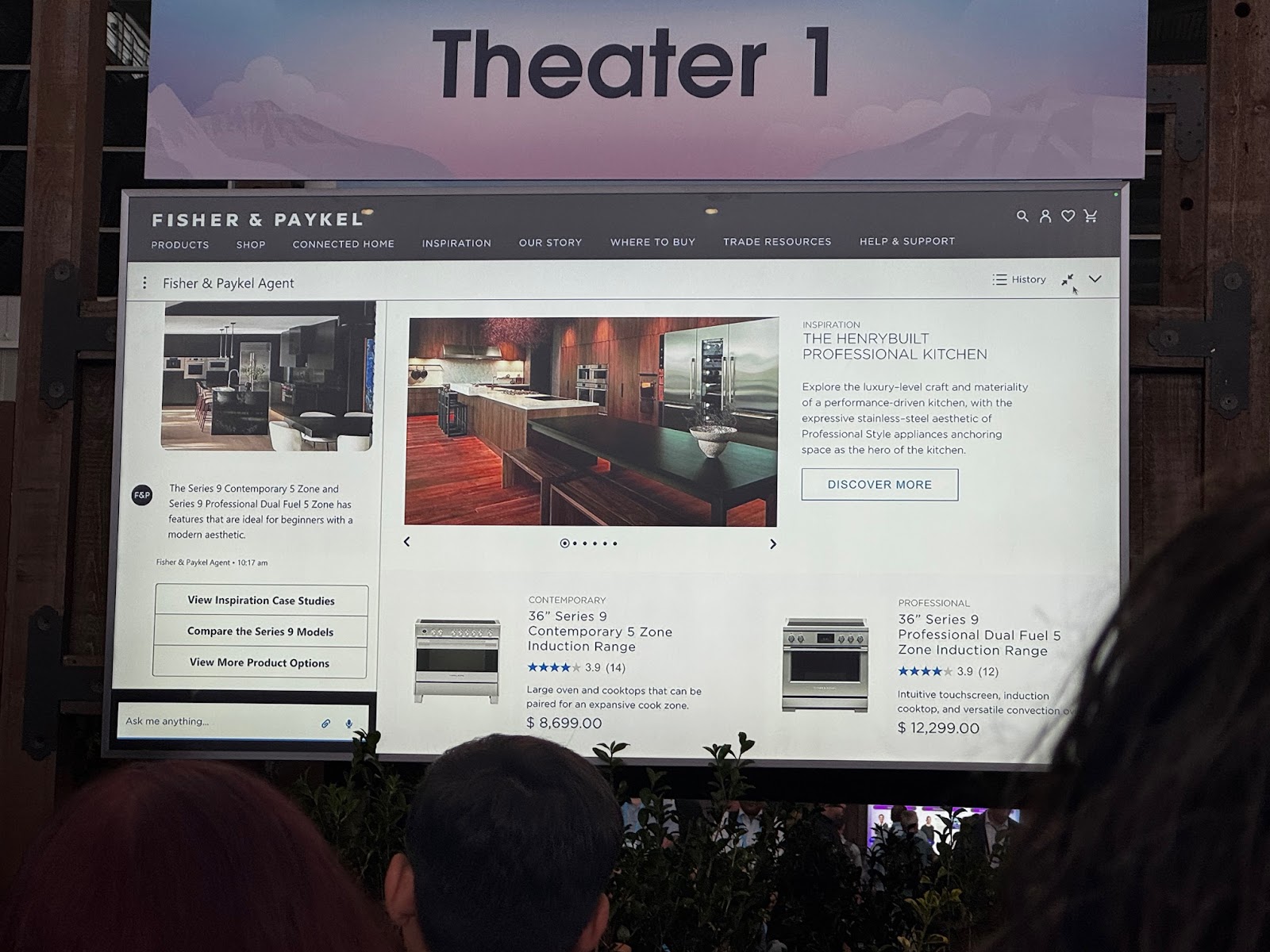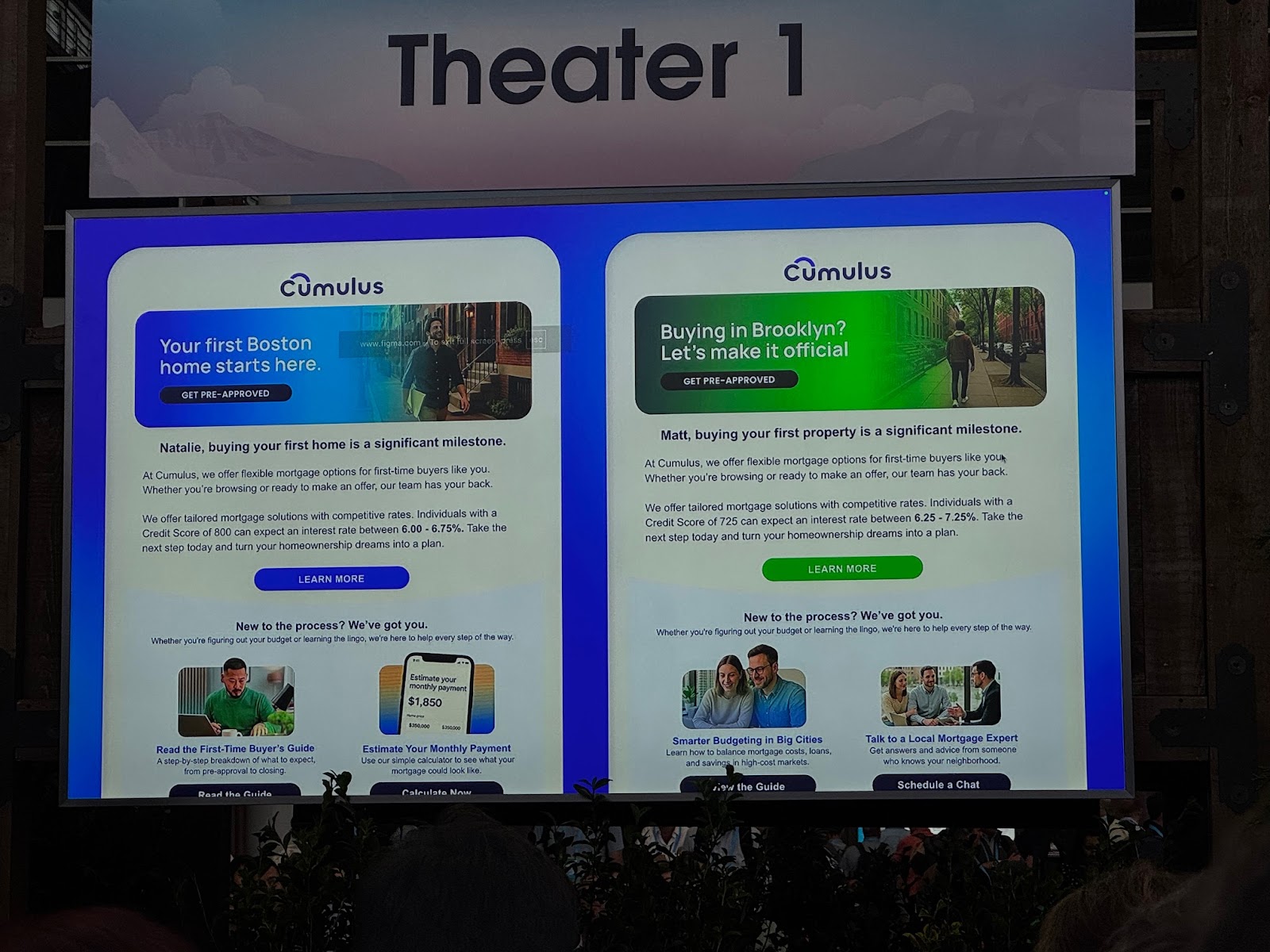
I just got back from the Agentforce World Tour in Boston and my brain is full of ideas. I wasn’t totally sure what to expect, but I ended up walking away with a lot of thoughts on how this new wave of Salesforce tools is going to affect the way we design—and honestly, it’s already starting.
Here’s what stood out to me, what’s changing in marketing design, and what I think we need to start doing differently.
What Salesforce tech I learned about—and why designers should care
The big thing right now is Agents. These are digital agents built into Salesforce that help you build campaigns, write copy, pass tasks between teams, and do all the repetitive stuff we usually get stuck with.
Here’s what stuck with me:
A Marketing Agent that helps write emails, build landing page briefs, and generate campaign ideas
Agents that pass work from marketing to sales to success without everything falling apart
A combo of Einstein and Data Cloud that makes personalization actually doable—not just a buzzword
The whole point is: this tech works in the background, which means the assets we make (emails, landing pages, chat flows) need to be flexible and fast to keep up. If the backend is getting smarter, the frontend has to match.
Why designers should be paying attention:
With marketers using agents to streamline content and campaign creation, we need to make sure that the designs on the frontend are just as easy to be flexible and scale. How can you templatize designs so they can be used for multiple variations and make assets a rinse and repeat process, so that marketing can continue to flow seamlessly to engage customers where they are?
As AI functionality + Data Cloud is making it easier to tailor campaigns on a 1:1 level, designers need to prep for modular, dynamic design solutions that can easily adapt to be used in tandem with these personalized experiences.
How design can make bots, emails, and landing pages better
A lot of chatbot flows feel like someone gave up halfway through. This tech is finally making them better, and as designers, we should be helping that along.
Things that stood out:
Keep bot messages short. Break things up.
Add little visual moments such as spacing, structure, and simple hierarchy
Same goes for emails and landing pages. If AI is helping create content, our layouts should be:
Modular and adaptable. Not every headline is going to be the same length
Built with personalization blocks in mind
Designed to include stuff like product recs, timers, or variations depending on the audience
It’s less about making something perfect once, and more about making something that works in a bunch of different ways.
Marketing tracking and data = smarter creative decisions
I used to skip over the data talk. But now that I see how it connects to the creative side, I’m paying more attention.
Salesforce showed how live audience data helps trigger different campaign paths. And if we know who we’re designing for, we can make better choices.
Things I’m going to start doing:
Ask who we’re designing for before opening Figma
Build layouts that make A/B testing easy
Stop hanging onto designs that don’t perform, even if they look good
Key takeaways for fellow designers working in Salesforce-powered marketing
Design for flexibility. AI needs space to breathe, your layouts should anticipate variability.
Think like a builder. Modular, testable, scalable.
Keep it human. No matter how smart Agentforce gets, people still connect with thoughtful visuals, clear flows, and real emotion.
Ask for data early. It’s not just for reporting, it can inform design choices from the start.
If you’re a designer in the Salesforce space, this is your sign to get used to automation tools, AI agents, and your marketing team’s strategy. It’s not about being replaced, it’s about being empowered.
Product Note:Marketing Cloud Growth and Advanced are editions of Marketing Cloud Next and have also been referred to as Agentforce Marketing.
Marketing Cloud on Core (also known as Marketing Cloud Growth or Advanced Edition) can now track how marketing efforts contribute to revenue! With the Spring ‘25 release, Salesforce introduced Opportunity Influence, helping businesses connect marketing engagement to pipeline and revenue. But how does it work, and what’s the difference between Opportunity Influence and Campaign Influence? Let’s dive in!
Opportunity Influence vs. Campaign Influence: What’s the Real Deal?
Before we break down how to customize and report on Opportunity Influence, let’s clarify how it differs from Marketing Cloud Account Engagement’s Customizable Campaign Influence. While both models aim to connect marketing efforts to revenue, they function in distinct ways and serve different use cases.
Tracks Leads/Contacts who are Salesforce Campaign Members
Integration
Syncs Marketing Cloud engagement data to Salesforce Opportunities
Works within Salesforce CRM using Campaigns and Opportunities
Attribution Models
Multi-touch attribution (first-touch, last-touch)
Campaign Influence and Customized Models
Reporting & Insights
Measures marketing-driven revenue impact
Measure campaign-driven revenue impact
🚨 Important Note for Account Engagement Users 🚨
You cannot use Opportunity Influence alongside Customizable Campaign Influence. If your team already relies on Account Engagement’s Campaign Influence Models, keep this in mind when deciding which model to use.
Additionally, Account Engagement users cannot activate Opportunity Influence as it does not currently integrate with Account Engagement’s Campaign Influence model. If your organization currently tracks marketing-driven revenue using Campaign Influence reports, you’ll need to continue using that model. However, if you’re considering a shift to Marketing Cloud on Core, Opportunity Influence could offer enhanced multi-touch attribution and engagement tracking.
Battle of Influences: Campaign vs. Opportunity – Which One Wins?
Let’s say you’re running a B2B software company and you’ve executed multiple marketing campaigns using a variety of platforms, including ads, email, an e-book, and a webinar, to engage your prospects.
Campaign Influence: A prospect attends the webinar, clicks on an email, and downloads the e-book before being transitioned to sales as a marketing-qualified lead. These interactions are recorded under a Salesforce Campaign and can be manually associated with the Opportunity when created based on the Opportunity Contact Role and Campaign Member. You can assign influence weight based on your customized rules.
Opportunity Influence: Marketing Cloud on Core automatically tracks all marketing engagement, including the ad view and click, webinar attendance, and e-book download. These touchpoints are automatically associated to attribute influence based on the predefined model and associated to the Opportunity upon creation.
If Campaign Influence were a fine-dining experience, it would be a chef-curated meal—meticulously crafted with manual customization to fit your exact taste. You decide which interactions get the most credit, but it requires hands-on effort. On the other hand, Opportunity Influence is like an all-you-can-eat buffet with an expert chef behind the scenes. It automatically dishes out credit across touchpoints, giving you a full spread of marketing influence with minimal effort. If you love precision and control, Campaign Influence is for you. But if you want a seamless, automated view of your entire marketing impact, Opportunity Influence takes the crown.
How to Set Up Opportunity Influence
Setting up Opportunity Influence requires configuration in Sales Cloud to ensure marketing engagement is properly attributed to revenue-generating activities. To fully connect marketing efforts with sales outcomes, ensure that contacts engaging with marketing campaigns are linked to Opportunities. This allows for accurate tracking of marketing interactions that influence deals.
Enabling Opportunity Influence
Navigate to Salesforce Setup > Opportunity Influence
Enable Opportunity Influence
Select an Attribution Model
First-Touch: Gives full credit to the first marketing engagement that led to the opportunity. It’s ideal for understanding which top-of-funnel efforts drive initial interest.
Last-Touch: Assigns full credit to the last marketing interaction before the opportunity was created. It helps measure the final push that converted a lead into an opportunity.
Going Beyond Activation
Customization is key to maximizing Opportunity Influence. Marketers should align influence models with their sales cycle, ensuring critical marketing touchpoints, such as email engagements, paid ads, and automation journeys, are correctly captured. Because Opportunity Influence consumes Data Credits, it’s essential to be strategic when enabling multiple models to avoid unnecessary credit usage.
Making Sense of Your Data: Reporting on Opportunity Influence
Once Opportunity Influence is enabled and tracking data, you can start reporting on marketing’s impact. The key to unlocking valuable insights is leveraging Salesforce’s Reports & Dashboards to tell a clear story about how marketing drives revenue.
Your Treasure Map to Salesforce Reports & Dashboards
Head over to Salesforce Reports and search for Opportunity Influence Reports. This is your go-to hub for seeing which marketing touchpoints are helping close deals.
Get specific with your insights! Use filters to refine reports by timeframe, campaign, or opportunity. Want to know which emails led to the most revenue? Adjust your filters to see the impact.
Create Salesforce Dashboards to visualize Opportunity Influence. Need a quick snapshot for your leadership team? Build an easy-to-read chart that shows exactly how marketing is fueling revenue.
The Ultimate Guide to Opportunity Influence Report Types
Salesforce provides several built-in report types to help you analyze how marketing efforts contribute to revenue. Here are the key report types you can use:
Opportunity Influence Summary Report – This high-level report shows how marketing engagements are influencing revenue across all opportunities. Use it to track overall marketing impact.
Opportunity Influence Detail Report – A more granular report that breaks down individual touchpoints per opportunity, allowing you to analyze which specific marketing interactions played a role in closing deals.
Influence Attribution Model Comparison Chart – Compare first-touch and last-touch models side by side to see which one provides the best insights for your marketing strategy.
Marketing Touchpoint Analysis Report – Identifies which marketing channels (email, ads, website visits, etc.) are contributing the most to opportunity creation and pipeline growth.
By setting up and analyzing Opportunity Influence reports, marketing teams can gain deeper insights into which touchpoints matter most, optimize their strategies accordingly, and confidently demonstrate their return on investment.
Why Opportunity Influence is a Game-Changer
Opportunity Influence is a must-have tool for any marketing team looking to measure true revenue impact. No more guessing which emails, ads, or landing pages are driving pipeline – Opportunity Influence connects the dots, giving you a clear picture of how marketing fuels business growth. With built-in attribution models, you can customize insights based on what matters most to your strategy.
Whether you’re aiming to prove marketing ROI, optimize your campaigns, or align better with sales, Opportunity Influence provides automated, data-driven attribution that simplifies reporting and enhances decision-making. If you want better visibility into marketing’s role in revenue generation, this feature is your new best friend!
💡Next Steps:
Check your org to see if the new update is available.
Test Opportunity Influence tracking before rolling it out company-wide.
Monitor data service credit usage if you’re using multiple attribution models.
📣 Want to learn more? Check out the full Spring ‘25 release highlights or dive into the official release notes.
🚀 What are your thoughts on Opportunity Influence? Drop a comment below, and let’s discuss!
In 2024, Sercante and Salesforce community experts hosted the 5th MarDreamin’, the virtual community conference for marketers on the Salesforce platform that brings together the brightest minds in marketing to share knowledge, network, and transform strategies for growth. For the first time, MarDreamin’ is being taken to a whole new level with the first-ever in-person event: MarDreamin’ Summit.
Save the Date for May 7-8, 2025, to join an exclusive group of marketers in the community with a balanced mix of all experience levels, plus Marketing Champions, and Salesforce MVPs to gather in Atlanta, Georgia, for a peer-led, curated experience, to have deeper conversations, build lasting relationships, and learn from one another in a way that the virtual world can’t replicate.
What is MarDreamin’ Summit?
MarDreamin’ Summit isn’t just a conference—it’s a curated, no-fluff gathering for marketers redefining what’s possible with Salesforce. This day-and-a-half conference will feature expert-led, interactive workshops, peer-led, insightful sessions and panels, and exclusive networking opportunities where the conversations you have and the people you meet, are purposed to genuinely elevate your marketing game.
Every attendee will get to contribute, have their voice be heard, and will leave with actionable strategies, practical insights, and lasting connections to elevate their careers and drive real business impact.
This is an experience built by marketers for marketers. Expect the real-talk, you’ve come to love at MarDreamin’, in a learning-centric environment, where real marketers share real stories and solutions using the technology you can access right now.
Tell me about the agenda
Here’s a sneak peek at what’s in store at MarDreamin’ Summit:
Day 1: Workshop Day – May 7 (Half Day)
Engage in interactive, hands-on training sessions led by Salesforce-certified instructors. These workshops are designed to equip you with practical skills and strategies to:
Thrive in your role and propel your career forward
Day 2: MarDreamin’ Summit – May 8 (Full Day)
Day 2 is the main event! Look forward to an exhilarating summit of keynotes, panels, and insightful sessions across multiple floors. Highlights include:
Exclusive, in-person only content
Intimate networking experiences with peers and industry leaders
Insightful conversations to spark inspiration and build deeper relationships
Practical solutions to tackle the latest industry challenges
Live demos of the top solutions focused on learning what’s possible
Curated experiences where every unique voice contributes to community impact
Why MarDreamin’ Summit is a must-attend event
There are so many stellar community conferences out there, why should MarDreamin’ Summit be added to your calendar? Here are the top five:
Build deeper community connections: Step into a room full of marketers ready to engage and share their experiences, a space where everyone brings unique insights to the table to foster meaningful conversations, elevated learning, and lasting relationships.
Advance your skills with hands-on learning: Participate in interactive workshops tailored for all experience levels to be more efficient in your role, reach goals faster, and create even better customer experiences that drive real impact for your business.
Be inspired by peer-led content: Hear from your peers that have been in the trenches and engage in audience-led discussions to learn from each other in a way that fuels creativity and sparks your best ideas.
Maximize impact with real-world value: Every workshop, keynote, panel, networking experience, and session will be dedicated toward empowering attendees with practical strategies and solutions that they can apply to their customer experiences, role, and careers with the resources and technology they have available today.
Thrive in a curated, impact-driven environment: All demos and solutions shared will be focused on learning what’s possible to empower attendees with methods to solve real marketing challenges with effective tools—without the pitch.
What makes MarDreamin’ Summit different from other Dreamin’ events?
MarDreamin’ has been known in the ecosystem as being the must-attend, virtual conference for marketers on Salesforce. It has connected marketers from across the globe with attendees from 55+ countries sharing their challenges, experiences, best practices, and proven solutions to learn and grow together. MarDreamin’ has been the blend of powerful technology meeting the human connection that drives growth in careers, business, and fuels attendees’ most innovative ideas to create un-matched customer experiences.
Now we’re bringing this energy, in person for the community to connect like never before. MarDreamin’ Summit, is where marketers can gather with their peers on a deeper level, have their voice be heard, and feel supported by others who have been there and get it, and grow their skills to drive meaningful impact.
MarDreamin’ will still be held virtually in the fall.
For those unable to attend in May, MarDreamin’ 2025 will return virtually this fall with incredible content and community engagement. Stay tuned for details!
Want to Be a Part of the Action?
Pre-register: Seats are limited for MarDreamin’ Summit and the content will be carefully crafted and selected to support maximum learning for every attendee. Pre-register here to express your interest and share more about your goals for attending.
Be a Speaker: Have a great session idea? Start thinking about your proposal and visit the Call for Speakers page to learn more about speaking at MarDreamin’ Summit. Then stay tuned for when the call for speakers opens!
Don’t miss out on MarDreamin’ Summit!
Spaces are limited for this exclusive, in-person curated experience, so be sure to pre-register to request your seat. Whether you’re looking to advance your skills, build transformative connections, or gain fresh insights to drive growth, MarDreamin’ Summit is the place to be.
Join the community in Atlanta this May for the curated in-person experience of the year for marketers on Salesforce!
About MarDreamin’ Summit
MarDreamin’ Summit is a curated gathering for marketers redefining what’s possible with Salesforce. With peer-led sessions, hands-on learning, and intimate networking experiences, where every unique voice is heard, in an impact-driven environment, attendees have the opportunity to connect and learn from each other on a deeper level—in a way the virtual world can’t replicate. Pioneered by Sercante and Salesforce community leaders who get it, the MarDreamin’ Summit experience cuts through the noise and inspires creativity, from real marketers, real insights, and real connections.
Congratulations to the 2024 Salesforce Marketing Champions! We are honored and excited that some of our own Sercante dragons were selected as part of this prestigious group. Let’s get to know our new Marketing Champions.
What is a Marketing Champion?
Before we meet our new Champions, what exactly is a Salesforce Marketing Champion? Marketing Champions are nominated by the Trailblazer community for their expertise in the marketing industry, their wealth of knowledge with Marketing Cloud, and for actively helping other members of the Trailblazer Community grow and thrive.
We also want to send a BIG congratulations to the entire Salesforce Marketing Champion class of 2024! See the complete list here.
Why are you excited about joining the Marketing Champions Program?
I am honored and excited to join my peers in this year’s class, and I am eager to learn from the expertise of others. I hope that my presence shines a spotlight on the incredible capabilities of Marketing Cloud Intelligence as a tool for marketers looking to utilize data for decision making.
Favorite Salesforce Tool:
Marketing Cloud Intelligence (f.k.a. Datorama), it’s how I entered the Salesforce ecosystem and still the tool I love to dive into in new and exciting ways every day.
Something Fun:
I am a board game fanatic-my favorite games are Star Realms, Splendor, Business Walrus, and Monikers (depending on the crowd). When I want a lively evening out, I enjoy concerts and Broadway shows (Guternberg! The Musical! is a somewhat recent favorite).
Why are you excited about joining the Marketing Champions Program?
Content is in everything marketers touch. I’m excited meet other content marketers through the program and create a better understanding of what works and what doesn’t when it comes to the marketing tools we use.
Favorite Salesforce Tool:
Engagement Studio Programs (Account Engagement/Pardot) – I love all the creative use cases beyond standard prospect nurtures. At the same time, it’s got that user-friendly aspect that makes it easy to turn nurture strategies into Engagement Studio Programs.
Something Fun:
My happy place is skanking in circle pits at ska and punk shows. A couple of my faves in 2024 were Voodoo Glow Skulls, Folly, The Interrupters, NOFX, The Bouncing Souls, Lagwagon, Catbite, and We Are the Union.
Why are you excited about joining the Marketing Champions Program?
I have been following and learning from my fellow Marketing Champions for years. When I first got started in the ecosystem I remember reading their blogs, being amazed by their knowledge, and just wanting to be part of this esteemed group. I am excited to continue to learn but to also give back to the community. I hope to continue to bring analytics and reporting for marketers to the forefront.
Favorite Salesforce Tool:
I am a CRM Analytics/ B2B Marketing Analytics girly all the way 🙂. I love being able to help customers analyze their marketing efforts. This sounds dorky, but genuinely being able to make a really awesome dashboard that shows how hard the marketing team has been working legitimately makes me excited.
Something Fun:
I sang in an a cappella group in Atlanta for 10 years! Even though I am retired now, they are still some of my closest friends! I even sang for President Barack Obama in college!
Why are you excited about joining the Marketing Champions Program?
I have learned from and admired this group of awesome people for a long time. Not just their knowledge, but their willingness to help support others in the community. I’m thrilled to join this group, to continue to learn, and also to give back and pay it forward to help others learn.
Favorite Salesforce Tool:
Salesforce Flow! I’ve been a #flownatic for years and love to build cool solutions for marketing teams. I have been so excited about how this tool has evolved and enjoy digging in and trying out what’s possible.
Something Fun:
I took up pottery a few years ago and it’s become my favourite way to get away from the computer, chill out, and get my hands dirty.
Why are you excited about joining the Marketing Champions Program?
I’m excited about joining the Marketing Champions Program because it offers an incredible opportunity to network with and learn from some of the best minds in the Salesforce marketing ecosystem.
I’m a huge fan of arcade and pinball machine restoration. You can find me elbow-deep in wiring, schematics, and bringing vintage games back to life!
Repeat Sercante Marketing Champions
We’re super proud of our new Marketing Champions. But let’s all take a moment to recognize members of the Sercante team who were named Marketing Champions in the past (once you’re in, you’re in for good) and are already seasoned pros when it comes to championing marketing for Salesforce.
Connect with the Salesforce Marketing Champion Community
One of the qualities of a Salesforce Marketing Champion is that they put themselves out there to be helpful to the greater Salesforce community. Champions frequently write blog posts, speak at Salesforce events, lead user groups, answer questions in Slack and trailblazer communities, etc. Consider this your invitation to connect with Marketing Champions!
Follow Marketing Champions on Twitter and Linkedin with #MarketingChampions
Learning how to use and customize Salesforce can be a rewarding experience, but it can also present unique challenges for individuals with disabilities. Whether it’s navigating the interface, processing complex data, or communicating effectively with colleagues, users with disabilities may encounter barriers that hinder their learning journey.
It’s a topic that’s near and dear to my heart, and I had the pleasure of presenting a session on this topic at WITNess Success, a Salesforce community conference.
In this blog, we’ll explore the experiences of individuals who have learned Salesforce while managing disabilities, highlighting their strategies, successes, and the resources available to support them.
Emphasizing the importance of accessible online learning modules to learn Salesforce while overcoming disabilities
The Salesforce community includes inspiring members who have shared insights into the experiences of individuals with disabilities learning Salesforce.
Here’s what they have to offer.
Akasia Parran
Akasia Parran, who has been legally blind for five years, found her path to a Salesforce career through the support of the Blind Institute of Technology and Salesforce’s accessible online learning modules.
Akasia completed her Salesforce Administrator certification in just six months. “I wouldn’t have a career without Salesforce’s continuing efforts to create accessible software,” she shares.
Thomas Frantz, Senior Manager of Accessibility Partnerships and External Communications at Salesforce, emphasizes the role of inclusive design and community support.
He has been instrumental in promoting accessibility within Salesforce and shares how the company’s efforts have helped him and many others thrive in their careers.
His work continues to foster a culture of inclusion and accessibility within the tech industry (Salesforce).
Leveraging Assistive Technologies
A range of assistive technologies is available to help users with disabilities learn Salesforce.
Screen readers like JAWS and NVDA help visually impaired users navigate the Salesforce interface.
Voice recognition software such as Dragon NaturallySpeaking enables users to input data and commands through speech, which can be particularly beneficial for those with mobility impairments or dyslexia.
Alternative input devices, like adaptive keyboards and mice, provide valuable support, allowing users to interact with Salesforce more comfortably and efficiently.
Seeking Personalized Support
One of the most effective strategies for learning Salesforce with a disability is to seek personalized support.
The Salesforce Trailblazer Community is a fantastic resource where users can connect with others who share similar experiences. Local user groups and accessibility resources provide additional guidance and support. By reaching out to these communities, users can access tailored advice, mentorship, and encouragement.
Embracing Universal Design
Inclusive design practices ensure that Salesforce training materials and resources are accessible to users of all abilities. Organizations should advocate for and implement universal design principles, ensuring their training content is user-friendly and accommodating. This includes providing alternative formats for materials, ensuring compatibility with assistive technologies, and creating an inclusive learning environment.
Building a Supportive Community
Fostering a culture of empathy and support within the Salesforce community is essential for empowering disabled users. Encouraging open dialogue about challenges and sharing strategies for overcoming them helps create a more inclusive and understanding environment. Users should feel empowered to share their experiences, learn from one another, and support each other in their Salesforce journeys.
Learning Salesforce with a disability may present unique challenges, but it is possible to succeed with the right strategies, resources, and community support.
Remember, your unique perspective is a source of strength, and your experiences can inspire and empower others on their learning journeys.
Event marketing is a fantastic way to connect with your audience, build brand awareness, and generate leads. However, managing event marketing activities can take time and effort. That’s where Account Engagement can help — in more ways than you probably thought!
Salesforce Marketing Cloud Account Engagement (f.k.a. Pardot) can streamline your event marketing efforts from initial promotions and registrations to post-event follow-up and nurturing. In this post, we’ll explore how you can use Account Engagement for event marketing to ensure a seamless and impactful experience. We’ll show you which out-of-the-box tool(s)we recommend using at what time during the event process so you can maximize your efforts.
Using Account Engagement for Event Marketing: Planning and Promotion
A marketing event is only as good as the planning that goes into it. Ensuring you have your campaigns and other assets created in advance with a clear goal and structure in mind will dramatically improve the organization of your initiatives and enable consistent reporting down the road.
Here’s how to do that.
Set Up Your Event in Account Engagement (Pardot)
If you’re using Connected Campaigns, start by creating a campaign (or hierarchy of campaigns) in Salesforce for your event. This will help you track all marketing activities and ROI related to the event. You’ll then associate all your event assets (emails, landing pages, forms) with these campaigns later.
If you’re not using Connected Campaigns, then we highly recommend you read this blog post to understand the advantages of Connected Campaigns and how to enable the feature. Then, reach out to Sercante if you’re unsure of your next steps.
Create Your Campaign Structure
These are the steps to create your campaign structure:
Navigate to Campaigns and click on + Add Campaign.
Name your campaign using your organization’s standard naming conventions.
Set default and/or custom fields, like cost, start/end date, and type.
If it is a child campaign, select the appropriate parent to create your hierarchy
Ensure your campaign is marked “Active” so it can sync with Account Engagement via Connected Campaigns.
Design Event Registration Forms
Now it’s time to design your forms to collect attendee information such as name, email, job title, and company.
Under Content > Forms, click + Add Form.
Ensure your form includes fields that are crucial for segmenting and personalizing follow-up communications.
Develop Event-Specific Landing Pages
Create engaging landing pages to capture registrations. These pages should highlight the event’s benefits, speakers, and agenda, and include a clear call-to-action (CTA).
Navigate to Content > Landing Pages and click on + Add Landing Page.
Choose a layout template that fits your event’s branding.
Customize the page with relevant content and images.
When prompted, select the form you created in the previous step.
Promoting Your Event
Develop Email Marketing Campaigns
After all, Account Engagement is an email marketing platform! Let’s use that core functionality to promote our event. Next, you’ll create a series of emails to promote your event.
Your campaign will include some form of the following emails:
Invitations
Reminders
Last-chance registration prompts
Follow-up correspondence with attendees
Some emails may be used as List Emails, while others may be automated sends using email templates.
I always recommend my clients have a comprehensive, universal email template on hand in their org. What I mean by that is a repeatable template that has lots of different sections for all types of emails. You’d clone this template, remove the sections you don’t need, and save.
On the right is an example of a Sercante Ultimate Email Template the team built for The Spot. It’s a common request our clients bring to us, so drop us a message if you don’t have a universal email template and want to get one.
Sending One-Off List Emails
If you’re sending a one-off List Email, follow these basic steps:
Navigate to Account Engagement Email > List Emails and choose one of your published Email Templates.
Modify your sections accordingly, while keeping consistent branding.
Craft compelling subject lines and body content that convey the value of attending your event.
Include a call to action, depending on the needs of the event.
Make sure to always test before you schedule or send your emails. There’s a handy QA checklist in this blog post so you can hit the send button confidently.
Go to Prospects > Segmentation Lists and create lists based on criteria such as past event attendance, industry, or engagement level.
Use dynamic lists for criteria-based segmentation (i.e. location, job title, CRM status).
Use static lists for manual segmentation (i.e. adding individual prospects to an invitation list).
Want to go a step further? Use social media connectors
Tap Account Engagement’s social posting capabilities to promote your event on LinkedIn, Twitter, and Facebook. You’ll need to set up your social media connectors under Account Engagement Settings > Connectors and log in to connect your social media accounts with Account Engagement.
Under Content > Social, you can create, manage, and schedule social posts. To complete the circle, you can insert CTAs in your posts that link back to your event landing page.
Managing Marketing Event Registrations with Account Engagement
Tracking Registrations
Forms
Use Forms to ensure all data flows into Account Engagement seamlessly. There’s a handy form style generator here you can use to customize your forms to match your branding.
Navigate to Content > Forms and click + Add Form (or clone one you already have!)
Map your fields to capture all necessary registration information.
Ensure you customize your Completion Actions for autoresponders, assignments, campaign membership, etc.
Automation Rules for Registration Management
If Completion Actions don’t offer the functionality you’re looking for, consider creating Automation Rules to manage registrants.
Automation Rules allow you to automate actions such as adding them to a list, sending confirmation emails, or notifying your sales team when hot prospects or accounts are actively engaging.
Go to Automations > Automation Rules and click + Add Automation Rule.
Set criteria (i.e. form completion) and corresponding actions (ie. add to list, send email, update campaign member status).
Once you’re ready to run it, make sure you “unpause” the automation rule.
Confirmation and Reminder Emails
For this, we highly recommend using Account Engagement’s automated nurture engine: Engagement Studio. This powerful tool comes out of the box with all MCAE editions.
Under Automations > Engagement Studio, you can create intelligent nurture programs to automate follow-up, update records and act immediately on interactions with your prospects.
Sending Confirmation Emails
Ensure that every registrant receives an immediate confirmation email with event details.
Reminder Emails
Schedule reminder emails leading up to the event to keep registrants engaged and reduce no-shows. Create a series of reminders — starting a week before the event, a day before, and a few hours before the start.
Event Marketing Doesn’t End There. Keep it Going!
You’ve made it to the day of your event! While your pre-event promotion is over, and your email invitations and reminders have all been sent, you can still use Account Engagement to engage with your prospects during and after the event, and throughout the sales process.
During the Event
Engaging Attendees with Personalized Content
Use Account Engagement’s dynamic content features to personalize the content displayed to attendees based on their profiles.
Navigate to Content > Dynamic Content and create content blocks that change based on prospect data (i.e. industry, job title, location).
Real-Time Data Collection
Use Account Engagement’s tracking capabilities to monitor attendee interactions during the event, such as session attendance and engagement with event content. You can also implement tracking codes on event-related pages and materials to capture real-time data.
Feedback Forms
Create and send feedback forms immediately after each session to gather attendee insights and improve future events. This is a crucial step that will help your team continuously improve and build stronger relationships with your audience.
Post-Event Follow-Up
Analyzing Event Performance
Generating Reports
Use Account Engagement’s reporting features to analyze event performance, including registration numbers, attendance rates, and engagement metrics.
Navigate to Account Engagement Reports to view detailed reports on your event’s asset performance (forms, landing pages, emails, etc.).
You can filter and export data, or use other tools like Salesforce Lightning Reports or B2B Marketing Analytics for more advanced reporting and data visualization.
ROI Analysis
Calculate the ROI of your event by comparing the costs associated with the event to the revenue generated from leads and opportunities.
Use Account Engagement’s ROI reporting tools under Reports > Marketing Assets.
Nurturing Leads
Follow-Up Emails
Create a series of follow-up emails to thank attendees, share event highlights, and provide additional resources. Use Engagement Studio to automate these follow-up emails for timely and relevant communication.
Lead Scoring and Grading
Update lead scoring and grading models based on attendees’ behaviors during the event.
Go to Account Engagement Settings > Scoring to adjust scoring rules, and use this updated data to prioritize leads for sales follow-up.
Re-Engaging Non-Attendees
Post-Event Outreach
Don’t forget about those who registered but didn’t attend. Reach out with recorded sessions, summaries, and key takeaways to keep them engaged. Use segmentation lists to identify non-attendees and create a specific follow-up campaign for them.
Surveys and Feedback
Send a survey to non-attendees to understand why they couldn’t attend and gather insights to improve future events.
Use Forms to create and distribute these surveys, and analyze responses to enhance your event strategy.
Planning Future Events
Reviewing Your Feedback
Incorporate feedback from attendees and non-attendees into your planning for future events to continuously improve the experience.
Use Account Engagement Reports > Forms to analyze the feedback forms you’ve sent after previous events, and make data-driven decisions and adjustments to your approach.
Early Bird Promotions
Start promoting your next event early with exclusive offers and early bird discounts to previous attendees.
Use Account Engagement Email to create and send promotional emails, and leverage Dynamic Content for personalized offers.
Now you’re an Account Engagement event marketing pro!
Using Account Engagement’s powerful features and capabilities, you can streamline every aspect of your event marketing activities, from initial planning and promotion to post-event follow-up and long-term nurturing. This ensures a seamless and impactful event experience and maximizes your marketing ROI and strengthens your relationships with prospects and customers.
Utilizing Account Engagement for event marketing can lead to more organized, efficient, and successful events, ultimately driving more meaningful interactions with your customers.