Category

Andrea Tarrell

Product Note: Marketing Cloud Growth and Advanced are editions of Marketing Cloud Next and have also been referred to as Agentforce Marketing.

There’s some fear in the air.

I’m sensing major mixed emotions swirling for many with the announcement of Marketing Cloud Growth Edition and the vision of marketing automation on the Einstein 1 (a.k.a. Salesforce core) platform.

On the one hand — it’s everything we’ve all been asking for. True one platform, no-integration-needed shared infrastructure for marketing to work seamlessly with all customer data. 

But there’s a glimmer of doubt with people thinking: “What does this mean for me? Are my skills still relevant? What does this mean for my product, my team, or my consulting business?” 

Don’t bet on innovation being slow 

There is a very large population of people who benefit from the status quo as it sits today. 

Employees benefit from their skills being in demand to drive up compensation. 

Consultants benefit from their experience being rare and slow to accumulate to stay relevant.

Product companies have grown to address a specific product gap or market need in today’s toolset.

But if the technology changes, all of that gets disrupted. When I hear people asking about timelines for the expansion of Marketing Cloud Growth Edition, I feel like they’re actually hoping that the pace of innovation on this will be slow. When I tell them I don’t think that’s going to be the case, that statement is met with uneasiness, and it’s clear that‘s not what they were hoping to hear.

Big change takes time, for sure. But I really wouldn’t bet on this freight train moving slowly. This has been a long time coming, and there’s momentum behind this new product that is incredibly exciting.

Remember that the technology is only one piece of the puzzle

I think that the fear of change here is somewhat misplaced.

Yes, there is a lot of power in the technical knowledge of any platform — Marketing Cloud Engagement, Account Engagement (Pardot), Salesforce, and any number of new tools.

But even harder to come by are the soft and business skills that make you successful with those platforms. Things like: 

  • Understanding business process
  • Mapping out data relationships 
  • Wrangling colleagues from across sales, marketing, customer service, and product to get agreement on content 
  • Training and driving the adoption of a new tool or process
  • Defining project plans and dependencies with the work of other teams 
  • The logistics that go into the execution of any complex campaign 
  • Spotting a gap or a need, and the extreme ownership you bring to “I’m going to figure out how to solve it” 
  • Spreading best practices & defining standard processes
  • Breaking complex terminology into terms anyone on your team can understand

Just think about your job today: How much of it is actually hands-on configuration in a tech platform, and how much of it is “tech-adjacent” planning, organizing, collaborating, and communicating? 

I bet it’s a blend of both, and as you move up the ladder in your career the “tech adjacent” becomes more critical.

Time to go back to school 

So, if we could flip a switch and change all customers to the new platform overnight — the skills and experience we’ve all gained from many years on Pardot and Marketing Cloud are still super useful, even if we’re logging in at a different URL. 

We’re not being sent back to the starting line. But we do probably have some relearning to do to keep our edge and stay relevant. But I choose to view that as exciting and not daunting. (Well maybe a little daunting. But I’m going to crack open a Red Bull and push through.) 

The way I think of it is this: Someone has to emerge as leaders, thinkers, and builders on any new platform. Who better than you and I? Let’s leverage the hard-won experience in this ecosystem as a springboard in this next chapter. 

Let’s lean into the next-gen set of tools that are going to bring marketing strategies to life on the Salesforce platform, and let’s go build some cool stuff.

Some quick shameless plugs

I can’t resist sharing two more things on this topic…

#1: Check out our Salesforce Flow for Marketers course

Flow is a big piece of how Marketing Cloud Growth Edition users can automate customer journeys. Need to brush up on your skills? Sercante has a Salesforce Flow Basics for Marketers Workshop that will kickstart your learning.

#2 Come join a team of growth-minded learners

When change is in the air, it’s a great time to be among like-minded learners. If this article resonated with you, I would invite you to come check out roles on the Sercante team. We’re committed to always learning, always chasing that edge, and we are eagerly seizing opportunities to get our team’s hands on the “next gen” ASAP. It’s a great spot to try on new skills and figure out the role you want to play in the next chapter of your career. Drop us a note at [email protected] if you’d like to chat!

Product Note: Marketing Cloud Growth and Advanced are editions of Marketing Cloud Next and have also been referred to as Agentforce Marketing.

ICYMI: Salesforce dropped a hot product announcement yesterday. And she’s called Marketing Cloud Growth Edition

There was a flurry of blogs and social postings following the official drop of the Salesforce press release, notably: 

To hear some talk, MC Growth Edition is going to instantly change everything and be the best thing in the world. 

On the flip side of the spectrum, I’ve seen some hyper-skeptical commentary around MC Growth Edition. “It’s SMB only”, “It’s going to take years to catch up”, and “You don’t have to worry about this now,” (I’m sensing a twinge of fear/self-doubt intermingled in these statements, though).

Like most things involving extreme opposites, the current reality and answer to “What is Marketing Cloud Growth Edition?” is somewhere in the middle of these two takes.

Let’s dig into some of the nuances here and read the tea leaves. If I could boil this down to a top 5 highlights, they would be: 

1) Marketing Cloud Growth Edition is built on “Core,” and that’s a fundamental advantage for innovation 

Marketing Cloud Growth Edition is built on the Einstein 1 platform — aka the same underlying infrastructure as Sales Cloud, Service Cloud, Experience Cloud, Data Cloud, and recently, Commerce Cloud. 

Marketing Cloud Engagement is NOT on core today (but it’s integrated).

Pardot / Marketing Cloud Account Engagement IS on core… kind of. It’s a blend of on and off-core. Call it “near core” if you need another buzzword for your collection.

Many long-time Pardot customers have been rallying around the vision for “Pardot on Platform” for the last several years. And if you’ve been watching closely, you may have noticed that many of the product enhancements delivered in recent years have been either built-in core, rely heavily on components from core, or had prerequisites of things like enabling SSO with core. 

Why does this “on core” distinction matter, though? The simplified answer is that as new things are released, you can take advantage of those within other “on-core” tools. Examples would include things like Flow for automation, UI enhancements like Path, improvements to Salesforce reporting functionality, etc. These product innovations can be leveraged for the most part across objects and clouds that are built on core. 

So TL;DR — MC Growth Edition being on the Einstein 1 platform means that when enhancements are added to Salesforce and Data Cloud, we don’t have to wait for an integration to come out to use them in the marketing department. We will be able to take advantage of these enhancements immediately, in many cases.

2) The significance isn’t what’s available now — it’s about the vision 

In subsequent posts on The Spot, we’re going to be getting way in the weeds of how MC Growth Edition works and outlining functions and constraints of the current builders. 

There will be edition comparison guides.

Screenshots.

Pros & cons lists.

But amidst all of this, I would emphasize that what’s generally available now isn’t the important thing to look at unless you are actively evaluating a platform to purchase in the next 30 days. The exciting thing about MC Growth Edition is about where the product is headed.

Salesforce has an aggressive vision for this, and looking at the speed with which Data Cloud has grown, I’m betting on them to move FAST.

3) Expect to see a focus on unifying builders & tooling 

A friction point for existing customers is there are usually several ways to do things in different clouds. We have two email builders in Pardot. Another email builder in Salesforce. And an entirely different content builder in Marketing Cloud Engagement. 

Expect to see these tools start to converge, with Marketing Cloud Growth Edition as the first mover for shared functionality. 

One email builder. 

One landing page builder. 

One segmentation engine (built on Data Cloud).

(P.S. The buzzword for this concept is “composable services” — as a new tool is built, expect to see it designed in a way that it can be used and leveraged in multiple parts of Salesforce. We’re already seeing examples of today for more behind-the-scenes things of Pardot/Marketing Cloud, like the backend email sending engine.)

4) This makes AI real 

I’ve been listening quietly to all of the headlines about generative AI for the last year. 

Listening, because as Thumper says, “if you can’t say something nice, don’t say nothing at all.” 

The picture has been painted like this: 

  • You’re working with smart marketing automation tooling
  • You log in and the system can suggest a target audience for you 
  • It can suggest a product offer for you 
  • Heck, it can write your content from a campaign brief 
  • AI tells you when to send your email
  • AI makes it omnichannel 
  • Campaign results come flooding in… and yes, AI analyzes that for you too 
  • We cheers with our Mad Men era old fashioneds because the computers do all of the heavy lifting for us

That sounds nice, but also super unattainable with today’s tooling.

The elephant in the room: No one’s data is that organized. Systems remain super siloed. And the systems most customers are on today don’t solve for that. 

Until now. 

Marketing Cloud Growth Edition is the vision for how we move past that. It’s the beginnings of the shared infrastructure and unified data that get us to the AI-shaped pot of gold at the end of the rainbow.

Bring on the robots.

5) Existing customers are going to see the benefits too… without switching

Customers new to marketing automation, or new to marketing with Salesforce should absolutely evaluate MC Growth Edition.

Pardot and Marketing Cloud Engagement customers should wait a bit before asking themselves “Should I switch?” Largely because they may find they get some of the “good stuff” without having to switch.

We had two team members (one from a Pardot background, and one who’s an OG ExactTarget pro) participate in the pilot of MC Growth. What we saw is that Salesforce is thinking very carefully about how to share the value of the development work being done in MC Growth with its existing customer base. 

Over the next few months, customers will start to see new features you can opt into or just turn on in your org. It’s not going to be a “migration” or a requirement to move anything — just a gradual transformation and growth in the tools that are available to you as more of these composable services are built and shared.

The future looks bright 

One thing is for sure — the next chapter is going to be anything but boring for marketing technologists on the Salesforce platform!  I’ve never been more excited to grow in this ecosystem <3

I just returned from an action-packed week at Connections (Salesforce’s banner event for marketers) and I gotta say — it feels good to be back with the Ohana.

It’s been a hot minute since in-person Salesforce community events were in full force. Dreamforce 2019 is the last big thing I attended prior to this event. As we ramp back up, I’m realizing that some of my team members, customers, and friends in the ecosystem actually have never attended a Salesforce event. And those who have are a little rusty (I know I was.)

If you’re looking to get more involved in the Salesforce ecosystem through events, here are a few rules/guidelines you can follow to maximize the benefits.

Rule 1. Mix it up and attend both “official” and “community” Salesforce events

There are a few types of Salesforce community events that might come across your radar. And there’s value in attending all of them.

Each event type brings something unique to the table. If you have the opportunity to, I’d recommend engaging with a mix of Salesforce-sponsored and community-led events. 

Salesforce User Groups

Local events led by a community member, customer or partner. Topics are often how to/best practice oriented. They’re usually 20-30 people, sometimes more in bigger metro areas. 

Search for Salesforce user groups in your region here.

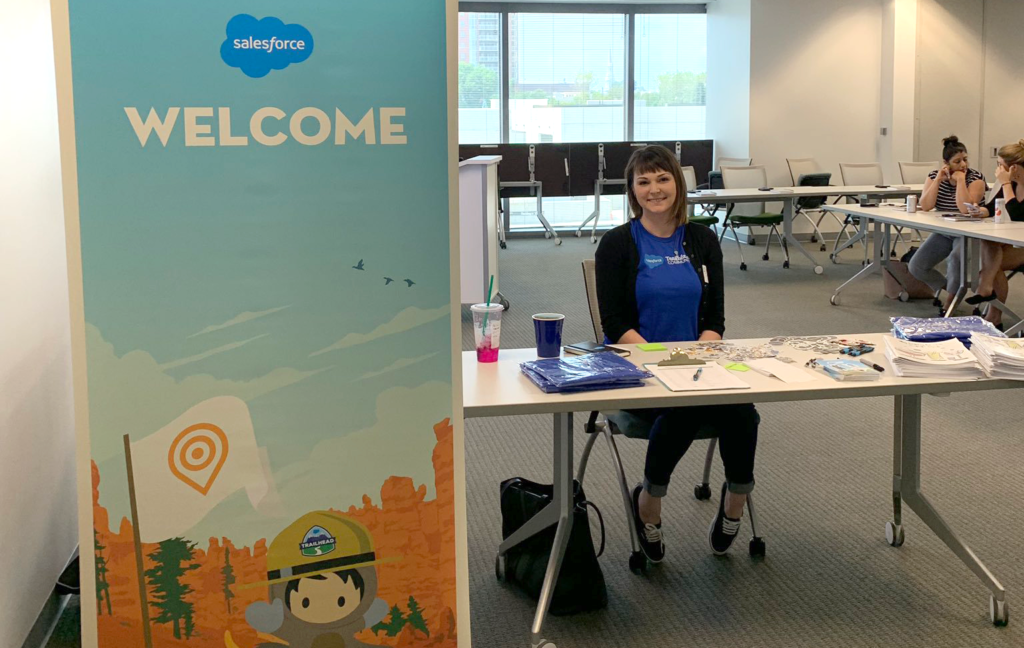
Erin Duncan welcomes attendees to an Atlanta Pardot User Group meeting.

Salesforce World Tours

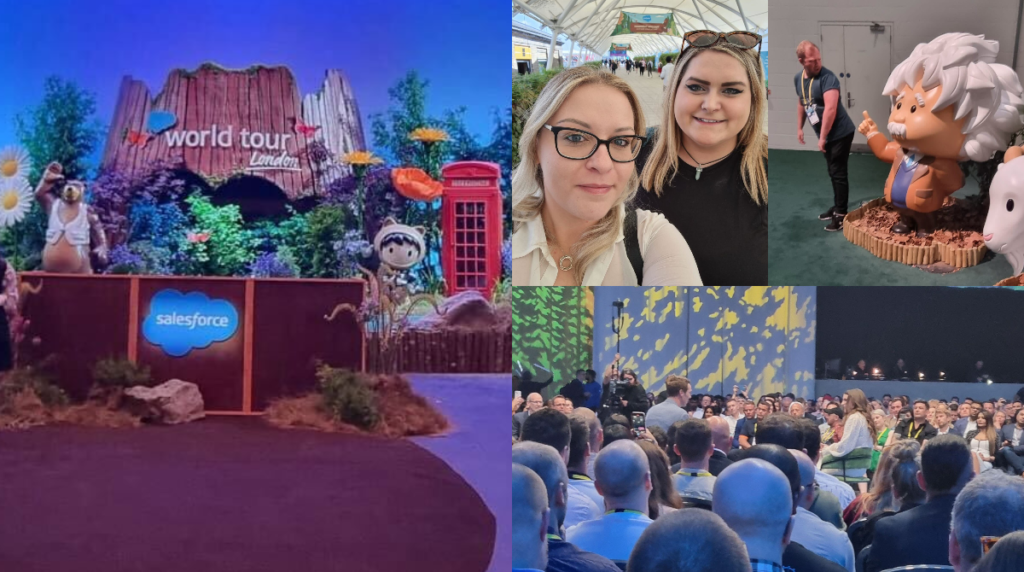
These are usually in a big city and are official events put on by Salesforce (free to attendees). Expect a couple thousand people, a big expo hall, dancing mascots, and a high energy keynote full of product news and big logo customers. Oh, and post-event happy hours from vendors and partners. 

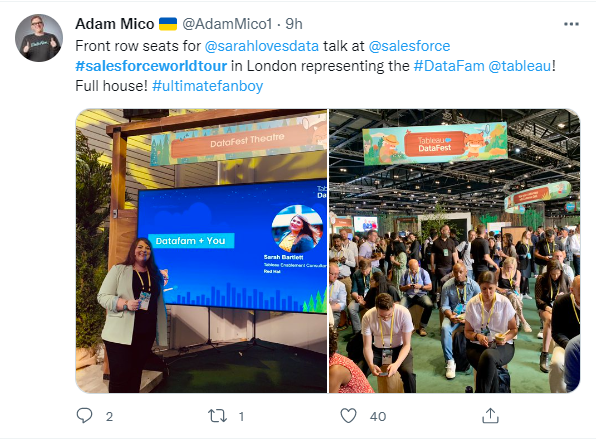
A few Sercante dragons were spotted in the wild at Salesforce World Tour London 2022

Dreamin’ Events

Although increasingly virtual or hybrid, these are usually in a big city and put on by members of the Salesforce community for a modest fee (usually $100-300). In other words, they’re created by Salesforce users, for users, and are loosely sanctioned/supported by Salesforce. 

The content is totally different in comparison to Salesforce World Tours. There’s no “selling” angle in mind — instead, you’ll find “in the trenches” advice from admins and hands-on folks with lots of real talk. This is a great place to find your people and meet someone you can call with an SOS when you’re stuck on something.

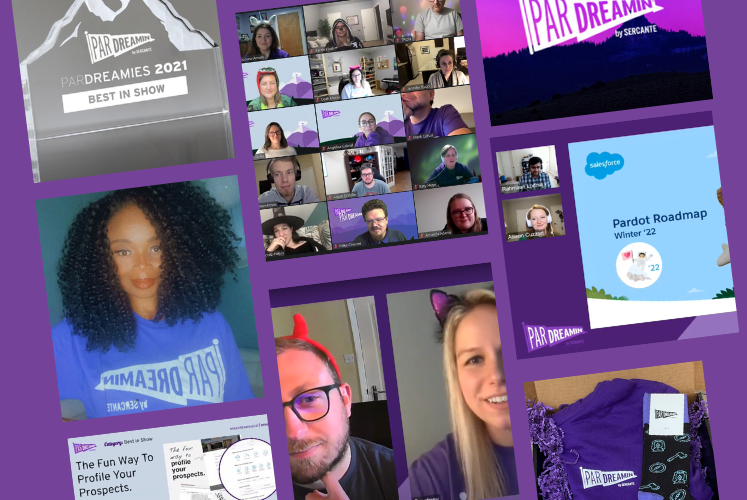
MarDreamin’ (formerly ParDreamin’) is a marketing-focused Salesforce community event

Dreamforce

This is the Superbowl of Salesforce. There’s a huge volume of content catered to almost any audience, and Salesforce pulls out all the stops to make this a fun, flashy, and engaging event. And the entire partner ecosystem rallies to woo customers, throw parties, and celebrate headline product news. 

The price tag is $1-3Kish depending on discounts and how early you buy your Dreamforce ticket. 

Pre-covid, they shut down multiple city blocks in San Francisco and had nearly 200K people. This year, rumor has it that attendance will be capped at 30K (but limited info out about that yet.) 

Here are scenes from the last big Dreamforce in 2019.

Salesforce Connections

Already happened this year, but for future reference, Connections is like a mini Dreamforce for marketers (also Salesforce sponsored). It’s been in Chicago for the last several years, and is the place to be for customers (or would-be customers) of Marketing Cloud and Commerce Cloud.

The Sercante team was happy to gather and learn at Connections 2022.

Rule 2. Define your goal for participating 

Do a little soul searching to figure out your ‘why’ for attending these events. Your objectives for attending Salesforce community events might include:

  • Tactical, how-to learning
  • Getting ideas & inspiration
  • Networking with other users 
  • Meeting your Salesforce account team
  • Recruiting 
  • Sales & prospecting
  • Learning about interesting products that work with Salesforce 
  • Evaluating prospective partners
  • Building a personal brand in the ecosystem 

Determining what’s most important to you will inform what events you should prioritize. As a rule of thumb, I would say user-led events are the best for tactical, how-to learning. 

Rule 3. Get digital business cards

I completely forgot business cards were a thing until Connections. Surely I have a stash of pre-covid cards somewhere in my house… but it didn’t even enter my mind until I was ready to swap contact info with someone.

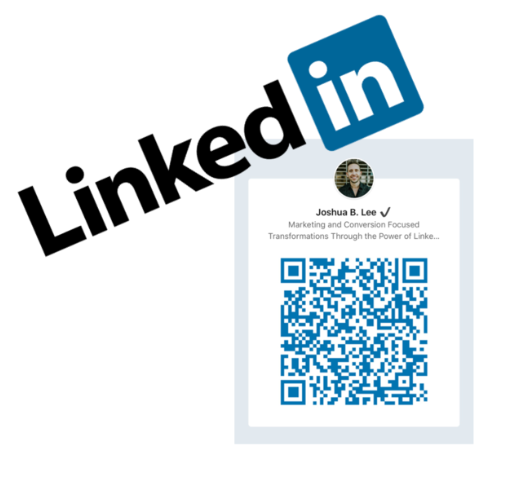
I was surprised to see A LOT of people using QR codes for an efficient contact info swap. Some people connected this to their Linkedin, and others had a QR code that created a contact record in the scanning user’s phone. I will definitely be doing this before the next event! 

Image credit

Rule 4. Don’t just attend… speak and volunteer! 

Once you have a feel for what these events are all about, I highly recommend throwing your hat in the ring to speak. I’ve found speaking at events to be incredibly rewarding and fantastic for networking. 

You know you’ve found your people when you can get up in front of a group and say

 “I worked on XYZ, I struggled with ABC, and here’s where I’m at,” and see heads nodding. It’s validating to find others who have the exact same challenges and know we’re all figuring this thing out together.

I’m a big believer that we all have something to learn and something to teach. If you’re reading this thinking “I have nothing to speak on” — check that imposter syndrome

Another great way to get more engaged is through volunteering. As someone who isn’t a particularly natural networker, working badge check in desks used to be my go-to to meet people in a low-pressure way.

Rule 5. Pick what sessions you want to prioritize

When it comes to the bigger conferences and Dreamin’ events, it’s not uncommon for popular sessions to fill up and not be able to accommodate everyone who wants to join. Skim the agenda before you go and pick three things you really want to attend.

Pro tip: If you see Circles of Success on the agenda, pick those! They’re group discussions and rarely disappoint.

Rule 6. Try to figure out who you want to meet… in advance of the event 

Ask around (i.e. customers, partners, friends, Salesforce AEs) and see who’s going. Events are a great opportunity to get some facetime with people you only work with online. Skim the speaker list — anyone with an interesting background? 

Ping these folks before the event and set up a coffee or lunch date, or plan to go find them the day of.

(And if you don’t know anyone who’s going — not to fear. You can still have a great networking experience attending live! This extra step ensures you get the value you were hoping for out of the event.) 

Rule 7. Check out Twitter 

The Salesforce ecosystem is active on Twitter. That means it’s the place to be for social connection during the actual event. 

For bigger events, follow the event hashtag to see pictures, find information about happy hours and adjacent events, read people’s hot takes, and more. Many user groups also have their own Twitter accounts and hashtags.

Pro Tip: Follow the #SalesforceWorldTour hashtag.

Rule 8. Don’t skip the “real life” social parts 

After a long day of networking, you might want to head home or get back to your hotel room to decompress. But you’d be missing the best part — happy hours, dinners, and spontaneous post-event hang outs are some of my favorite memories from Salesforce events. That’s because people tend to be more relaxed and aren’t rushing to the next thing.

If the idea of unstructured open networking makes you green in the face, then try thinking of a few questions to keep in your back pocket. 

For example: 

  • What was your biggest takeaway from the event? 
  • Are you working on anything you’re excited about?
  • What do you see as the biggest barrier or struggle with Salesforce at your organization? 
  • Have you ever seen a ghost? (Seriously — someone asked me this once at a happy hour, and it led to the most interesting group conversation ever.)

Rule 9. Say thank you and follow up 

Most people consider the event over when it’s…. well, over. But the magic is staying connected and building on value you got from the event. 

What relationships can you nurture? Who can you say thank you to? Do you have any thoughtful resources or help you could offer a new acquaintance? 

If all else fails, at least fire off a few Linkedin requests. 

Salesforce community events propel careers

I can’t tell you how many people I’ve met at Salesforce community events who later became teammates, clients, and partners. And I get it. These things aren’t easy for natural introverts like me. 

What I can tell you is someone else in the room is likely experiencing the same anxiety you’re feeling about being in these situations. And there’s luckily a big enough variety of Salesforce community events to accommodate all social situation comfort levels.

  • Not a fan of crowds? Check out an intimate user group meeting in your area. 
  • Don’t wanna be around people at all? Connect with Trailblazers through a virtual community group meeting (this blog post has a few examples).
  • Rather blend in with a crowd? Dreamin’ conferences have a spot for you to soak in all the educational in-person sessions.

Bottom line is — get yourself out there. You’ll connect with people who have similar work experiences and learn a few things. And, who knows, it may lead to your next big opportunity.

Have any nuggets of wisdom for attending Salesforce community events that we forgot? Tell us about it in the comments section.

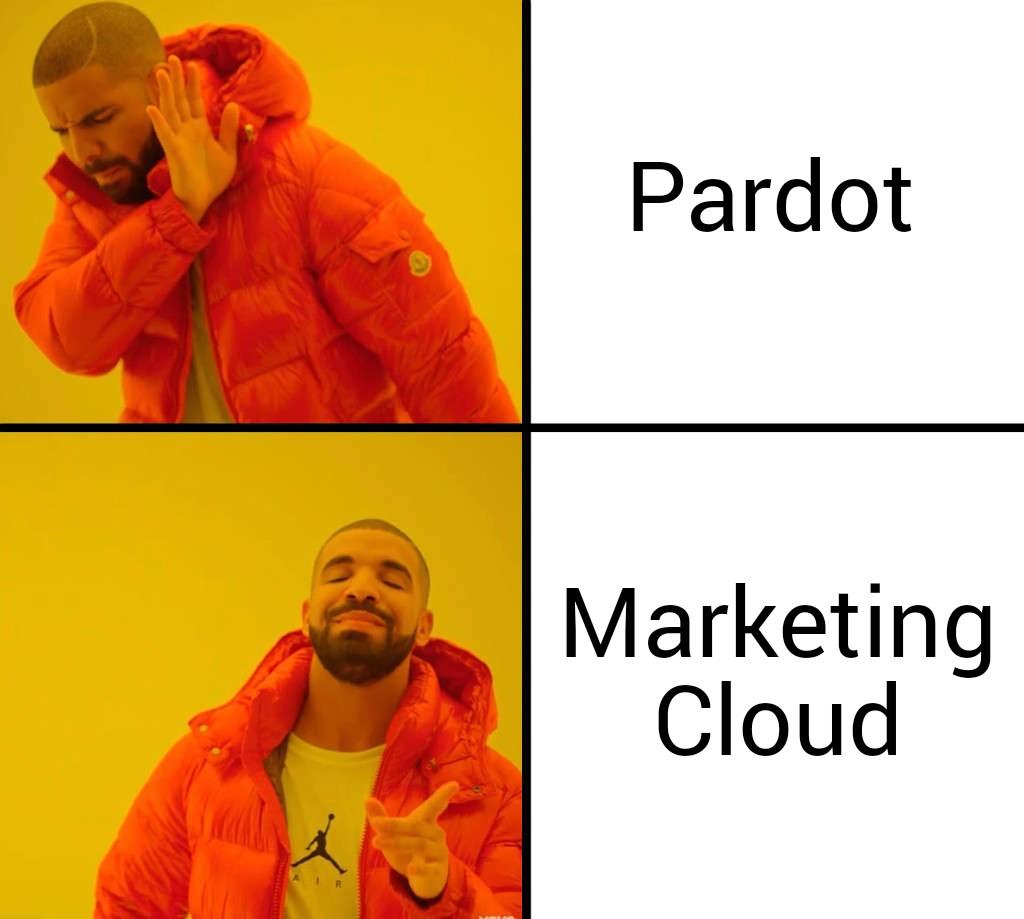
It’s official — Pardot is going to be called Marketing Cloud Account Engagement going forward.

This is a big, bold change.

I have a lot of respect for whoever did the work on this rebrand, and whoever ultimately had to push the button and make the final approval on these changes. Having been a part of several corporate rebrands, I have a tiny peek at how much work goes into that.

Time and Twitter will tell how the new names land. Like most things — there are both pros and cons for this change. I suspect there will be a lot of strong opinions on both sides.

Quick background on the Marketing Cloud name changes

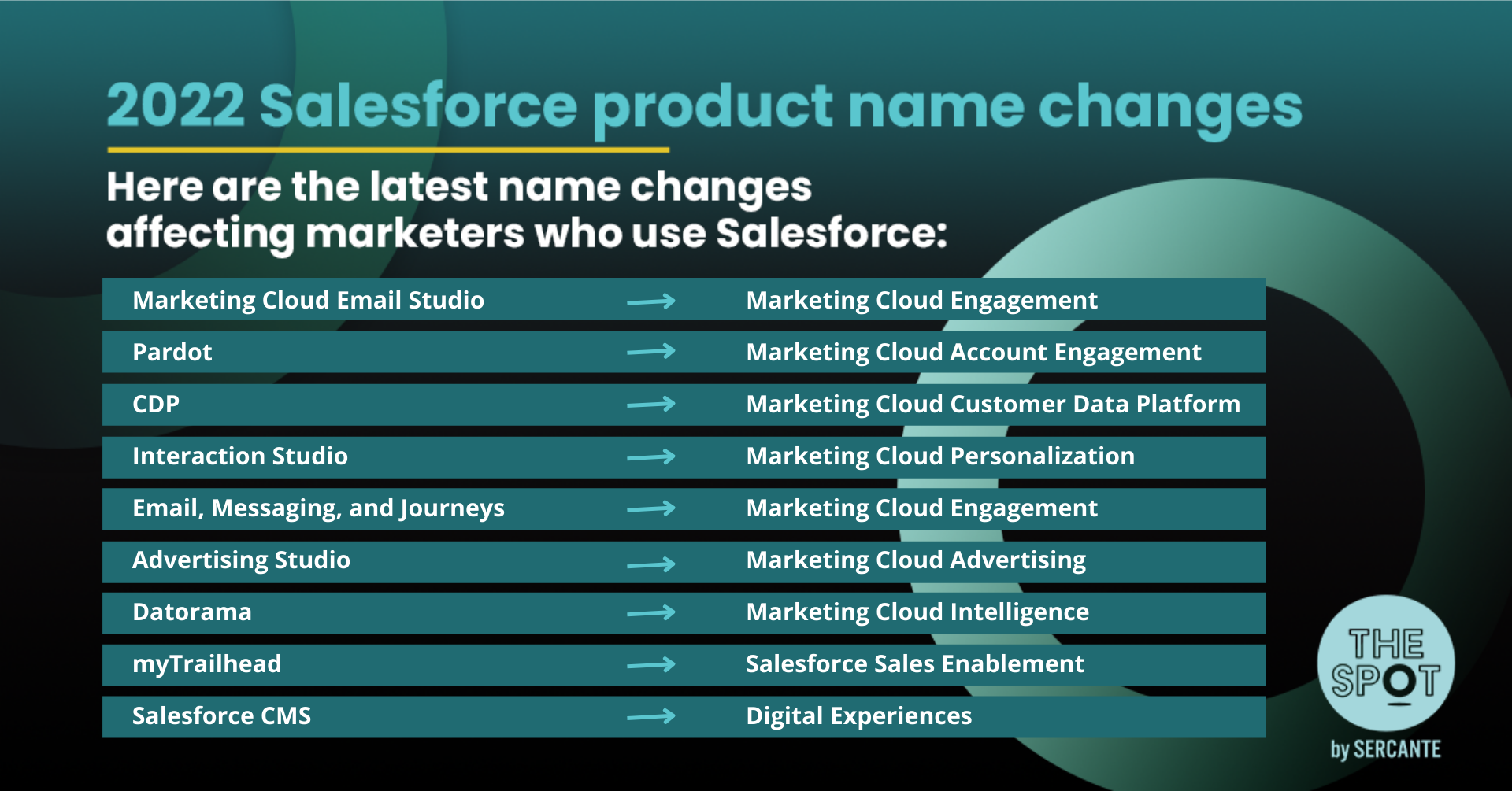
Here are the latest name changes affecting marketers who use Salesforce:

  • Marketing Cloud Email Studio (aka ExactTarget) 🡪 Marketing Cloud Engagement
  • Pardot 🡪 Marketing Cloud Account Engagement
  • CDP 🡪 Marketing Cloud Customer Data Platform
  • Interaction Studio 🡪 Marketing Cloud Personalization
  • Email, Messaging, and Journeys 🡪 Marketing Cloud Engagement
  • Advertising Studio 🡪 Marketing Cloud Advertising
  • Datorama 🡪 Marketing Cloud Intelligence
  • myTrailhead 🡪 Salesforce Sales Enablement
  • Salesforce CMS 🡪 Digital Experiences

Get all the details on the recent Salesforce product name changes here.

What I like about the name changes (particularly the Pardot one)

Let’s start with the good stuff.

1. It sets a vision for the connection between Salesforce products

The new naming conventions for the Marketing Cloud suite of products emphasizes that these products are part of the same family. 

Salesforce has made a large number of acquisitions in the martech space, and retaining the individual brand names dilutes the message that they’re all one platform. A unified naming system simplifies the message for the existing stack, and makes it easier to name and talk about future additions.

2. It aligns with marketers’ big picture needs 

Marketers need more than a pile of point solutions.

They have a vision, and they need infrastructure to execute on that. This line in Salesforce’s announcement about the change stated it perfectly: 

“As you consider how to make the wow moments that build customer trust and loyalty, we know you’re focusing less on one channel or technology and more on the full experience. Our job is to deliver the how behind the wow.”

This shift also mirrors a recent change that we made in the positioning of this blog. We announced a few weeks ago that “The Spot for Pardot” is becoming “The Spot” and broadening its focus to a broader subset of martech — and this need is exactly why.

3. It focuses on what the products actually DO from a customer’s perspective

If you already know what Pardot is, you know what it does and what problems it solves. If you already know what Datorama is, you know what it does and what problems it solves.

But no one is sitting around saying “I need a Datorama.” 

They’re saying: “I need actionable business intelligence.”

Putting the names in the customer’s language simplifies the message, in some cases, on why a particular product is the solution of choice for a particular business challenge.

4. It makes it clearer that Pardot + ExactTarget play nice in the sandbox 

For whatever reason, Pardot and ExactTarget have often been viewed as “competing” with one another. People liked to compare features, list pros and cons, and generally viewed it as a “this or that” choice. 

Really, the products both send email, and that’s about where the similarities end. They are totally different tools, designed for totally different customers, with totally different admin experiences. 

Using Sercante enterprise customers as a sample, I’d estimate about half use both ExactTarget and Pardot in different subsets of their business. Having both ensures their marketing teams can run fast and solve hard problems for the business. 

(Somehow in this “either or” narrative people seem to forget that’s why ExactTarget actually bought Pardot before Salesforce scooped them both up. Clearly their founders recognized they were better together than they are apart.)

4. It’s easy to pronounce!

First, at least people will pronounce the new name correctly. Goodbye, Par-dough. 

Silver linings, guys.

Some challenges with the rebrand

Now, for a gentle critique.

1. It’s going to be hard to unstick the legacy brand names

My friend’s mom decided she wanted to be called “Grand-mère” when her daughter brought little humans into the world. 

Her grandchildren decided she was, in fact, “Lulu.” 

Why? Not a clue.

But it stuck.

Take it from the 2 year olds: it’s really hard to tell people what to call you.

The ExactTarget brand was “sunsetted” ages ago. But people still call it that today, mostly for disambiguation with Marketing Cloud. It was rebranded Email Studio. Then Messaging & Journeys (kind of.) Now it’s “Engagement.” 

Jury’s out on how Pardot customers will react to this change.

2. It’s going to make things harder to talk about 

While the new naming system does have a unified nomenclature, it looks clean and sharp on a slide deck, it messages the right things from a customer perspective… 

…it’s going to make the products really hard to talk about.

Take Salesforce Personalization for example. Formerly known as “Interaction Studio,” Salesforce Personalization provides a category-leading experience for AI-driven personalization in cross-channel marketing campaigns. It can be used alongside both Marketing Cloud or Pardot (see also: 3 Interaction Studio Features Marketers Should Look Out For from our Pardot conference last year.)

But labeling it with the generic word “Personalization” makes it really hard for people (customers, colleagues, the community, etc.) to know what you’re actually referring to. 

Because you can personalize content with Pardot using handlebars merge language, dynamic content, or legacy variable tags. You can personalize content in Marketing Cloud with AMPscript or personalization strings. And we call those things “Personalization” too.

I don’t think it’s super clear in the current naming system that “Personalization” is its own thing that requires a separate SKU on your Salesforce order form and requires its own implementation.

3. “Account Engagement” doesn’t reflect the needs of all Pardot customers 

“Account Engagement” implies a go-to-market model where sales reps are identifying target accounts and getting after them, and marketing is complementing those efforts through an ABM strategy. 

That reflects the use case of some customers, for sure. 

But many others use Pardot differently. They use it to communicate with students and donors. They use it for community engagement. They use it for recruiting and internal comms. And Pardot is pretty darn good at those things. The new name doesn’t jive with this. 

4. It makes talent acquisition more confusing 

If I see “project managed Pardot implementation” or “reported on KPIs to stakeholders using Datorama” on a resumé, I have a pretty clear vision of what that person did and what they can do for my company. 

If you take away the OG brand names, it sounds like nonsensical fluff. Project managed Account Engagement? Reported on KPIs to stakeholders using Intelligence?

This is going to need some work.

5. It makes finding a partner more confusing 

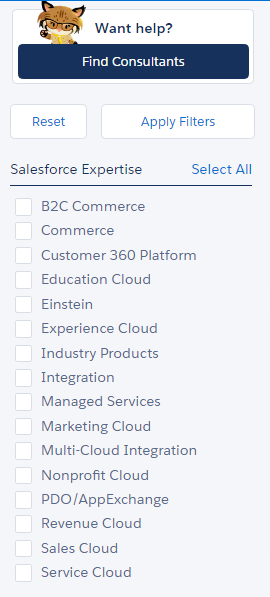
The AppExchange made a change to its filters a few days ago, presumably to align with this change to remove “Pardot” and “Datorama” from their filter criteria:

Expertise implementing one part of Marketing Cloud does not always translate to other parts of Marketing Cloud. In the short term, I think this change to the searchability of the AppExchange is going to really damage the ability of customers to find and vet qualified partners. 

In the long term, I think we will see an increased emphasis on partners growing to support across the entire Marketing Cloud. But that will take some time.

6. It makes Googling your way to success more confusing 

What do you search if you’re looking for Pardot help in the future? 

“Marketing Cloud Account Engagement Tips for _______” is almost certainly going to turn up a lot of irrelevant content.

I have a lot of faith in Google, but it’s going to be tricky there for a while.

How I expect the Pardot community to respond to the name change 

The Pardot community is going to full-on rebel in the wake of this name change.

Mostly kidding.

I think a decent subset of Pardot customers, consultants, and long-time users will see the intent of what Salesforce is trying to do with the naming update and get on board.

I also think a decent subset of Pardot customers, consultants, and long-time users will call it “Pardot” until their final days. 

Remember back in 2019 where Salesforce tried to force a name change of Pardot User Groups to “B2B Marketing User Groups”? Yeah, they’re still called “PUGs.”

The Spot has several digital community hubs to rebrand following this change:

More to come on those after the dust settles from this announcement. 

The bottom line 

I believe in the “why” behind the Pardot name change 100%. I appreciate that Salesforce is aligning with customer needs and meeting them where they’re at when they’re talking about their business challenges.

I have faith that Salesforce is going to work on the details and logistics of what this means to customers to make this a net positive at the end of the day. There will be some bumps in the road. And many people will hold on to the Pardot name. And it will continue to help marketers kick butt and take names with engaging their audiences in a scalable way.

What’s your take on the name change? 

I’m dying to hear what ya’ll think of this renaming. Are you for or against? Spicy feelings? 

Drop a comment with your opinion and let’s discuss.

Salesforce announced today that they’re changing the name “Pardot” to… drumroll… Marketing Cloud Account Engagement. Along with this rebrand, they’re changing the names of about a dozen products — but of course, Pardot is nearest and dearest to my heart.

Do I have opinions? Ohhhh yes. And I will be sharing those in a blog tomorrow.

In the meantime — here’s what you need to know about the future of the Pardot brand. 

2022 Salesforce product name changes

Salesforce likes renaming things. It’s what they do. Having been a customer and partner in this ecosystem for 12 years, I’ve kind of accepted it.

In this quarter’s wave of brand updates, Salesforce itself is actually getting an upgrade. The company announced in March 2022 that Salesforce.com is changing its legal name to Salesforce, Inc. (Sorry, I’m still going to call it SFDC though.) 

The most recent wave of Salesforce name changes

Several products are also getting the rename treatment. Pay attention — you’ll have to use these new names when communicating with Salesforce support agents. 

Here are the latest name changes affecting marketers who use Salesforce:

  • Marketing Cloud Email Studio (aka ExactTarget) to Marketing Cloud Engagement
  • Pardot to Marketing Cloud Account Engagement
  • CDP to Marketing Cloud Customer Data Platform
  • Interaction Studio to Marketing Cloud Personalization
  • Email, Messaging, and Journeys to Marketing Cloud Engagement
  • Advertising Studio to Marketing Cloud Advertising
  • Datorama to Marketing Cloud Intelligence
  • myTrailhead to Salesforce Sales Enablement
  • Salesforce CMS to Digital Experiences

Wait, what? Why?

The word Salesforce has used as a touchstone when communicating these product name changes is that they are EASY. 

Salesforce EVP & GM Digital Experiences Lidiane Jones echoed this in the official announcement about the name change: 

The Marketing Cloud portfolio is now more aligned with the language marketers already use, so the capabilities and value are easier to understand. For example, many marketers are looking for the capability and value of real-time Personalization, not an “Interaction Studio” solution.

We’re expecting to hear more on Salesforce’s logic behind the changes at the Sydney World Tour. 

What is NOT affected by the Pardot name change

With the name change, there’s lots that is staying the same:

  • Product features & functionality (continuing to grow and expand as part of the normal release cycle) 
  • Pricing 
  • Packaging / bundles
  • The actual SKU names on your Salesforce contract

Not ready to accept the new brand? Let’s cope together. 

If you’re anything like us, Pardot is your BFF and you know all the Pardot trivia, including how Pardot got its name.

So, you might need some time to process the news from Salesforce — especially since Marketing Cloud Account Engagement just doesn’t have the same ring to it.

Spotify playlists for your recovery

While we are still waiting for the ecosystem to establish its own moniker (McKay, anyone?) we have just the thing to get you through all of your stages of grief — some tunes to carry you through. Check out our breakup playlists on Spotify. 

What’s your reaction to the new name? Share your take in the comments while we all process this.

Your Marketing Automation Platform (MAP) doesn’t exist in a vacuum. And neither do we.

The Spot for Pardot is following a natural evolution we’re seeing in the marketing technology industry. As demand for integrations with MAPs increase and Marketing Operations Professionals (MOPs) are finally finding voices among the big players, we’ve shifted our focus to the MarTech stack as a whole.

We’re still The Spot for Pardot. But now we’re so much more.

Moving forward, you’ll find community resources for ALL marketers who use the Salesforce platform. The ones who use Pardot. Or Marketing Cloud. Or both. Or some other MAP they’re integrating with Sales Cloud.

We’ll share what we know about using marketing technology and the Salesforce platform together.

A new focus for “The Spot” (and a new name)

It started as a personal blog sharing quick tips and solutions from one Pardot user. Then others joined to share their knowledge. And more readers followed. Now it’s a community hub for marketers on Salesforce who work together to reach their goals. 

Here’s a message from the original The Spot blogger, Andrea Tarrell, to share how we got here.

A message from Andrea, OG blogger at The Spot

I am thrilled to announce a fully revamped, reimagined, relaunch of “The Spot.”  Shout out to the amazing marketing team at Sercante — especially Sarah, Ambre, and Christina — for bringing this to life.

The new site looks infinitely better than the old WordPress site I hacked together in 2017. 

But it’s much more than a face lift.  The content, authors, categorization, and overall focus are evolving to better serve you, dear reader — and I couldn’t be more excited about it.  

Where The Spot got its start

I started The Spot for Pardot in August of 2017.

It was a side project.

Actually, if I’m being honest — it was a bit of a stall tactic.

I was thinking about starting a business, but I was scared.  So, I started the blog instead.

As a marketer, I wrote hundreds of blog posts for various clients and employers, on everything from insurance best practices, to architecture, to industrial printing, to trucking firms, and more.

But I had never had a place to write about things that mattered to me.

I created The Spot as a place to express myself and share learnings, hot takes, and the occasional war story.  I half expected no one to read it.

But it picked up steam shockingly quickly.  Turns out that a lot of other marketers had been grappling with the exact same problems that kept me up at night.  And before I knew it, the blog became a magnet for my PEOPLE — the kinds of marketers that I want to work with, both as team members, clients, and community members.

The authors on The Spot: More insights from the best minds in MarTech

For the first two years of The Spot, it was just me penning posts.

But today, it is supported by authors from the Sercante team, and across the entire martech community.  (Shout out to Brittany Rhyme for being our first ever “guest post” back in 2018 and opening the flood gates!)

Do you have a perspective you’d like to share?  We welcome guest posts and paid, long-term contributor gigs.

The Name: Welcome to “The Spot”

To reflect our new focus, we’re dropping the word “Pardot” from our blog name.  Instead, you can just call us “The Spot.”  (And actually, most people called us that anyway.)

We’re keeping thespotforpardot.com as the URL right now for SEO juice, and will be phasing that out over the next 12 months.

What’s not changing: Our relentless zeal for learning & sharing

To recap — in addition to a new look for The Spot, you’ll now see:

You’ll also continue to see our team share content and resources through:

When I started The Spot back in 2017, I had no idea what it would grow into.  Thank you for being here, for sharing this content with your friends and colleagues, and for constantly challenging my team and I to bring our best to this community.  

Cheers to the next chapter!

Content on The Spot: Hello Marketing Cloud, martech & more

The Spot started out as content about Pardot with the goal of sharing insights to help marketers be successful on the Salesforce platform.

To meet that goal, we’ve branched out beyond Pardot. We’re covering topics and platforms like:

Expect to see a wave of new content covering all kinds of martech — especially other parts of Salesforce Marketing Cloud that we see growing in relevancy for savvy digital marketers. 

We’ve also added a categorization system to our posts. Now, it’s easier to browse and find what you’re looking for:

Why marketers on Salesforce need third-party resources

Yes, we realize Salesforce has Trailhead. And product-specific blog posts. And webinars. And all kinds of other resources. But you’re only getting information from the Salesforce perspective. 

You’re a real marketer with real-life challenges. And you know your tech stack includes more than just Salesforce products.

The Spot has resources to find solutions and better utilize all of your technology tools — all from the perspective of a marketer who uses the Salesforce platform.

On a mission to mobilize marketers

Our mission is simple — to provide an online home for marketers on Salesforce to learn and collaborate. It’s a central location to find Pardot resources across all levels — from getting started guides to launch an org to expert tips for advanced integrations that extend marketing technology stacks.

We want marketers to realize “what could be” and feel empowered to take their marketing campaigns and lead generation efforts to the next level. 

Get involved and claim your spot

Contributors from around the world represent all kinds of digital marketing specialties on The Spot. It’s filled with easy-to-digest (and sometimes cheeky) content for marketing professionals who use Salesforce and want to automate all the things.

Join us by getting involved and connecting with the community.

3 ways you can get involved with The Spot

  1. Become a contributor.
  2. Post an open job listing.
  3. Join the conversation in our Slack community group.

And remember to become a subscriber! The Spot newsletter delivers a healthy dose of martech to your inbox — and nothing more.

No more posts to show